
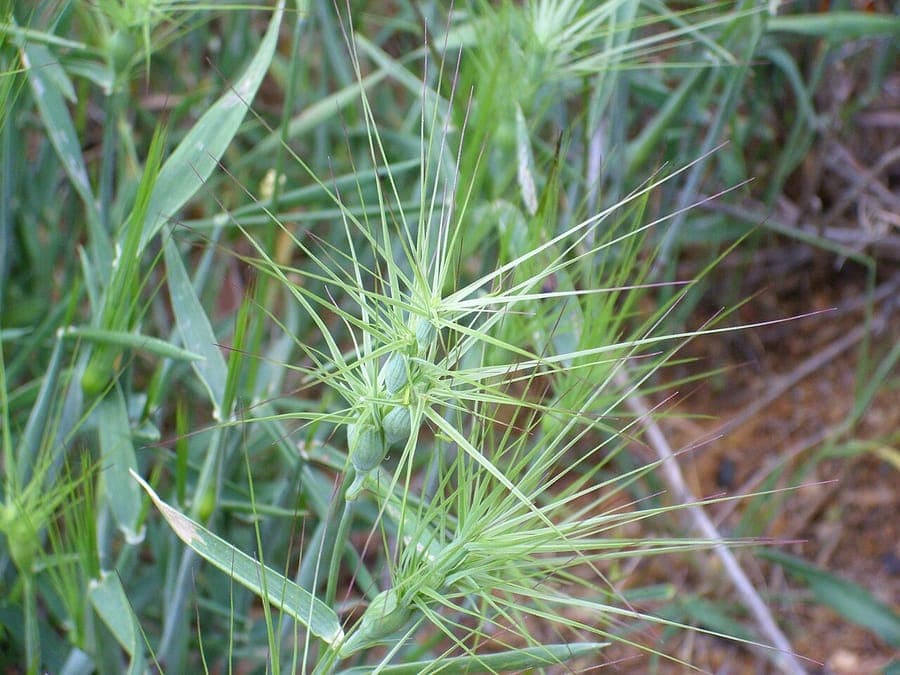
Javier martin / Public domain, via Wikimedia Commons
Ovate Goat Grass: complete guide
Aegilops geniculata
¿Quieres ver Ovate Goat Grass: complete guide en tu jardín?
1 minuto, sin tarjeta de crédito
Overview
Aegilops geniculata, commonly known as ovate goat grass or geniculate goatgrass, is a fascinating grass species within the Poaceae family. This annual or winter-annual plant grows naturally throughout the Mediterranean region, from the Canary Islands to Afghanistan. The name "geniculata" refers to the distinctive bent (geniculated) flowering stems that give this grass its characteristic elegant appearance.
While primarily used in botanical collections and as a fodder crop, this grass offers intriguing possibilities for natural gardens and ecological plantings. The plant attracts numerous bird species and can contribute beautifully to wildflower meadows and natural planting schemes.
Appearance and Bloom
Aegilops geniculata produces sturdy individual culms (stems) that reach 20-60 cm in height. The most distinctive feature is the clearly bent lower segments of the inflorescence, creating an elegant aesthetic that sets this grass apart from other species.
Blooming occurs from May through June. The spikelets are densely crowded with striking yellow to reddish-brown coloration. This inflorescence is botanically interesting and visually decorative in garden design. After flowering, the plant produces seed vital for bird populations and wildlife feeding.
Ideal Location
Place Aegilops geniculata in full sun positions. This grass requires at least 6-8 hours of direct sunlight daily for optimal growth. The plant thrives in open, dry locations where light is abundant.
In Northern Europe, choose a sheltered spot protected from strong winds. While reasonably frost-hardy, the plant appreciates protection from winter winds. Ideally, plant this grass on elevated areas where water drains effectively.
Soil Requirements
This Mediterranean grass is undemanding regarding soil type. It grows well in moderately fertile to poor soils. Excellent drainage is essential - waterlogging must be avoided completely. Heavy clay soils can be improved with sand amendments.
Aegilops geniculata tolerates calcareous soils and acidic substrates (pH 6.0-8.0). Fertilization is unnecessary. The grass adapts to dry conditions and requires no additional feeding beyond initial establishment.
Diseño gratis
¿Quieres ver Ovate Goat Grass: complete guide en tu jardín? Crea un diseño gratis ahora.
Watering
Once established, this grass is quite drought-tolerant. During the growing season, especially spring and early summer, water moderately. The soil should not dry out completely, but waterlogging must be prevented.
Winter wetness: ensure good drainage if winters are wet. In dry summer periods, additional water helps, especially during bloom. The grass will manage under average climate conditions with minimal intervention.
Pruning
Aegilops geniculata requires no active pruning. After June blooming, leave the seed spikes standing for bird feeding. Only in autumn, once the plant has completely died back, remove dried stems.
In wild meadows, allow the plant to self-seed and naturally disappear. For formal gardens, clean up spent culms in October-November. The plant naturally declines without special maintenance.
Maintenance Calendar
February-March: sow seeds or plant seedlings. April-May: strong growth period. May-June: flowering. July-August: seed development. September-October: plant decline. Winter: dormancy.
Winter Hardiness
Aegilops geniculata tolerates frost down to approximately -10 to -15 degrees Celsius, depending on variety and local conditions. In Dutch climate zones, many specimens survive winter outdoors.
However: winter rainfall is the main concern. Ensure perfect drainage around planting sites. In very wet winters, plants may rot. Wind protection is recommended. In harsh locations, treat the plant as an annual.
Special Applications
Aegilops geniculata excels in wildflower meadows and ecological gardens. It attracts numerous bird species that feed on its seeds. The plant supports small birds and other wildlife through food provision.
In botanical gardens, this grass serves as an interesting educational specimen. It demonstrates diversity within the grass family and the adapted design of Mediterranean plant communities.
Final Thoughts
Aegilops geniculata is a small treasure for the thoughtful gardener who values character over scale. It requires minimal maintenance, tolerates drought, and provides nutrition for our feathered friends. This Mediterranean grass deserves greater attention in natural and ecological gardens.
Interested in growing it? Visit gardenworld.app for advice on ornamental grasses and wildflower gardening. The curious gardener will find seeds and young plants at local garden centres. Start small and discover the character of each grass species.
For more information on wildflower meadows and ecological planting schemes, visit gardenworld.app. Discover combinations that attract birds and pollinators to your garden space.
¿Quieres ver Ovate Goat Grass: complete guide en tu jardín? Crea un diseño gratis ahora.
Sube una foto, elige un estilo y obtén un diseño fotorrealista con lista de plantas en menos de un minuto.
Más de 10.000 jardines diseñados
Sin tarjeta de crédito


Plantas similares
Sporobolus pungens: complete guide
Sporobolus pungens
Sporobolus pungens is a stoloniferous Mediterranean coastal grass with outstanding salt and drought tolerance, perfect for seaside and dry gardens.
Mediterranean aegilops: complete guide
Aegilops biuncialis
Everything about Aegilops biuncialis, a Mediterranean annual grass with ornamental spikes and outstanding drought tolerance for dry gardens.
Silver bluestem: complete guide
Bothriochloa saccharoides
Full guide to Bothriochloa saccharoides (silver bluestem): site, soil, watering, winter hardiness, pruning, and garden companions.