
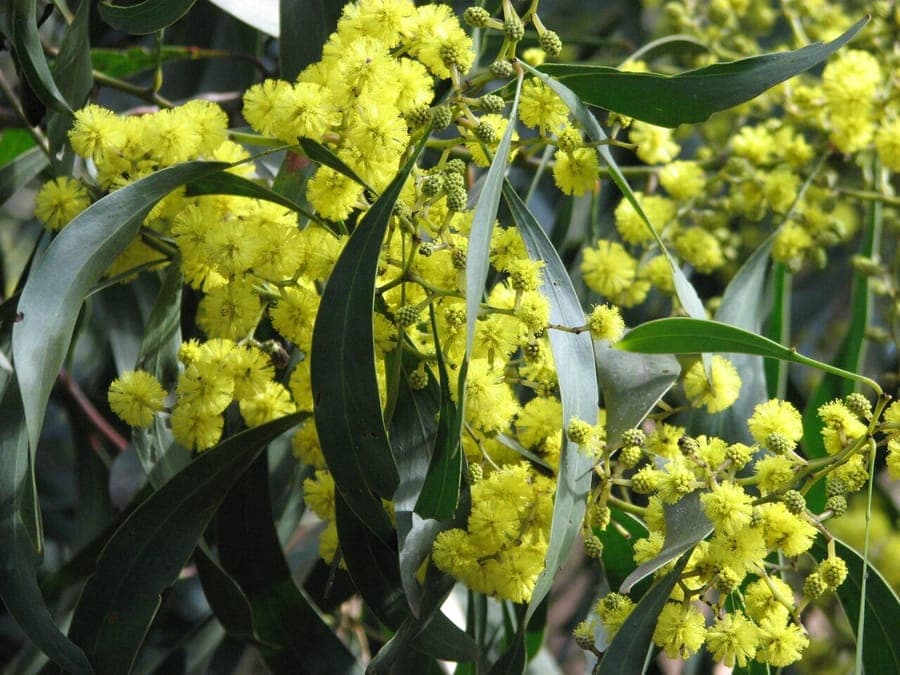
Melburnian / CC BY-SA 3.0, via Wikimedia Commons
Acacia pycnantha: complete guide
Acacia pycnantha
¿Quieres ver Acacia pycnantha: complete guide en tu jardín?
1 minuto, sin tarjeta de crédito
Overview
Acacia pycnantha, known as the Australian golden wattle, is a beautiful, fast-growing tree native to southeastern Australia. This plant is renowned for its spectacular golden-yellow flowers that bloom abundantly in spring. The species is highly suitable for Mediterranean and warmer gardens, where it can reach 6-8 meters tall under ideal conditions.
In Europe, this acacia has become popular due to its rapid growth, ornamental value, and drought tolerance. The plant also provides valuable pollen for bees and other pollinators, making it an excellent choice for wildlife gardens.
Appearance and bloom
The Australian golden wattle grows into an attractive tree with an open, slender crown and delicate, feathery foliage. The leaves are bipinnate and have a soft, fine appearance that creates pleasant dappled shade beneath.
Flowers appear from March to May, depending on location. They form dense, golden-yellow pompoms that arrange themselves in clusters along the branches. This massive blooming creates an impressive visual impact and spreads a pleasant fragrance throughout the garden.
Ideal location
Plant the Australian golden wattle in a spot receiving full sun, with at least 6-8 hours of direct sunlight daily. The tree flowers best in warm, sunny positions. Avoid heavily shaded areas, as this leads to sparse blooms and slow growth.
The plant tolerates wind well and can grow in coastal regions, though it thrives best without direct sea spray.
Soil
Acacia pycnantha grows well in well-draining soil and accepts both acidic and neutral substrates. The plant thrives even in poor, sandy, or gravelly soils, making it a versatile choice.
Aim to provide soil with good drainage properties. Stagnant water is harmful and can cause root rot. For container cultivation, a mix of garden soil, sand, and grit is recommended.
Diseño gratis
¿Quieres ver Acacia pycnantha: complete guide en tu jardín? Crea un diseño gratis ahora.
Watering
Ensure the plant is well-watered after planting. Once roots are established, the Australian golden wattle shows remarkable drought resistance. In normal years, rainfall is usually sufficient.
During dry summer periods, you may water, but avoid excessive moisture. Watch out for waterlogging, especially in winter months.
Pruning
The Australian golden wattle requires minimal pruning. After flowering, you can gently remove dead branches and trim the shape if needed.
Avoid heavy pruning, as this can damage the tree. If formal pruning is desired, do this shortly after flowering before the plant begins new growth.
Maintenance calendar
January-February: Check for winter damage and perform gentle pruning if needed. March-May: Enjoy the spectacular blooming, water when necessary. June-August: Clean weeds around the base, water during dry spells. September-October: Winter preparations, health monitoring. November-December: Minimal maintenance, frost protection in harsh winters.
Winter hardiness
The Australian golden wattle is frost-sensitive. In Mediterranean climates (zones 9-11), it usually survives without protection. In cooler regions, protection is essential.
Watch for temperatures below -5 degrees Celsius. In cold winters, foliage may be damaged or the plant may die. Consider growing the plant in containers in areas with harsh winters.
Companion plants
The Australian golden wattle pairs well with other Mediterranean plants such as lavender, rosemary, cistus, and other acacias. These combinations create harmonious, drought-stable planting schemes.
Avoid vigorous growers that may dominate, and maintain sufficient distance from other trees to enable full development.
Closing
Acacia pycnantha is a spectacular choice for gardens in warmer climates where rapid growth and dramatic spring blooms are desired. With minimal intervention, it delivers beautiful golden flowers year after year. Visit gardenworld.app/en for more garden tips and designs. Find online assortments at local suppliers like Intratuin or Gamma for quality plant material.
¿Quieres ver Acacia pycnantha: complete guide en tu jardín? Crea un diseño gratis ahora.
Sube una foto, elige un estilo y obtén un diseño fotorrealista con lista de plantas en menos de un minuto.
Más de 10.000 jardines diseñados
Sin tarjeta de crédito


Plantas similares
Tall Silky Lupine: complete guide
Lupinus elatus
Tall silky lupine is a fast-growing Californian perennial with silvery foliage and blue-purple flower spikes, ideal for a prairie-style garden.
Garfield Lupine: complete guide
Lupinus garfieldensis
The Garfield lupine is a rare, fast-growing American perennial for alkaline, dry grassland gardens, with striking blue flower spikes.
Lupinus elegans: complete guide
Lupinus elegans
Lupinus elegans, the elegant lupine, is a spectacular blooming plant from Mexico with blue flower spikes. Care, cultivation and garden use.