
Forest & Kim Starr (USGS) / Public domain, via Wikimedia Commons
Indian-licorice: complete guide
Abrus precatorius
¿Quieres ver Indian-licorice: complete guide en tu jardín?
1 minuto, sin tarjeta de crédito
Overview
Indian-licorice or Rosary Pea (Abrus precatorius) is an elegant tropical climbing plant native to Africa, Asia, and Australia. This species belongs to the legume family (Fabaceae) and is celebrated for its fine, feathery foliage, small purple flowers, and especially its striking red seeds with black spot (rosary beads). These red seeds were traditionally used for jewelry and rosaries, hence the name.
Indian-licorice contains many bioactive compounds and is used in traditional Ayurvedic medicine. However, be aware: the plant contains toxic substances and requires careful handling. This is a plant for experienced growers in warm, humid climates.
Appearance & Bloom
Indian-licorice grows as elegant climber with fine, feathery foliage composed of many small leaflets. The leaf canopy is elegant and light, giving fern-like texture. The stems are thin, slightly woody and willing to climb along supports.
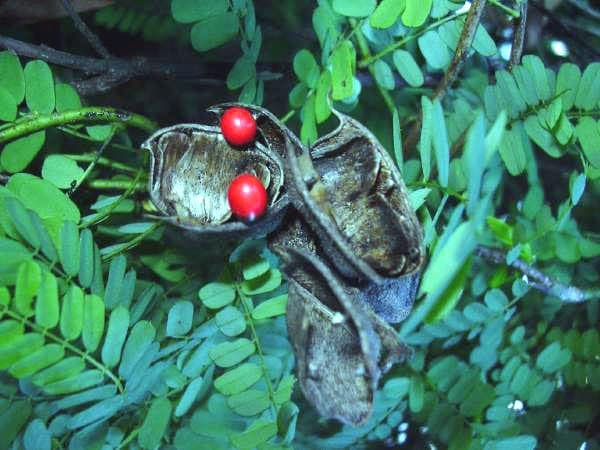
Flowers appear in August-October on elongated spikes, small but numerous. They are purple-white to pink-purple and very softly scented. After flowering spectacular seed pods develop: small green pods with striking red seeds with glossy black spot. These seeds are very eye-catching and persist long on the plant.
The seeds contain highly toxic abrine that in very small amounts can cause serious harm. Intact seeds are less dangerous than damaged ones; care in handling is essential.
Ideal Location
Indian-licorice requires warm tropical or subtropical climate. This means minimum temperatures of at least 60-65F (15-18C), ideally 68-77F (20-25C). The plant grows in full sun to light dappled shade, but grows best in lightly filtered sun.
This is not suitable for temperate climates outdoors. In Europe it grows only in very warm regions (southern Spain, southern France, southern Italy) or in warm greenhouses.
Soil
Indian-licorice grows in fertile, well-draining soil with pH 6.0-7.5. The plant thrives in tropical soils rich in organic material. In containers use nutrient-rich potting mix with extra compost.
The plant is not particular about soil but grows slower in poor soil. Regular feeding with slow-release fertilizer promotes growth.
Diseño gratis
¿Quieres ver Indian-licorice: complete guide en tu jardín? Crea un diseño gratis ahora.
Watering
Indian-licorice requires regular water especially during growing seasons. Water when soil feels dry. The plant is sensitive to drought and drops leaves quickly if water is lacking.
In winter watering can be reduced but never stopped completely. Ensure soil never completely dries out. Good drainage is important to prevent root rot.
Pruning
Indian-licorice responds well to pruning. Pinch back growing tips regularly for more compact, branched growth. This also promotes more foliage and flowers. Remove dead branches and leaves regularly.
When growing in pots you can keep the plant smaller by regular pinching. Wild growth can reach 6-10 feet or more.
Maintenance Calendar
- March-April: New growth begins; start feeding
- May-July: Active growth; regular water and pruning
- August-October: Bloom and fruiting; enjoy flowers
- November-February: Quiet season; less water
- Year-round: Caution with seed handling
Winter Hardiness
Indian-licorice is not cold-hardy and dies at frost. In warm climates it grows outdoors year-round. In colder areas it is grown only in warm greenhouses or containers that can be brought inside.
Temperatures below 50F (10C) cause leaf drop; below 41F (5C) branches die back.
Companion Plants
Indian-licorice combines beautifully with:
- Other tropical climbers: Passiflora, Convolvulus
- Heat-lovers: Ficus, Hibiscus
- Understory: Tropical ferns
- Support: Triangular trellis or pergola
Be careful to keep toxic seeds away from children's reach.
Caution & Use
Abrus precatorius contains abrine (highly toxic) in the seeds. Damaged seeds are more dangerous than intact. Handling the plant requires caution. Do not get seeds on skin; wash carefully after contact.
In traditional use the plant is used in very small amounts with caution. Modern medicine recognizes some uses but advises caution.
Conclusion
Indian-licorice is a unique, exotic climbing plant for experienced growers in warm climates. With elegant foliage, beautiful flowers, and spectacular red seeds it offers botanical interest. Careful handling is essential due to toxicity. Plant this fascinating species only if you can exercise necessary caution.
¿Quieres ver Indian-licorice: complete guide en tu jardín? Crea un diseño gratis ahora.
Sube una foto, elige un estilo y obtén un diseño fotorrealista con lista de plantas en menos de un minuto.
Más de 10.000 jardines diseñados
Sin tarjeta de crédito


Plantas similares
Tall Silky Lupine: complete guide
Lupinus elatus
Tall silky lupine is a fast-growing Californian perennial with silvery foliage and blue-purple flower spikes, ideal for a prairie-style garden.
Garfield Lupine: complete guide
Lupinus garfieldensis
The Garfield lupine is a rare, fast-growing American perennial for alkaline, dry grassland gardens, with striking blue flower spikes.
Lupinus elegans: complete guide
Lupinus elegans
Lupinus elegans, the elegant lupine, is a spectacular blooming plant from Mexico with blue flower spikes. Care, cultivation and garden use.