
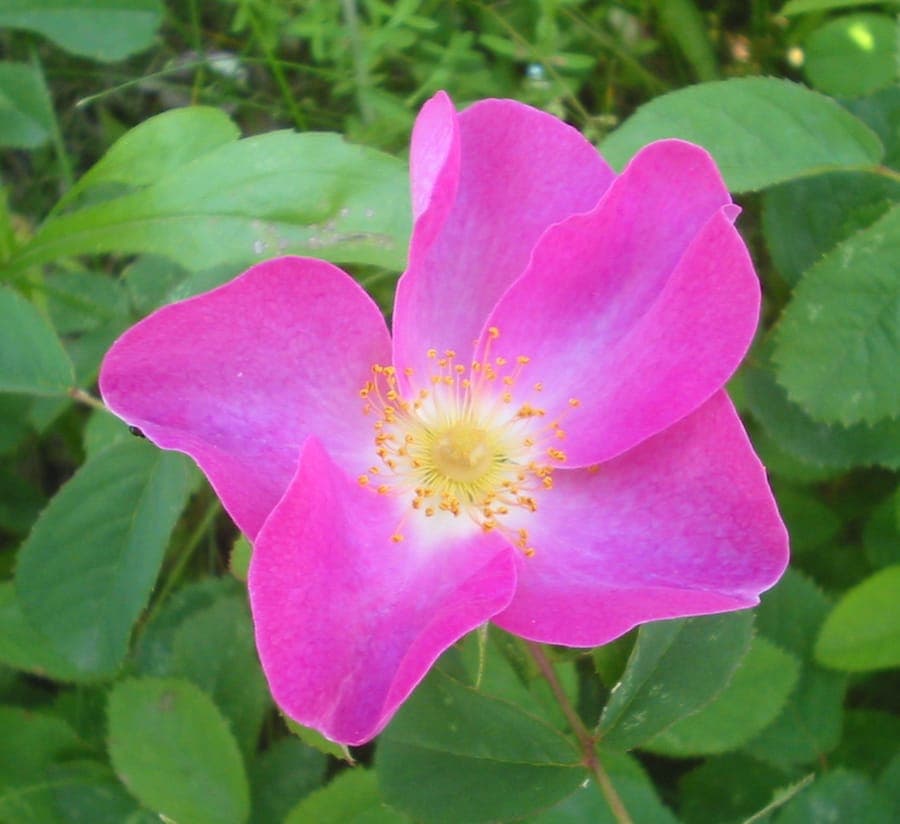
Wikimedia Commons / CC BY-SA 3.0, via Wikimedia Commons
Hungarian rose: complete guide
Rosa gallica
Want to see Hungarian rose: complete guide in your garden?
Full design in HD: €7.99
Overview
Rosa gallica, commonly known as the Hungarian rose, is one of the oldest cultivated roses in Europe. Native to regions stretching from France to Eastern Europe and parts of Western Asia, this subshrub has been grown in gardens for over a thousand years. Reaching heights of 100–120 cm and spreading up to 80 cm wide, it's a compact yet impactful addition to any garden. Its historical significance and reliable performance make it a favorite among gardeners who value resilience and timeless beauty. On gardenworld.app you can create a garden layout that highlights Rosa gallica's form and color, especially when paired with complementary perennials.
Unlike modern hybrid teas, Rosa gallica blooms once per season, but the display is rich and highly fragrant. The plant produces dense, bushy growth with stiff, thorny canes and excellent disease resistance when grown in proper conditions. It's particularly well-suited to cottage gardens, heritage landscapes, and low-maintenance borders. In the UK and US, it's increasingly popular in xeriscaping due to its drought tolerance once established.
Appearance & bloom cycle
The Hungarian rose features deep green, pinnate leaves with a slightly greyish underside, giving the foliage a soft texture. Flowers appear in late spring to early summer, peaking in mid-June. Each bloom is 6–8 cm in diameter, with 15–25 petals, ranging from deep crimson to soft pink depending on the variety. The scent is rich and spicy, more pronounced in the morning and evening.
Flowering is typically once yearly, lasting 3–4 weeks. After blooming, the plant develops small, oval hips that turn reddish-brown by autumn. These persist into winter, providing food for birds and visual interest. The plant's growth habit is upright and bushy, forming a dense thicket over time, ideal for structure in mixed plantings.
Ideal location
Choose a spot with at least 7 hours of direct sunlight daily. Rosa gallica thrives in full sun but can tolerate light afternoon shade in hotter climates. In USDA zones 6–8, a south-facing wall or fence offers ideal exposure, reflecting heat and encouraging robust flowering. Avoid north-facing positions or heavily shaded areas, as these lead to leggy growth and poor bloom production.
Air circulation is critical-plant with at least 60–80 cm clearance from other shrubs to prevent fungal diseases. Coastal gardens suit this rose well, provided salt spray is not excessive. On gardenworld.app you can simulate sun exposure and spacing to ensure your Hungarian rose gets optimal conditions from day one.
Soil requirements
This rose prefers well-drained, loamy soil with a neutral to slightly alkaline pH (7.0–7.5). Heavy clay soils should be amended with grit and compost to improve drainage. Sandy soils benefit from added organic matter like composted manure or leaf mould to retain moisture and nutrients.
Avoid waterlogged conditions-root rot is the most common issue in poorly drained sites. A 5–8 cm mulch layer of bark or straw in spring helps retain moisture and suppress weeds. Keep mulch away from the crown to prevent collar rot. Do not use fresh manure, as it can burn roots and encourage disease.
Free preview
Want to see Hungarian rose: complete guide in your garden? Make a free preview of your design.
Watering
Water deeply but infrequently. Young plants need consistent moisture in their first growing season-about once every 5–7 days during dry spells. Mature specimens are drought-tolerant and rarely need supplemental watering beyond prolonged dry periods (3+ weeks without rain).
Always water at the base to keep foliage dry and reduce the risk of black spot and powdery mildew. Early morning is the best time, allowing foliage to dry before nightfall. Rainwater is preferable, as tap water with high lime content can gradually alter soil pH.
Pruning
Pruning is minimal. In late winter or early spring (February to March), remove dead, damaged, or crossing canes. Cut back the oldest woody stems by about one-third to encourage new basal growth. Use clean, sharp secateurs and disinfect between cuts to avoid spreading pathogens.
Do not prune heavily-Rosa gallica flowers on old wood, so aggressive cutting reduces bloom potential. Light shaping after flowering is acceptable but generally unnecessary. Avoid pruning in autumn, as this can stimulate tender growth vulnerable to frost.
Maintenance calendar
- January: Inspect for winter damage, remove broken branches
- February: Begin light pruning, check for pests
- March: Complete pruning, apply mulch
- April: Monitor for aphids, apply organic deterrent if needed
- May: Keep soil moist as buds form
- June: Peak bloom period, avoid pruning
- July: Remove spent flowers lightly, leave hips for winter interest
- August: No feeding, water only in extended drought
- September: Replenish mulch, watch for leaf drop
- October: Clear fallen leaves to reduce disease risk
- November: Protect base with compost or straw in colder zones
- December: Minimal care, check for frost heave
Winter hardiness
Rosa gallica is extremely cold-hardy, surviving temperatures down to -20°C (USDA zones 4–8). It reliably goes dormant in winter and resumes growth in spring. In milder zones, some foliage may persist. No winter protection is usually needed, but a mulch layer around the base helps prevent frost heaving in areas with freeze-thaw cycles.
Avoid covering the plant with plastic or non-breathable materials. Let it experience natural winter conditions-this strengthens its hardiness. The hips add winter appeal and support local wildlife.
Companion plants
Pair the Hungarian rose with plants that share its sun and soil needs. Lavender (Lavandula angustifolia), catmint (Nepeta × faassenii), and yarrow (Achillea millefolium) work well. Low-growers like thyme or sedum help suppress weeds and reduce soil splash.
Avoid invasive groundcovers or plants with high water demands. Maintain spacing to ensure airflow. The rose's upright form contrasts beautifully with softer, billowy perennials in a cottage garden setting.
Closing
Rosa gallica is a dependable, fragrant, and historically rich rose that earns its place in any garden. It asks for little but gives back with abundant blooms, winter structure, and ecological value. Plant it in a sunny spot with good drainage, and it will thrive for years. Find healthy stock at reputable garden centres across the UK and US, where staff often carry heritage varieties. With the right care, this old-world rose will become a centrepiece in your garden's story.
Want to see Hungarian rose: complete guide in your garden? Make a free preview of your design.
Upload a photo, pick a style, and get a photorealistic design with plant list in under a minute.
Full design in HD: €7.99


Identify this plant in your own garden
Take a photo of a plant in your garden and see which one it is.
Similar plants
Siberian crab apple: complete guide
Malus x robusta
Complete guide to the Siberian crab apple (Malus x robusta): location, soil, pruning, winter hardiness and the best companion plants for your garden.
Chinese flowering crabapple (Malus x spectabilis): complete guide
Malus x spectabilis
Meet the Chinese flowering crabapple (Malus x spectabilis): a classic spring bloomer with carmine buds and pink blossom.
Potentilla crassinervia: complete guide
Potentilla crassinervia
Potentilla crassinervia, the Corsican cinquefoil, grows wild on Corsica and Sardinia's peaks. Discover how to grow this hardy alpine rock garden gem.