 Perennials
Blue wild indigo is a stately, long-lived perennial with blue-green trifoliate leaves and striking racemes of indigo-blue, lupin-like flowers in May and June. After flowering, decorative inflated dark seed pods appear that remain attractive into winter. The plant forms a sturdy, shrub-like clump that grows larger and more impressive each year.
Want to see Blue Wild Indigo in your garden?
Full design in HD: €7.99
Want to see Blue Wild Indigo in your garden? Make a free preview of your design.
Upload a photo, pick a style, and get a photorealistic design with plant list in under a minute.
Full design in HD: €7.99


Characteristics
- Sun
- Full sun
- Water
- Low
- Height
- 90–120 cm
- Spread
- 60–90 cm
- Hardiness zone
- 3–9
- Family
- Fabaceae
- Evergreen
- No
- Flower colors
- blue
- Wildlife value
- bees, butterflies
Bloom period
Care guide
Plant in full sun in well-drained soil. Once established, the plant is very drought-tolerant thanks to a deep root system. Do not transplant — the long taproot makes this virtually impossible. No feeding needed; as a legume, the plant fixes its own nitrogen.
Pruning tips
Leave the decorative seed pods in place through winter for garden interest. Cut dead foliage at the base in late autumn or early spring. The plant needs no further pruning and grows compactly without staking.
Good companions
 Perennials
Echinacea purpurea
Purple Coneflower
Purple Coneflower is a sturdy perennial with distinctive pink-purple petals surrounding an orange-brown cone. The flowers appear from July to September and are a magnet for butterflies and bees. In autumn and winter, the seed heads attract goldfinches and other seed-eating birds.
 Perennials
Amsonia tabernaemontana
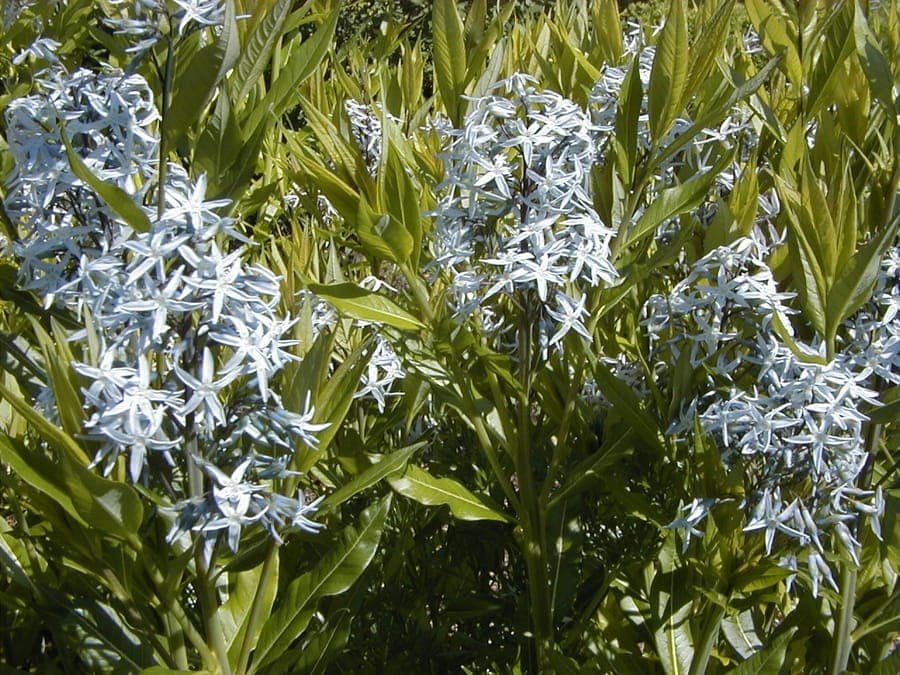
Eastern Bluestar
Eastern bluestar is an elegant, low-maintenance perennial with willow-like leaves and ice-blue, star-shaped flowers in loose clusters in May and June. The narrow foliage turns a stunning golden yellow in autumn, making the plant decorative across two seasons. Over the years it forms a sturdy, vase-shaped silhouette.
 Perennials
Penstemon digitalis
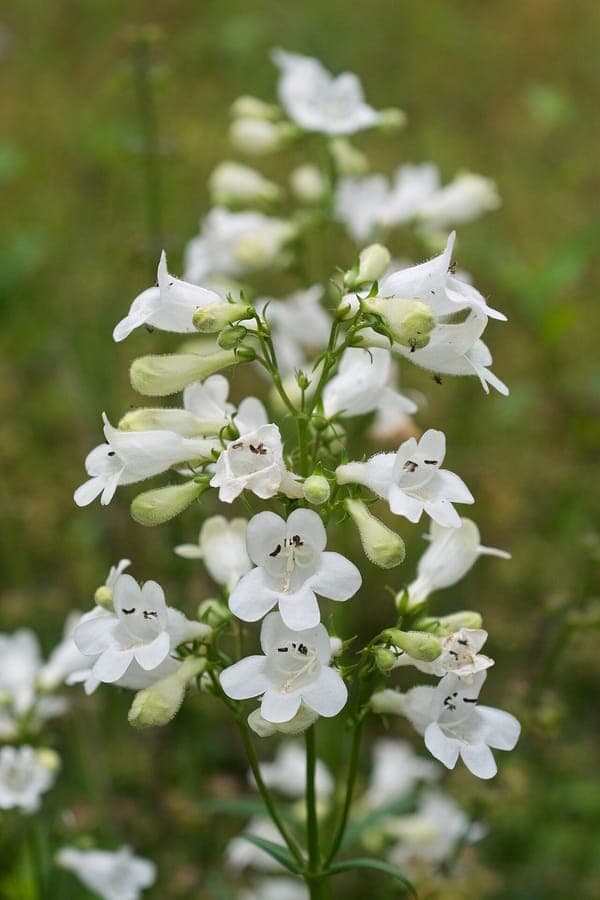
Foxglove Beardtongue
Foxglove beardtongue is a graceful North American native perennial with striking clusters of white, tubular flowers on elegant upright stems in June and July. The blooms attract a wide range of pollinators. The dark green foliage often has a reddish flush, especially in spring. An excellent choice for naturalistic plantings and prairie gardens.
Garden design in 1 minute
Upload a photo, pick a style. Get plant list, technical sheet and care description.
Make my previewFull design in HD: €7.99
How garden design worksHow plant identification works
View examplesAs an Amazon Associate we earn from qualifying purchases. It costs you nothing extra.