
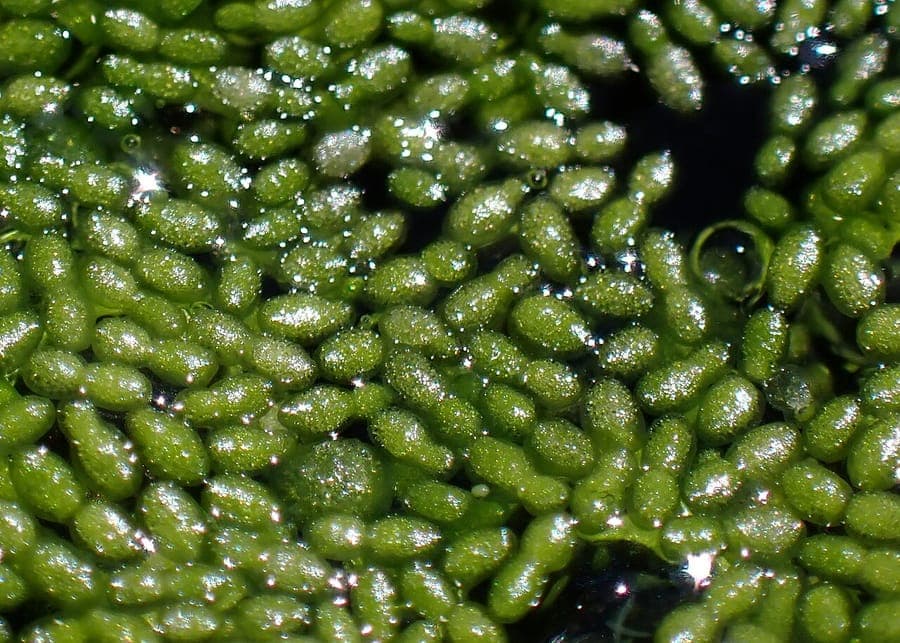
Krzysztof Ziarnek, Kenraiz / CC BY-SA 4.0, via Wikimedia Commons
Rootless duckweed: complete guide
Wolffia arrhiza
Want to see Rootless duckweed: complete guide in your garden?
1 minute, no credit card
Rootless Duckweed: Guide to This Tiny Aquatic Plant
Overview
Rootless duckweed (Wolffia arrhiza), also called spotless watermeal, is among the world's smallest flowering plants. This minute aquatic plant belongs to the family Araceae and is native to regions across Africa, Europe to North India, and South Korea to the Philippines. With dimensions of just 1 to 2 millimeters, this plant is a biological marvel that captivates aquarium enthusiasts and water gardeners worldwide.
Despite its minimal size, rootless duckweed possesses impressive properties. The plant is completely rootless, making it unique among aquatic vegetation. This quality renders it exceptionally suitable for various water garden applications. Its floating growth and rapid multiplication make this species ideal for educational purposes and experimental gardening. At gardenworld.app, we help you integrate this unique plant into your aquatic design projects with confidence.
Appearance and Bloom
Rootless duckweed is nearly invisible to the naked eye. The plant consists of tiny, elliptical fronds with minimal leaf structure. Each frond is equipped with a single pouch (root pocket) rather than true roots, hence the name 'rootless.' Color ranges from light green to bright green, depending on nutrient availability and light exposure.
Flowering is rare and difficult to observe due to the extremely small flower structures. The flowers are greenish and barely visible to unaided eyes. The plant multiplies primarily through vegetative budding, resulting in rapid population growth under favorable conditions.
Given its microscopic dimensions, this plant is visually less prominent in traditional water gardens but proves extremely valuable for aquariums and specialized water systems.
Ideal Location
Rootless duckweed thrives best in shallow waters with abundant light. The ideal location is a spot receiving direct sunlight, minimum 6 to 8 hours daily. In garden ponds, this works well for quiescent aquatic systems with minimal water movement, as the plant prefers calm water.
In aquariums, position the plant close to lighting fixtures. Warmer locations favor faster growth; temperatures between 18 and 25 degrees Celsius are optimal. For aquarium installations, place the plant in low water-movement zones where it can drift and gradually spread across the surface.
Avoiding depletion through competition with other water plants is essential. Position rootless duckweed in dedicated sections or small containers where it can dominate without disturbance.
Soil Requirements
As a completely rootless water plant, rootless duckweed has no direct soil needs. However, as part of a larger water ecosystem, nutrient-rich substrate contributes to the health of the entire system. Micronutrients in water are essential for this plant.
In aquariums or artificial water systems, liquid fertilizers work excellently. Add micronutrients once weekly, especially iron, potassium, and magnesium. The pH value should remain between 7.0 and 7.5, so neutral to slightly alkaline water is ideal.
Water rich in nitrate and phosphate promotes faster growth. This makes rootless duckweed suitable for aquaponics systems and advanced water gardens. Good water filtration helps stabilize nutrient levels.
Watering
Rootless duckweed inhabits water permanently, so traditional 'watering' doesn't apply. Instead, regularly add fresh water to replace evaporated water. Maintain consistent water levels, especially in aquariums.
Water must remain clean and free from excessive algae growth. Change 20 to 30 percent of aquarium water weekly to maintain water quality. In garden ponds, ensure good water circulation with pumps or fountains.
Water quality is crucial. Ammonia, nitrite, and nitrate must stay within safe limits. Regular water quality testing helps keep the plant healthy. For aquarium use, employ a water test kit for optimal conditions.
Free design
Want to see Rootless duckweed: complete guide in your garden? Make a free design now.
Pruning and Maintenance
Rootless duckweed requires minimal pruning due to its extremely small size. Should the plant spread too rapidly and cover excessive water surface, you can simply remove portions using a small net or siphon.
Regular inspection is important to prevent unwanted algae growth. Should the plant turn yellow or show growth stasis, this might indicate nutrient deficiency. Increase fertilizer application in such cases.
Regularly remove dead or decaying plant material to maintain water quality. Ensure the plant doesn't become too dense, allowing light penetration and water exchange to continue. Gentle thinning by carefully removing a few fronds promotes a healthier population.
For aquarium use, you can employ a small floating plant container to keep the plant confined and prevent spreading into filter sections.
Maintenance Calendar
Spring (March-May): Begin more intense lighting as daylight increases. Add micronutrients and increase water changes to weekly. Check for infestations.
Summer (June-August): Provide adequate shade to prevent excessive algae growth. Change water twice weekly. Monitor temperature rise; cooling may be necessary in extreme heat.
Fall (September-October): Gradually decrease lighting and nutrient application. Change water once weekly. Prepare for lower winter temperatures.
Winter (November-February): Maintain minimal lighting and feeding. Change water every two weeks. Regularly monitor for fungal or bacterial issues in stagnant water.
Winter Hardiness
Rootless duckweed is sensitive to freezing and cannot survive winters outdoors in cold climates. The plant dies at temperatures below 5 degrees Celsius. In the UK, northern Europe, and cold regions, the plant must be brought indoors in autumn if growing outdoors.
In heated aquariums, the plant survives winters effortlessly. Maintain temperatures between 15 and 25 degrees Celsius for optimal comfort. For winter survival in ponds, provide insulation covering or relocate the plant to an unheated greenhouse.
In frost-free regions, rootless duckweed can potentially overwinter outdoors if water doesn't freeze completely. However, growth will significantly slow down.
Companion Plants and Combinations
Rootless duckweed works excellently with other floating water plants and aquatic vegetation. Ideal companions include other dwarf aquatic plants such as azolla, small Spirodela species, and other Wolffia types. Together, these create a complete floating ecosystem.
For aquariums, rootless duckweed pairs perfectly with rooted stem plants, sword plants, and other aquarium classics. The microscopic size of rootless duckweed doesn't interfere with other plants and contributes to biological balance.
In garden ponds, combine rootless duckweed with water lilies, pickerel rush, and other aquatic plants. This combination creates layering and diversity within the water ecosystem. For educational aquariums, you can use rootless duckweed alongside other fast-growing variants to demonstrate growth patterns.
Closing Remarks
Rootless duckweed is a fascinating plant for those interested in aquatic ecology and experimental gardening. Despite its minimal size, it plays an important role in water ecosystems, from natural habitats to artificial water systems.
This plant is ideal for aquariums, educational projects, and advanced water gardens. At gardenworld.app, we appreciate the innovative possibilities rootless duckweed offers. For UK aquarists: rootless duckweed is available through specialized aquarium shops and online retailers such as Aquarium Gardens and Tropical Plant suppliers. In North America, check with local aquarium stores and online platforms like Aqueon and The Planted Tank.
Meticulous maintenance of water quality and regular monitoring ensure success with this unique plant. Enjoy cultivating this microscopic wonder in your aquarium or water gardens!
Want to see Rootless duckweed: complete guide in your garden? Make a free design now.
Upload a photo, pick a style, and get a photorealistic design with plant list in under a minute.
No credit card required


Similar plants
Arrowhead vine: complete guide
Syngonium auritum
Everything about Syngonium auritum, the tropical five-fingers houseplant. Care, location, watering, and pruning explained clearly for beginners and enthusiasts.
Minute duckweed: complete guide to Lemna perpusilla
Lemna perpusilla
Everything about Lemna perpusilla, the minute duckweed: ecology, pond management, water quality and care in garden water features.
Dead horse arum lily: complete guide
Helicodiceros muscivorus
Everything about the dead horse arum lily (Helicodiceros muscivorus): growing conditions, spectacular bloom, thermogenesis, and care for this Mediterranean aroid.