
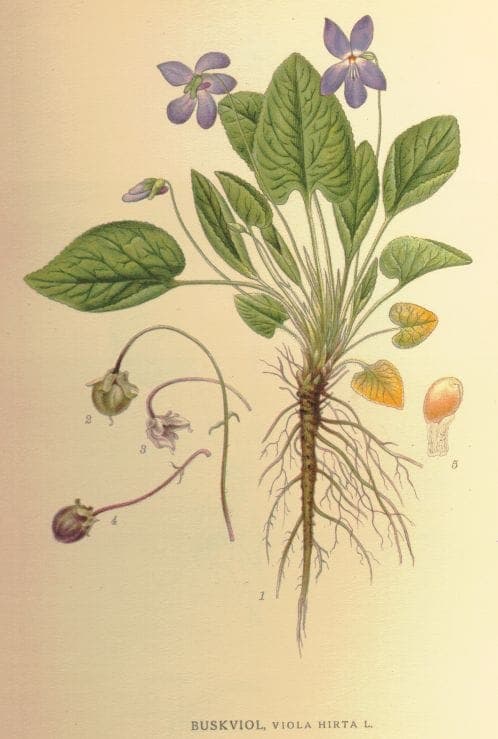
Carl Axel Magnus Lindman / Public domain, via Wikimedia Commons
Hairy violet: complete guide
Viola hirta
Want to see Hairy violet: complete guide in your garden?
1 minute, no credit card
Overview
The hairy violet (Viola hirta) is a small, frost-hardy plant native to much of Europe. With its delicate purple flowers and dark green, hairy foliage, it adds a subtle charm to borders and wild garden areas. This unassuming plant is prized for its hardiness and authentic woodland character.
Appearance and bloom
The hairy violet reaches heights of only 10-15 cm, growing in a compact mound. Purple to violet flowers appear in spring (March to May), each with a small yellow throat. The heart-shaped leaves are distinctly hairy, giving the plant its common name. After flowering, small seed pods develop and are dispersed by ants.
Ideal location
This violet thrives in dappled shade but also tolerates full sun positions. It loves spots beneath shrubs or at woodland edges. When designing natural garden schemes on gardenworld.app, hairy violets make perfect understory plants.
Soil requirements
The hairy violet is not fussy about soil type. It grows in most soils but prefers moderately moist, well-draining earth. Heavy clay benefits from the addition of sand or compost to improve structure.
Free design
Want to see Hairy violet: complete guide in your garden? Make a free design now.
Watering
This plant has moderate water needs. During dry spells, occasional watering helps, but waterlogging must be avoided. Once established, it becomes quite drought-tolerant, especially in cooler climates.
Pruning
Pruning is rarely necessary. After flowering, you can remove tired foliage. If self-seeding becomes excessive, remove a few seed heads before they mature.
Maintenance calendar
- March-May: flowering period, check soil moisture
- June: gentle weeding around the plant
- September-October: allow some seed set for natural spread
- November-February: dormancy, minimal care needed
Winter hardiness
The hairy violet is fully hardy (USDA zones 4-8). It actually prefers cold winters and flowers better after frost exposure.
Companion plants
Pair with other spring bloomers such as snowdrops, crocuses, and primrose. It looks wonderful along rock gardens and between stepping stones.
Closing
The hairy violet deserves a place in every naturalistic garden design. Requiring minimal care while delivering maximum charm, it brings early color when you need it most. Explore gardenworld.app for more ideas on incorporating woodland wildflowers into your garden plans.
Want to see Hairy violet: complete guide in your garden? Make a free design now.
Upload a photo, pick a style, and get a photorealistic design with plant list in under a minute.
No credit card required


Similar plants
Woodland white violet: complete guide
Viola blanda
Discover the woodland white violet (Viola blanda), a fragrant North American groundcover for shady gardens. Site, soil, and care covered in full.
Canada violet: complete guide
Viola canadensis
Learn to grow the Canada violet (Viola canadensis), a tall, fragrant woodland violet for shade borders. Site, soil, pruning, and hardiness explained.
Mont Cenis violet: complete guide
Viola cenisia
Grow the Mont Cenis violet (Viola cenisia), an alpine cushion plant from the Alps for rock gardens and troughs. Site, soil, and hardiness explained.