
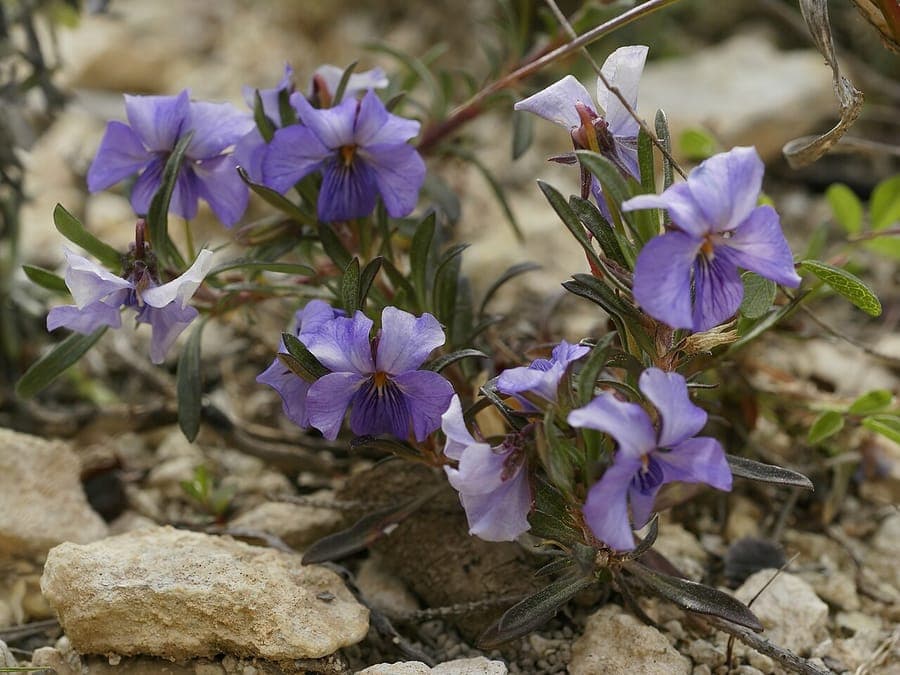
Hans Hillewaert / CC BY-SA 3.0, via Wikimedia Commons
Viola arborescens: complete guide to shrubby violet care
Viola arborescens
Want to see Viola arborescens: complete guide to shrubby violet care in your garden?
1 minute, no credit card
Overview
Viola arborescens, the shrubby violet, is a fascinating species from the Violaceae family. Native to the western Mediterranean basin, particularly southern France, Spain, Portugal, and North Africa, this plant grows as a true semi-shrub with woody stems and persistent foliage, unlike herbaceous violet relatives.
This elegant specimen offers years of colorful bloom during warm seasons and adds character to Mediterranean or dry gardens. Its compact growth and abundant flowers make it ideal for borders, pergolas, and rock gardens.
Appearance and Bloom
The shrubby violet reaches approximately 30 to 60 centimeters tall with similar spread. The plant forms a compact, attractive shape with dense foliage. Leaves are small, light green, with fine texture.
Flowers are the showpiece: appearing as small, dark purple or violet-blue blooms, sometimes with white centers. Flowering begins in autumn and may continue into spring, depending on climate and care.
Ideal Location
This plant thrives in warm, sunny positions. Ensure at least 6-8 hours of direct sunlight daily. Less light reduces flowering and produces loose growth. The plant accepts partial shade, especially in very hot climates.
The shrubby violet grows well in containers, advantageous for space-limited gardens. Ensure good drainage in pots.
Soil
The shrubby violet is undemanding regarding soil. It performs best in well-draining soil, even if somewhat lean in nutrients. A pH between 6.5 and 7.5 is ideal. Excessive moisture is worse for this plant than drought; waterlogging causes root rot.
Avoid heavy clay soil; add sand or perlite to improve drainage. In pots, quality potting mix is essential.
Free design
Want to see Viola arborescens: complete guide to shrubby violet care in your garden? Make a free design now.
Watering
Once established, the shrubby violet is quite drought-tolerant. During the growing season (autumn-spring), water regularly but follow the rule: better dry than wet. In summer it requires less water and can endure dry periods.
Warning: excessive winter water, especially combined with cold, poses serious risk. Plant on elevated sites or in well-draining pots.
Pruning
The shrubby violet requires minimal pruning, though light shaping improves appearance. After flowering, remove spent blooms to encourage additional flowers. Use clean pruning shears to prevent disease spread.
If the plant becomes overgrown, carefully cut back after flowering. Remove dead branches and weak growth points.
Maintenance Calendar
July-August: Trim overgrown material; check for pests. September-October: Prepare for flowering; water regularly. November-February: Flowering period; deadhead and minimize water. March-April: Final flowers; light pruning after bloom for form. May-June: Rest period; minimal water, minimal maintenance.
Winter Hardiness
Viola arborescens has only limited winter hardiness. In temperate climates such as the UK it may survive outdoors with frost protection. In harsher regions, it is safer to pot and bring indoors during winter.
Companion Plants
This shrubby violet is perfect alongside other Mediterranean plants. It looks beautiful between lavender, sage, and santolina. Combined with cacti and succulents, it creates lovely compositions. Avoid planting with water-lovers.
Conclusion
The shrubby violet deserves greater attention in European gardens. With elegant growth, years of blooming, and easy care, it suits anyone with warmer garden spots. Try this Mediterranean classic and enjoy its flowering abundance.
Seedlings are available at garden centers. Choose healthy plants with full flower buds. Visit gardenworld.app for more garden plant guides.
Want to see Viola arborescens: complete guide to shrubby violet care in your garden? Make a free design now.
Upload a photo, pick a style, and get a photorealistic design with plant list in under a minute.
No credit card required


Similar plants
Woodland white violet: complete guide
Viola blanda
Discover the woodland white violet (Viola blanda), a fragrant North American groundcover for shady gardens. Site, soil, and care covered in full.
Canada violet: complete guide
Viola canadensis
Learn to grow the Canada violet (Viola canadensis), a tall, fragrant woodland violet for shade borders. Site, soil, pruning, and hardiness explained.
Mont Cenis violet: complete guide
Viola cenisia
Grow the Mont Cenis violet (Viola cenisia), an alpine cushion plant from the Alps for rock gardens and troughs. Site, soil, and hardiness explained.