
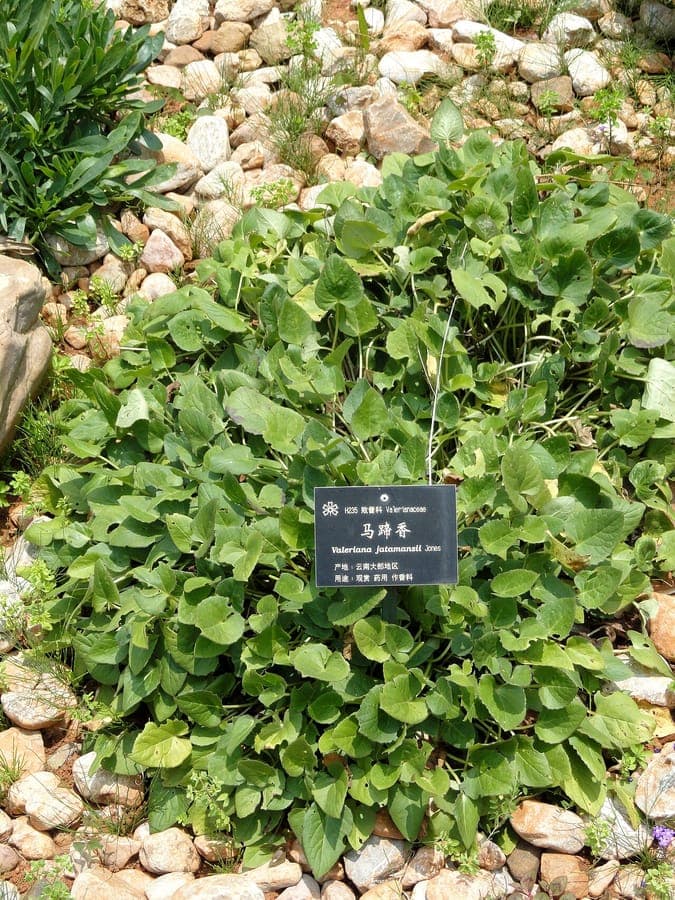
Daderot / Public domain, via Wikimedia Commons
Indian Valerian: complete guide
Valeriana jatamansi
Want to see Indian Valerian: complete guide in your garden?
1 minute, no credit card
Overview
Indian Valerian (Valeriana jatamansi) is a fascinating alpine plant originating from the Himalayan range and surrounding regions. Known for its powerfully aromatic roots and leaves, this plant has been used for centuries in Ayurvedic and traditional medicine. With its lovely blooms and distinctive fragrance, it makes a unique addition to a medicinal or herb garden.
Appearance and Bloom
Indian Valerian grows as a compact shrub with long, dark green leaves that provide year-round interest. The plant produces soft pink to white flowers in dense clusters during summer months. These blooms attract pollinators and enhance the plant's ornamental value. The fragrance is strongest in the roots and stems rather than the flowers themselves.
Ideal Location
This Himalayan plant thrives best in locations with abundant light and good air circulation. Plant in a spot receiving at least 5-6 hours of direct sunlight daily. The plant prefers slightly elevated locations where water does not stagnate. In mountainous areas and higher elevation gardens, it excels.
Soil
Indian Valerian requires well-draining, nutrient-rich soil. Enrich the soil with humus and organic matter. A pH between 6 and 7 is ideal. The plant is quite robust and tolerates various soils provided they drain well and remain not permanently wet.
Watering
Water regularly, especially during growing seasons. Allow the soil to dry slightly between waterings. Avoid waterlogging which can cause rot. Provide extra water during dry periods; be cautious during wet seasons.
Free design
Want to see Indian Valerian: complete guide in your garden? Make a free design now.
Pruning
Pruning is mainly needed after flowering to keep the plant compact. Remove spent flower clusters. Light pruning in spring improves form. Prevent the plant from becoming unruly through regular cutting back.
Maintenance Calendar
Spring: Prune back and start feeding. Summer: Regular watering and care; flowering period. Autumn: Root harvesting possible; reduce feeding. Winter: Minimal care; protect against frost.
Winter Hardiness
Indian Valerian is reasonably hardy but needs protection in harsh winters. In the Netherlands and Belgium, it can survive in sheltered locations or with protection like mulch. In mountainous regions, it is fully hardy. Protect young plants with straw or leaves.
Companion Plants
Combine with other medicinal herbs like St. John's Wort, Oregano, or other alpine herbs. The plant grows well with others requiring moist but well-draining soil. Avoid growing next to highly invasive plants.
Closing Thoughts
Indian Valerian is an excellent choice for those establishing a medicinal garden. With its aroma, blooms, and traditional value, it offers numerous benefits. Seeds and cuttings are available from specialized nurseries and online suppliers.
Where to Buy
Find seeds and young plants at major garden centers. Online ordering via gardenworld.app/en or gardenworld.app/nl offers convenience and expert guidance.
Want to see Indian Valerian: complete guide in your garden? Make a free design now.
Upload a photo, pick a style, and get a photorealistic design with plant list in under a minute.
No credit card required


Similar plants
Yellow honeysuckle (Lonicera tragophylla): complete guide
Lonicera tragophylla
Meet yellow honeysuckle (Lonicera tragophylla): a Chinese climber with large golden flowers that thrives in partial shade.
Lonicera korolkowii: complete guide
Lonicera korolkowii Stapf
Discover blueleaf honeysuckle, a vigorous shrub with beautiful flowers. Guide on growing, shaping and why this Asian climbing plant is perfect for gardens.
Lonicera oblongifolia: complete guide
Lonicera oblongifolia Hook.
Discover swamp fly honeysuckle, a North American woodland plant. Guide on growing, caring and why this native species is valuable for gardens.