
Cillas / CC BY-SA 4.0, via Wikimedia Commons
Coralberry: complete guide
Symphoricarpos orbiculatus
Want to see Coralberry: complete guide in your garden?
1 minute, no credit card
Coralberry: Complete Guide
Overview
Coralberry (Symphoricarpos orbiculatus) is a robust hedging shrub from the Caprifoliaceae family. This North American shrub is known for producing red to pink berries that remain visible deep into winter. With its strong root system and bird-friendly character, coralberry is an ideal choice for difficult garden corners, erosion control, and natural hedging.
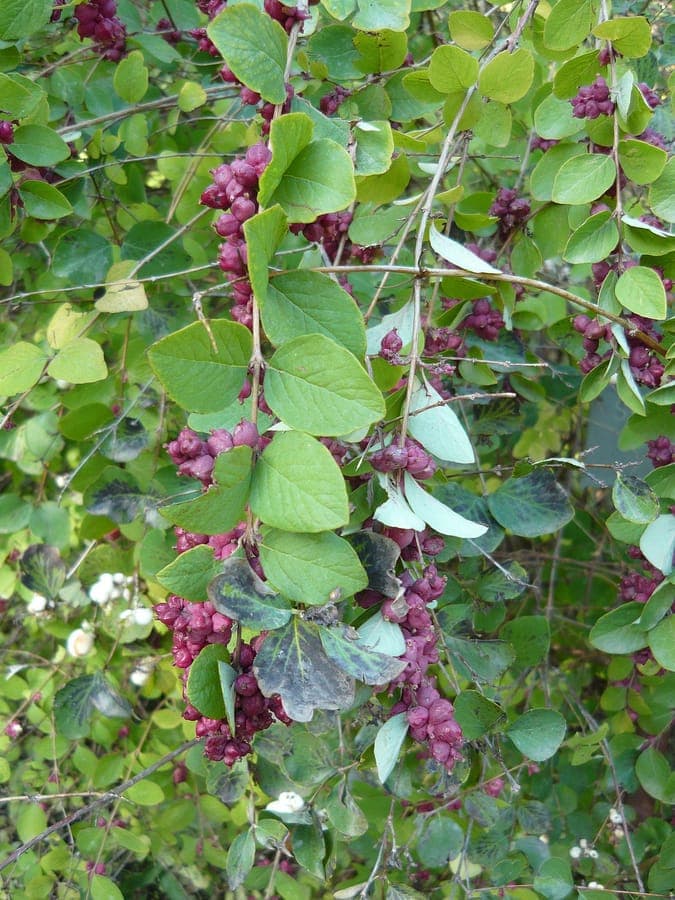
Coralberry reaches a height of 1 to 2 meters and forms into a broad, dense shrub with plenty of lateral growth. In autumn, the red, glossy berries appear, creating a beautiful contrast with the green foliage.
Appearance and Bloom
Coralberry has a compact appearance with fine, oval leaves that have a soft texture. The foliage is bright green and can become slightly purple-tinged in autumn. In summer, the plant produces small, grayish flowers that form densely along the branches.
After flowering, red to pink berries appear, which are the main distinguishing feature of this plant. These berries grow in large numbers and hang densely together, creating a very decorative effect. The berries remain visible from September through January and provide ample bird food.
The plant retains its leaves fairly late into the season, meaning it provides substantial seasonal interest.
Ideal Location
Coralberry grows well in full sun to partial shade, although it produces more berries in full sun. The ideal location features:
- At least 6 hours of direct sunlight
- Well-ventilated location
- Protection from strong winds
- Visible position where the red berries can truly shine
Coralberry is very tolerant of urban environments and pollution, making it perfect for city gardens and industrial areas.
Soil
Coralberry is very adaptable to different soil types. This plant grows well on dry, poor soils, and even tolerates alkaline soils. For optimal results:
- Well-draining soil (essential)
- Tolerant of dry soils
- Functions on poor soil
- pH 5.5 to 7.5
When planting, don't add large amounts of fertilizer; this plant performs well on lean soils.
Free design
Want to see Coralberry: complete guide in your garden? Make a free design now.
Watering
Coralberry is very drought-tolerant and requires limited watering after establishment. In the first year, water regularly. After that, the plant is very self-sufficient.
Watering guidelines:
- Regular watering in planting year
- Very drought-tolerant after establishment
- Avoid waterlogging
- Water mainly during extreme drought
This makes coralberry ideal for gardeners who can provide minimal maintenance.
Pruning
Coralberry requires minimal maintenance and pruning. This plant can grow for years without pruning. If pruning is needed, do it in late winter:
Pruning tips:
- Prune in February-March
- Remove only dead branches
- Maintain natural shape
- Don't maintain formal pruning
Coralberry is tolerant of hard pruning if necessary.
Maintenance Calendar
Below you'll find a simple maintenance guide:
- March: Optional pruning
- April-June: Minimal care needed
- July-August: Flower development
- September-January: Berry stage
- February: Winter period
Winter Hardiness
Coralberry is very winter-hardy and grows in USDA Hardiness Zone 5-8. The plant tolerates temperatures down to approximately -24 degrees Celsius. It remains green fairly late into the season.
The red berries remain visible and provide color during the long, gray winter months.
Companion Plants
Coralberry grows well alongside:
- Other hedging plants
- Bird food plants
- Dark green evergreen conifers
- Dark foliage plants
- Other fruit-bearing shrubs
Closing Thoughts
Coralberry is an extremely low-maintenance plant for the garden. With its red berries and bird-friendly character, it's a plant that adds real value. Source quality specimens from specialized nurseries.
Want to learn more about bird-friendly gardens and hedging plants? Visit gardenworld.app/nl and gardenworld.app/en.
Want to see Coralberry: complete guide in your garden? Make a free design now.
Upload a photo, pick a style, and get a photorealistic design with plant list in under a minute.
No credit card required


Similar plants
Yellow honeysuckle (Lonicera tragophylla): complete guide
Lonicera tragophylla
Meet yellow honeysuckle (Lonicera tragophylla): a Chinese climber with large golden flowers that thrives in partial shade.
Lonicera korolkowii: complete guide
Lonicera korolkowii Stapf
Discover blueleaf honeysuckle, a vigorous shrub with beautiful flowers. Guide on growing, shaping and why this Asian climbing plant is perfect for gardens.
Lonicera oblongifolia: complete guide
Lonicera oblongifolia Hook.
Discover swamp fly honeysuckle, a North American woodland plant. Guide on growing, caring and why this native species is valuable for gardens.