
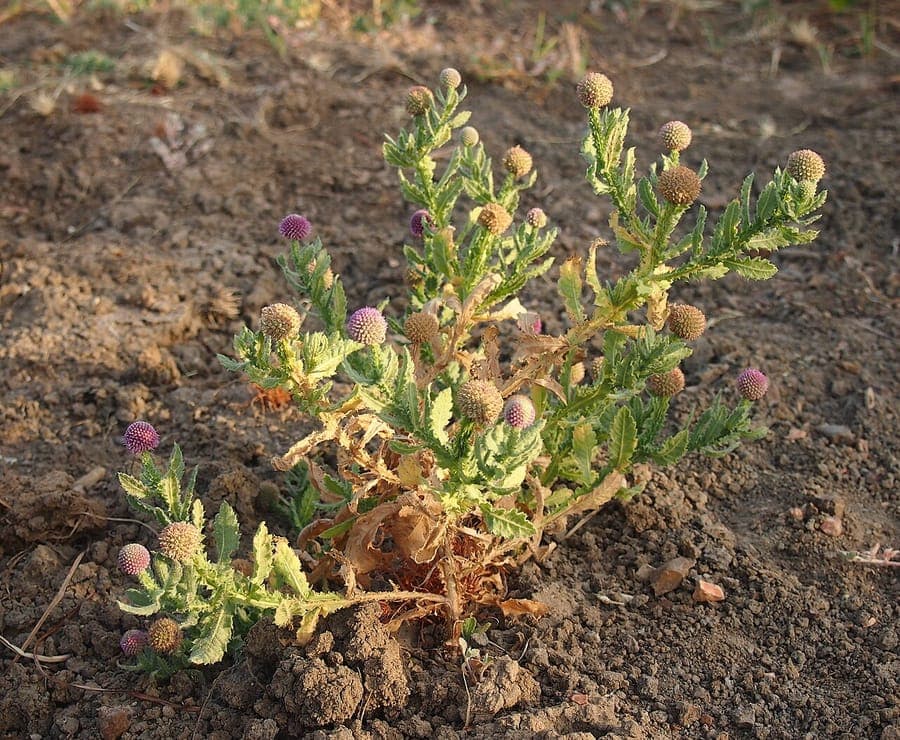
Mark Marathon / CC BY-SA 4.0, via Wikimedia Commons
East Indian globe thistle: complete guide
Sphaeranthus indicus
Want to see East Indian globe thistle: complete guide in your garden?
1 minute, no credit card
Overview
The East Indian globe thistle (Sphaeranthus indicus) is a low-growing plant belonging to the Asteraceae family (daisy family). This species naturally occurs across tropical Asia, from China to Australia. Its distinctive feature is its round, ball-shaped flower heads that appear in clusters.
Despite the word 'thistle' in its name, this is not a true thistle. It's a herbaceous plant of particular interest to plant collectors seeking exotic species. The plant is small and compact, ideal for the front of borders and containers.
In many countries, this plant is used traditionally in herbal medicine, especially for skin and digestive applications.
Appearance and Bloom
The East Indian globe thistle grows as an herbaceous plant, typically reaching 15-30 centimeters tall. The plant features small, narrow leaves arranged along thin stems.
The flowers are the plant's most distinctive feature. They form small, spherical button clusters that appear in groups. Colors range from white to pale yellow, blooming from early summer through autumn. A flowering plant presents a delightful display of tiny pompoms.
After flowering, seeds develop and can be collected for propagation, though germination is sometimes inconsistent.
Ideal Location
The East Indian globe thistle loves moisture-rich environments. In its native habitats, it often grows in marshy areas. This means it thrives best in consistently moist garden locations.
The plant prefers full sun to partial shade. In very hot climates, some afternoon shade is beneficial.
The plant is frost-sensitive and is typically grown as an annual in temperate climates. In warmer zones, it may behave as a perennial.
Soil Requirements
The East Indian globe thistle performs best in moist, nutrient-rich soil. Work in generous amounts of organic compost before planting.
The plant cannot tolerate completely dry conditions, but also dislikes waterlogging. A 'moist but well-drained' condition is ideal.
A neutral to slightly acidic pH is preferred. Test your soil if possible.
Free design
Want to see East Indian globe thistle: complete guide in your garden? Make a free design now.
Watering
Water regularly. The soil must never dry completely, especially during the growing season. Water early morning or late evening to minimize evaporation.
During rainy periods, you may skip watering. Always check soil moisture before adding water.
Excessive water can cause root rot - ensure good drainage in your planting bed.
Pruning
Pruning is minimal. Remove only dead or damaged material. If the plant becomes overgrown or leggy, pinch the top to encourage branching.
Deadhead spent flowers if you wish to extend the bloom period.
Maintenance Calendar
Early summer: Sow seed or plant out seedlings. Ensure adequate moisture for germination.
Summer: Water regularly. Apply light feeding to encourage growth. Watch for diseases.
Autumn: Flowering continues. Reduce feeding. Prepare for plant aging.
Winter: In temperate climates, the plant dies back. In warm zones, minimal care is needed.
Winter Hardiness
The East Indian globe thistle is not hardy in European winters. Temperatures below 10 degrees Celsius will damage the plant.
In temperate climates, this is typically grown as an annual. Sow seed in spring, allow it to grow through summer, then collect seed for the next year.
In very warm, protected locations, you might attempt winter survival, but this is risky.
Companion Plants
The East Indian globe thistle works well with other moisture-loving plants. Swamp gardens and water feature margins are perfect locations.
Combine with other exotic herbaceous plants for interesting effects. The compact growth makes it suitable for the front of borders.
Conclusion
The East Indian globe thistle is an intriguing plant for collectors seeking something different. Its distinctive button flowers certainly attract attention. With adequate moisture and care, this plant thrives beautifully. Try this unique specimen this season!
For sourcing: Many herb and specialty nurseries stock seeds. Modern online gardening suppliers offer this variety. Visit gardenworld.app for plant sourcing guidance.
Want to see East Indian globe thistle: complete guide in your garden? Make a free design now.
Upload a photo, pick a style, and get a photorealistic design with plant list in under a minute.
No credit card required


Similar plants
Calendula stellata: complete guide
Calendula stellata
Complete guide to Calendula stellata, the star-flowered marigold from Sicily: location, soil, watering and companion planting tips.
Korean chrysanthemum: complete guide
Chrysanthemum x rubellum
Chrysanthemum x rubellum is a hardy autumn perennial with single pink to copper flowers from August to November. Care and combinations.
Helianthus divaricatus: complete guide
Helianthus divaricatus
Helianthus divaricatus is a North American woodland sunflower with yellow summer blooms, ideal for naturalistic borders and shady edges.