
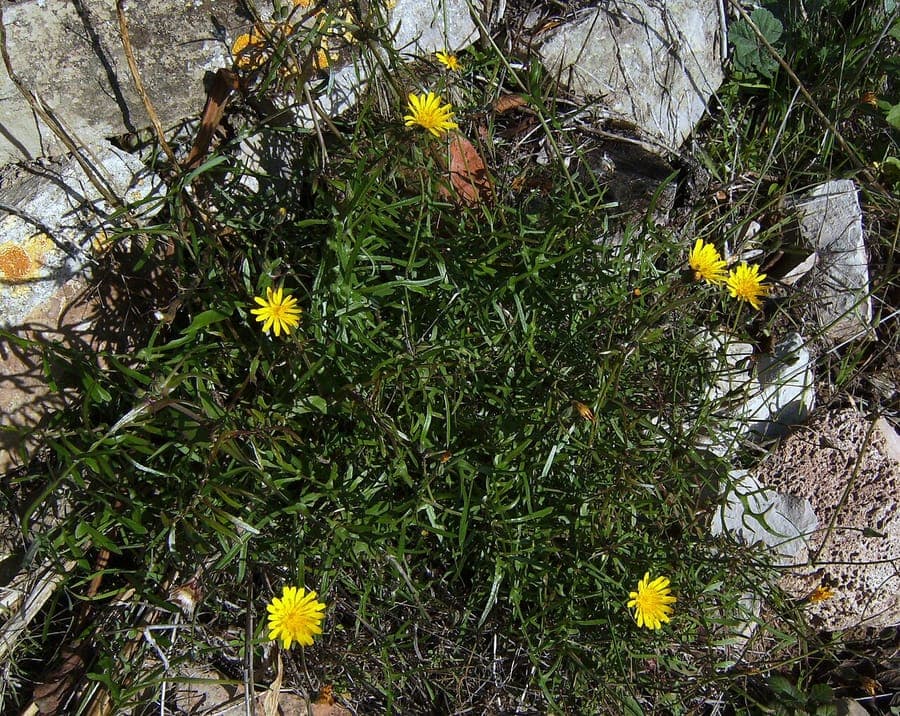
Victor M. Vicente Selvas / CC BY-SA 3.0, via Wikimedia Commons
Slender Sow Thistle: complete guide
Sonchus tenerrimus
Want to see Slender Sow Thistle: complete guide in your garden?
1 minute, no credit card
Slender Sow Thistle: complete guide
Overview
The Slender Sow Thistle (Sonchus tenerrimus) is an elegant annual or biennial plant from the Asteraceae family. This plant is renowned for its delicate, golden-yellow flowers and remarkably soft foliage. Native to the Mediterranean region, stretching from North Africa to Pakistan, this plant thrives in sunny locations with well-draining soil. It's perfect for gardens emphasizing natural beauty and attracts bees and other pollinators.
Appearance and bloom
The Slender Sow Thistle presents a refined appearance. The plant grows to approximately 30-60 centimeters tall with finely-cut, feathery green foliage characteristic of sow thistles. The leaves feature deep incisions and give the plant a light, festive appearance. From June to September, glorious yellow flowers appear in umbrella-shaped clusters at the stem tips. Each flower measures about 10-15 millimeters in diameter and immediately attracts pollinators. After blooming, characteristic seed heads form with fluffy bristles, allowing wind to disperse seeds over long distances.
Ideal location
The Slender Sow Thistle grows best in very sunny locations with at least 6 hours of direct sunlight daily. This ensures optimal flower development and robust growth. The plant is extremely suitable for rougher garden areas, wild corners, and bird gardens. Plant this species in full sun and ensure adequate air circulation to prevent fungal diseases.
Soil
The Slender Sow Thistle is undemanding and grows on virtually all soil types. For optimal results, however, choose well-draining soil with a pH between 5.5 and 7.5. Sandy or loamy soil is best amended with some organic material, but do not compact heavy clay soil before planting. The plant tolerates poor soil without issue and requires minimal nutrition.
Free design
Want to see Slender Sow Thistle: complete guide in your garden? Make a free design now.
Watering
Once established, the Slender Sow Thistle is extremely drought-tolerant. Ensure regular watering during the first year, especially during dry periods. For well-draining soil, watering 2-3 times per week during the growing season is sufficient. Avoid excessive watering, as this can cause root rot. In winter, this plant needs much less water.
Pruning
Pruning is not always necessary, but you can remove spent flowers to extend the blooming period. Remove dead or damaged leaves regularly. To prevent self-seeding, cut off seed heads before they fully mature.
Maintenance calendar
March to April: Sow seeds directly or transplant seedlings. May to October: Water regularly during dry periods. June to September: Enjoy the yellow flowers. October: Remove brown leaves and seed heads. November to February: Minimal maintenance; winter rest.
Winter hardiness
The Slender Sow Thistle is moderately frost-sensitive. In temperate climates (zones 7-10), the plant can tolerate light frost. In colder regions, the plant dies off in winter. To prevent frost damage, you can collect seeds in autumn and store them in a cool, dry location.
Companion plants
The Slender Sow Thistle grows well alongside other Mediterranean plants such as:
- Lavender (Lavandula)
- Sage (Salvia)
- Yarrow (Achillea)
- Sunflower (Helianthus)
- Oregano (Origanum)
This combination attracts insects and pollinators while creating a natural, cheerful garden composition.
Closing
The Slender Sow Thistle is highly recommended for gardeners seeking an easy, self-supporting plant that attracts pollinators. With minimal maintenance and a preference for sunny, dry spots, this plant is ideal for creating natural, informal garden arrangements. Available at major garden retailers, look for seeds or seedlings in spring. Discover more gardening tips on gardenworld.app.
For all your garden planning needs, visit gardenworld.app, where you can request professional garden designs.
Want to see Slender Sow Thistle: complete guide in your garden? Make a free design now.
Upload a photo, pick a style, and get a photorealistic design with plant list in under a minute.
No credit card required


Similar plants
Calendula stellata: complete guide
Calendula stellata
Complete guide to Calendula stellata, the star-flowered marigold from Sicily: location, soil, watering and companion planting tips.
Korean chrysanthemum: complete guide
Chrysanthemum x rubellum
Chrysanthemum x rubellum is a hardy autumn perennial with single pink to copper flowers from August to November. Care and combinations.
Helianthus divaricatus: complete guide
Helianthus divaricatus
Helianthus divaricatus is a North American woodland sunflower with yellow summer blooms, ideal for naturalistic borders and shady edges.