
Solidago leiocarpa: complete guide
Solidago leiocarpa
Want to see Solidago leiocarpa: complete guide in your garden?
1 minute, no credit card
Overview
Solidago leiocarpa, also known under the synonym Solidago cutleri and commonly called Cutler's alpine goldenrod, is one of the most specialized members of the goldenrod genus (Asteraceae). Unlike most goldenrods, which grow in lowland meadows and along roadsides, this species is a true mountain dweller: it occurs exclusively on the rocky summits of northeastern North America, including the White Mountains of New Hampshire, the Adirondacks of New York, the Green Mountains of Vermont, and the mountain peaks of Quebec.
The botanical name 'leiocarpa' literally means 'smooth-fruited,' referring to the bare, hairless seeds that distinguish this species from related alpine goldenrods. On gardenworld.app we classify this plant as a specialist rock garden species: it is unsuitable for an ordinary border but an absolute treasure for anyone building an alpine trough or miniature rock garden with authentic mountain character.
Appearance and bloom
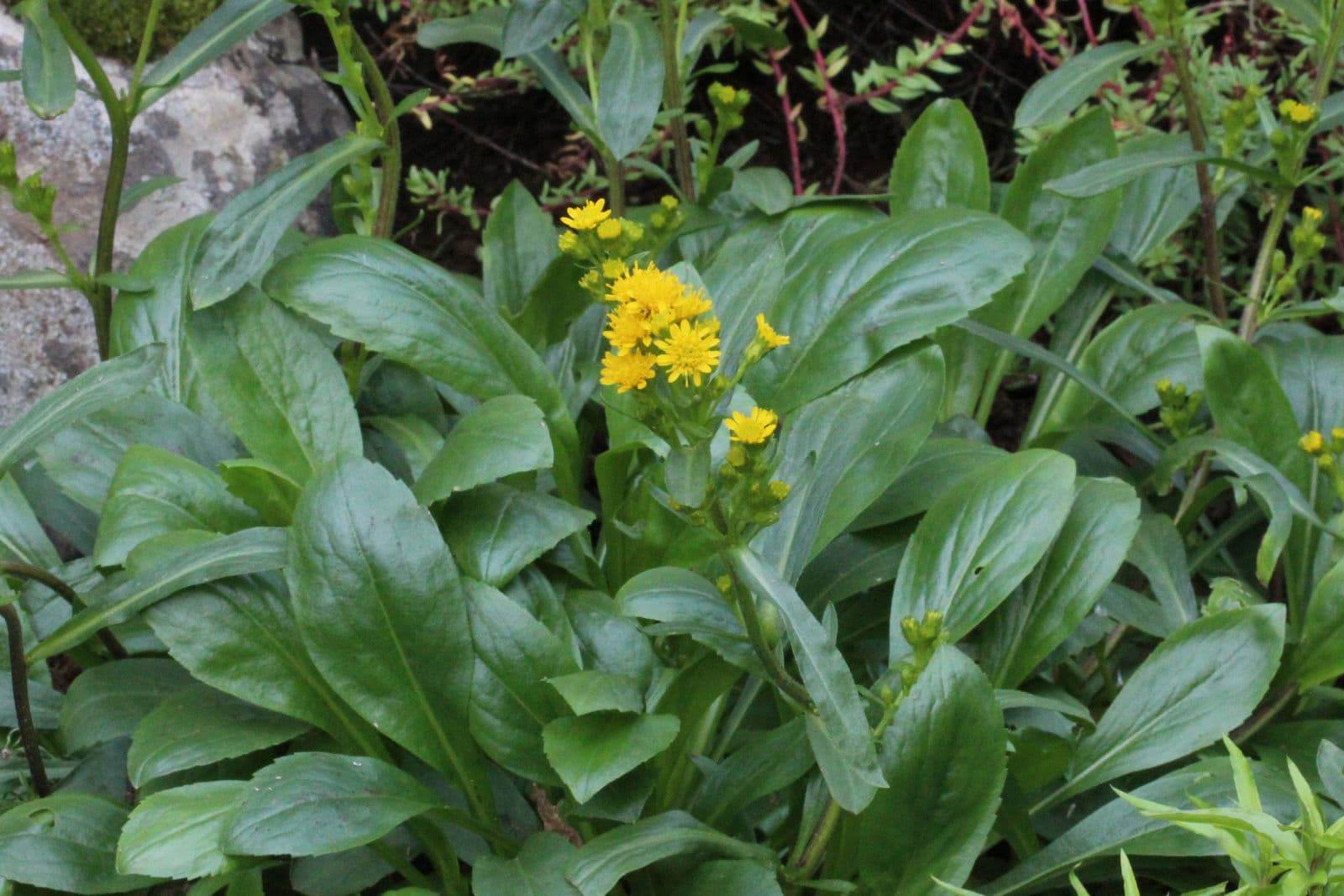
Solidago leiocarpa stays strikingly compact: the plant rarely exceeds 10 to 25 cm in height, considerably shorter than the 60 to 150 cm typical of lowland goldenrods. The leaves form dense, rounded basal rosettes, with smaller, narrower leaves along the short, sturdy flowering stem.
Bloom is brief but intense: due to the short alpine growing season, the plant typically flowers from mid-July to mid-August, producing compact, rounded to slightly flattened clusters of bright yellow flower heads at the top of the stem. Unlike the long, plume-shaped clusters of lowland species, this species keeps its inflorescence tight and densely packed, adapted to the short summer and harsh high-elevation climate.
Ideal location
This species requires a site that mimics its natural habitat: rocky, open, and in full sun to light afternoon shade. In the wild, at an average elevation of 900 to 1900 meters, the plant experiences cool nights and crisp summers, conditions difficult to replicate in a lowland garden.
The best spot in the garden is an alpine trough, a raised rock bed, or a scree garden with abundant gravel. Avoid warm, sheltered garden corners where summer temperatures climb high; this species tolerates heat and muggy summers far worse than most other goldenrods.
Soil
Solidago leiocarpa needs extremely well-draining soil. Mix ordinary garden soil with at least 50 percent coarse gravel, grit, or lava rock to prevent waterlogging around the roots. pH may range from slightly acidic to neutral, between 5.5 and 6.5.
The plant naturally grows in thin, nutrient-poor soil between rock crevices, so overfeeding is counterproductive and leads to floppy, less winter-hardy growth. A thin layer of gravel, 2 to 3 cm, around the plant's crown keeps moisture away from the sensitive growing point.
Watering
During the first establishment phase, the initial four to six weeks after planting, water lightly and regularly. After that, this species is surprisingly drought-tolerant as long as surrounding humidity does not become too high. Above all, avoid prolonged wet spells in summer, which cause root rot faster than drought ever would.
During extended dry spells in July and August, a light watering every ten days can be helpful, especially for trough-grown specimens where soil dries faster than in open ground.
Free design
Want to see Solidago leiocarpa: complete guide in your garden? Make a free design now.
Pruning
Minimal pruning is needed for this compact species. Remove spent flower stems after blooming in August to limit self-seeding, unless you intend to collect seed yourself. Carefully remove dead leaves by hand in early spring so as not to damage the compact rosette.
Since the plant naturally stays very low and tight, no shaping is required; maintenance is limited to tidying.
Maintenance calendar
April: check rosettes after winter dormancy; remove rotted leaves. May to June: growing period; feed lightly with a very dilute mineral fertilizer if desired. July to August: bloom period, the season's main highlight. August: remove spent stems or collect seed. September to October: final drainage check before winter. November to March: winter dormancy; no maintenance needed apart from checking for waterlogging during thaws.
Winter hardiness
Solidago leiocarpa is exceptionally hardy, suited to USDA zones 2 to 4, and survives severe frost down to -40 degrees Celsius without difficulty in its native mountain environment. The greatest threat is not cold itself but wet winters combined with poor drainage, which can rot the plant's crown.
In Western European gardens, where winters are often wetter than cold, a raised, fast-draining position is essential for successfully overwintering this species.
Companion plants
Solidago leiocarpa pairs excellently with other alpine specialists:
Dryas octopetala (mountain avens), a creeping alpine evergreen with white flowers.
Saxifraga paniculata (livelong saxifrage), which thrives in the same rock crevices.
Sempervivum species (houseleeks), perfect for the same lean, well-draining soil.
Campanula cochleariifolia (fairy thimble), whose blue accents contrast beautifully with the yellow.
Antennaria dioica (pussytoes), a low ground cover for gaps between rocks.
Propagation
Propagation is best done from seed, collected in August once the seed fluff loosens. Sow in a mix of sand and grit at a 1:1 ratio, and provide a cold period of 8 to 10 weeks at 2 to 4 degrees Celsius before germination occurs (refrigerator stratification works well).
Division of established rosettes in early spring is also possible, though more difficult than with larger goldenrods due to the compact growth habit. Work carefully and replant divided sections immediately into moist, well-draining substrate.
Pests and diseases
This species is little troubled by pests in its natural habitat, but in a lowland garden excess humidity can lead to crown rot and fungal problems. Good air circulation between rosettes is essential; avoid planting too closely together.
Slugs may nibble young rosettes during damp springs, especially in a shaded rock garden. Specialist alpine and rock garden nurseries are the best source for healthy stock of this rare species; ordinary garden centers such as those in the Intratuin chain typically carry only the more common goldenrod cultivars.
Closing
Solidago leiocarpa is not a plant for every garden, but a true gem for lovers of alpine plants and rock gardens. Its compact form, smooth seeds, and origin on bare mountain summits make it a conversation piece in any specialist plant collection.
Via gardenworld.app you can explore how an alpine trough or scree garden featuring this species would look, and see which other mountain plants combine well before you begin construction.
On gardenworld.app you will also find inspiration for rock garden designs and an overview of hardy alpine species suited to your climate zone.
Want to see Solidago leiocarpa: complete guide in your garden? Make a free design now.
Upload a photo, pick a style, and get a photorealistic design with plant list in under a minute.
No credit card required


Similar plants
Calendula stellata: complete guide
Calendula stellata
Complete guide to Calendula stellata, the star-flowered marigold from Sicily: location, soil, watering and companion planting tips.
Korean chrysanthemum: complete guide
Chrysanthemum x rubellum
Chrysanthemum x rubellum is a hardy autumn perennial with single pink to copper flowers from August to November. Care and combinations.
Helianthus divaricatus: complete guide
Helianthus divaricatus
Helianthus divaricatus is a North American woodland sunflower with yellow summer blooms, ideal for naturalistic borders and shady edges.