
Kurt Stüber [1] / CC BY-SA 3.0, via Wikimedia Commons
Solanum chacoense: complete guide
Solanum chacoense
Want to see Solanum chacoense: complete guide in your garden?
1 minute, no credit card
Solanum chacoense, the Chaco potato, is a remarkable wild potato from the Solanaceae family, native from southern Peru through central Brazil to northern Argentina. This modest herb offers gardeners interesting possibilities, especially for experimental cultivation and conservation purposes. While not suitable for food like cultivated potatoes, this species carries botanical value and attractive appearance.
Overview
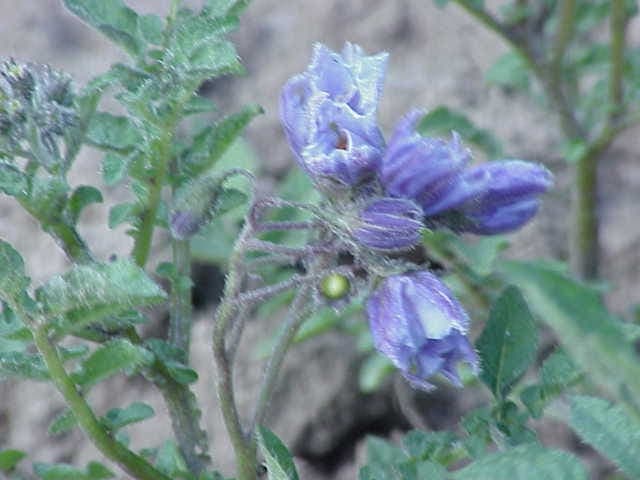
Formally described in 1912, Solanum chacoense has established itself in botanical collections worldwide. It is an herb reaching approximately 30 to 50 cm in height, with hairy stems and lobed or fingered leaves. The plant produces small, blue-violet flowers in clusters around August through October. This non-toxic form thrives in temperate gardens with good drainage and nutrient-rich soil.
Appearance and bloom
The leaves of S. chacoense are distinctly lobed, giving the plant an elegant appearance. Flowers are small, about 1-2 cm in diameter, with five blue to purple petals. They appear from August to October in semi-circular clusters. After blooming, small yellowish-green berries may form. The plant grows dense and compact, ideal as a herbaceous accent in borders. The hairy covering provides a restful, natural aspect.
Ideal location
Choose a spot with at least 6 hours of direct sunlight daily. S. chacoense thrives in full sun and blooms more abundantly in brighter locations. Protection from intense afternoon sun is advisable in very hot regions. The plant tolerates partial shade but blooms less profusely. Good air circulation prevents fungal diseases. Avoid heavily shaded areas.
Soil
Perfect drainage is essential. Use well-draining, nutrient-rich garden soil with 30% composted matter and 20% sandy peat. pH range: 6.0 to 7.0. Plant in raised beds or containers to eliminate waterlogging problems. The plant is intolerant of water stagnation. Additional organic matter promotes root development. Avoid compacted clay soils.
Free design
Want to see Solanum chacoense: complete guide in your garden? Make a free design now.
Watering
Keep the soil evenly moist, not soggy. During the growing season (May through October), water when the top 1 cm feels dry. During flowering, water regularly. In dry summers, water up to twice weekly. After October, reduce watering; in dormancy, much less water. Drip irrigation is preferred over overhead spraying. Avoid nighttime wetting due to fungal risk.
Pruning
Minimal pruning needed. Remove dead branches and malformed growth in spring (March). After flowering, spent flowers may be removed for aesthetics. Tip pinching in May/June promotes compact growth. Avoid heavy pruning; the plant flowers on full branches. Address aphids with soapy water if necessary.
Maintenance calendar
May to June: Monitor establishment, pinch tips, apply balanced fertilizer. July to August: Full watering, check for pests. August to October: Bloom period, maintain watering schedule. October to March: Gradually reduce moisture. November to March: Dormancy, minimal intervention. April to May: Season preparation.
Winter hardiness
Solanum chacoense is not winter-hardy in temperate climates (USDA zones 7-8 and colder). Grow as an annual or overwintered plant in cold regions, or cultivate in containers under glass. In milder areas (USDA 9-10), outdoor overwintering may be attempted in a sheltered location with dry mulch. In zones 7 and colder, dig up in October, store in a cool, dry place (0-5 C) and replant in May. Protect the root system from frost.
Companion plants
Combine with other South American species: Physalis peruviana, Capsicum annuum cultivars, and Gomphrena globosa for thematic borders. Mediterranean herbs like Lavandula and Santolina contrast beautifully. Low-growing Delosperma or Sedum species fill in at the base. Avoid competition with aggressive growers.
Closing
Solanum chacoense is a valuable experimental crop for advanced gardeners. The effort leads to botanical knowledge and beautiful blooms. Combined with proper care, this wild potato offers seasonal charm and horticultural insight into South American flora.
Want to see Solanum chacoense: complete guide in your garden? Make a free design now.
Upload a photo, pick a style, and get a photorealistic design with plant list in under a minute.
10,000+ gardens designed already
No credit card required

