
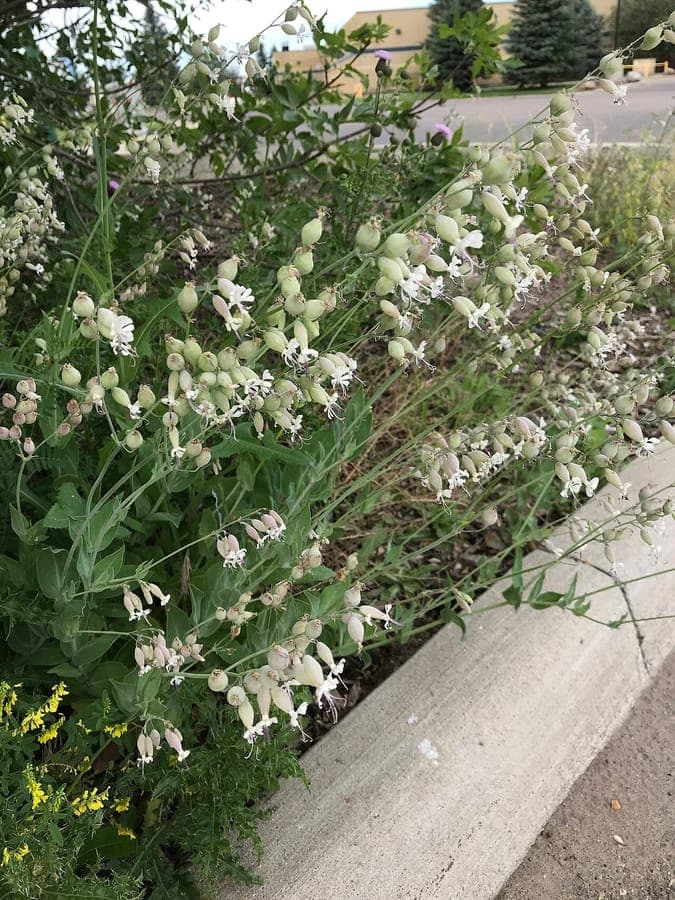
(c) David McCorquodale, some rights reserved (CC BY) / CC BY 4.0, via Wikimedia Commons
Balkan catchfly (Silene csereii): complete guide
Silene csereii
Want to see Balkan catchfly (Silene csereii): complete guide in your garden?
1 minute, no credit card
Overview
Silene csereii, commonly known as the Balkan catchfly or biennial campion, is a graceful short-lived perennial or biennial belonging to the family Caryophyllaceae - the same family as carnations, pinks and soapwort. First described by the botanist Baumgarten in 1817 from specimens collected in Transylvania, the species is named in honour of the Hungarian botanist Cserei. In its native range it grows across the steppe grasslands and dry rocky slopes of Bulgaria, Romania, Ukraine, the Caucasus and Turkey, but it has since established itself across much of Western Europe and North America as an introduced plant.
In garden terms, Silene csereii is a rewarding plant for anyone who enjoys natural, relaxed planting styles. Its slender stems, grey-green slightly glaucous leaves and clouds of small white to pale pink flowers give it a light, airy presence that sits perfectly in a prairie border, a gravel garden or a dry bank planting. On gardenworld.app you can experiment with different plant combinations and see how a naturalistic mix of wildflowers including silenes might look in your own front garden.
Appearance and bloom cycle
In its first year, Silene csereii forms a low rosette of lance-shaped, grey-green leaves with a slight waxy bloom. In its second year the plant sends up erect, branching stems reaching between 30 and 70 cm in height. The stems are lightly sticky and hairy - a characteristic that gives the plant its English common name "catchfly", as small insects occasionally become trapped on the adhesive surface.
The flowers are small but produced in abundance on open panicle-like inflorescences. Each individual flower has five white to pale pink petals that are notched at the tip, and a distinctive inflated calyx tube - a hallmark of the genus Silene. Flowering begins in May and continues through to August, depending on conditions. Butterflies, bees and hoverflies visit the flowers regularly for nectar.
After flowering, small capsule fruits develop containing numerous tiny dark seeds. The plant self-seeds freely, so in a naturalistic planting it can establish itself as a reliable self-maintaining presence without any effort from the gardener.
Ideal location
Silene csereii is a sun-loving plant that needs at least six hours of direct sunlight daily. It originates from open, dry habitats in eastern Europe and the Caucasus and performs at its best in a warm, open, well-ventilated position where it receives plenty of light. In partial shade the plant tends to become leggy and flowers less freely.
It fits beautifully in a gravel garden, a prairie-style border, a south-facing wall bed or a dry sunny bank. It combines well with other drought-tolerant plants such as thyme, Eryngium, Echinacea and ornamental fescues. Avoid waterlogged or persistently moist positions, as the plant is susceptible to crown rot in wet conditions.
Soil
This silene does not need rich soil - in fact, overly fertile ground encourages lush leafy growth at the expense of flowering. The best results come from free-draining, lean to moderately fertile soil. Sandy, lightly loamy or gritty soils suit it well.
On heavy clay or poorly draining ground, incorporate coarse grit or fine gravel to improve drainage before planting. The pH can range from slightly acid to slightly alkaline - Silene csereii is reasonably adaptable. Lime in the soil is no problem at all; in the wild this species grows on calcareous substrates across the Balkans.
Avoid feeding the plant with nitrogen-rich fertilisers. A light top-dressing of fine gravel around the base helps keep the crown dry and reduces the risk of rot. Organic mulch is less suitable as it increases soil fertility and retains moisture.
Watering
Once established, Silene csereii needs very little additional water. It is well adapted to dry summers and tolerates periods of drought without difficulty. In the first few weeks after planting or sowing, regular watering helps the roots establish, but after that the plant can largely be left to its own devices.
In very dry summers a deep watering every fortnight at the base of the plant is sufficient. Surface irrigation applied little and often encourages shallow rooting, which makes the plant less stable. Deep but infrequent watering encourages the plant to root deeply, enhancing its drought tolerance further.
Avoid standing water and wet feet, particularly in winter. Waterlogging is the most serious threat to Silene csereii: prolonged wet conditions at the crown can cause the plant to rot.
Free design
Want to see Balkan catchfly (Silene csereii): complete guide in your garden? Make a free design now.
Pruning
Silene csereii requires minimal attention in this regard. Remove spent flowering stems during summer if you want to limit self-seeding. If you prefer a naturalistic effect and want the plant to self-sow across the border, leave the flowering heads in place until the seeds have ripened and dispersed on the wind.
In late winter or early spring, cut back the previous year's dead stems to ground level to give the new rosettes space to develop. March or April is the ideal time, once you can see the fresh growth emerging. Take care not to cut down any young self-sown seedlings that may have germinated around the base of the parent plant.
Older plants that become woody at the base can be hard cut back in early spring to rejuvenate them. In many cases, however, it is simply easier to raise fresh plants from seed, as Silene csereii germinates readily and grows quickly.
Maintenance calendar
January - February: Rest period. Keep the soil as dry as possible. In the first year, protect young rosettes with a light covering of brushwood or fleece during severe frost.
March - April: Remove previous year's dead stems. Check for self-sown seedlings around the parent plants and thin them out if they are overcrowded.
May - June: Flowering begins. Enjoy the white to pale pink flowers. First butterflies and bees start visiting. No feeding needed.
July - August: Peak flowering. Leave flowers in place if you want self-seeding. Give a deep watering at the base if conditions are extremely dry.
September - October: Seeds ripen and fall. Remove unwanted seedlings appearing in paths or paving.
November - December: Dead stems can be left over winter for decorative effect and as shelter for insects. The plant overwinters as a low leaf rosette.
Winter hardiness
Silene csereii is reliably winter-hardy across most of the British Isles and northern Europe. As a biennial it overwinters in its first year as a compact, low-growing leaf rosette that tolerates moderate frost without difficulty. On a well-drained site it is rated to USDA zone 5, surviving temperatures down to around -15 degrees Celsius, provided drainage is excellent and the crown does not sit in water.
The main winter risk is not cold but moisture: plants sitting in wet soil are prone to crown rot. Ensure good drainage and consider a light gravel mulch around the base to deflect excess water away from the crown.
In mild Atlantic winters the plant may remain more or less evergreen, with the leaf rosette persisting intact through the cold months. In harsher continental climates the foliage partially dies back but the plant returns strongly in spring.
Companion plants
Silene csereii combines particularly well with other plants of dry, open habitats. Good companions include thyme (Thymus vulgaris or T. serpyllum), small prairie coneflowers (Echinacea angustifolia), bird's foot trefoil (Lotus corniculatus), meadow clary (Salvia pratensis), greater knapweed (Centaurea scabiosa) and cornflower (Centaurea cyanus).
For taller accents in the same planting, consider Eryngium planum or Achillea millefolium in white or yellow tones. Ornamental fescues such as Festuca glauca or Stipa tenuissima complement the light, airy flowering of Silene csereii perfectly, adding movement and texture without competing for the same visual space.
Avoid pairing Silene csereii with vigorous, spreading plants that might smother it. This species needs room and light, and it is quickly overwhelmed by more aggressive neighbours. On gardenworld.app you can explore naturalistic planting schemes that show exactly how to combine plants like this for a prairie or cottage garden effect.
Closing
Silene csereii is a modest yet charming plant that earns its place in any garden with a sunny, dry corner to spare. Easy to grow, free-seeding and genuinely valuable for pollinators, it is an excellent choice for naturalistic or ecologically minded gardeners. Look for it at specialist nurseries and wildflower seed suppliers across the UK; garden centres sometimes stock mixed silene seed collections that include this species.
Once established in your garden, Silene csereii will reward you year after year with its delicate white flowers dancing among the summer herbs. It asks for very little, gives back generously, and fits naturally into any garden vision that values wildness, beauty and biodiversity.
Want to see Balkan catchfly (Silene csereii): complete guide in your garden? Make a free design now.
Upload a photo, pick a style, and get a photorealistic design with plant list in under a minute.
10,000+ gardens designed already
No credit card required


Similar plants
White cockle: complete guide
Silene latifolia Poir.
Discover white cockle, a temperate Eurasian plant. Learn how to grow this rewarding plant successfully in your front garden.
Silene dioica: complete guide
Silene dioica
Red campion (Silene dioica) is a charming wild flower from Europe with brilliant red-pink blooms. Learn how to grow and maintain this distinctive plant in your garden.