
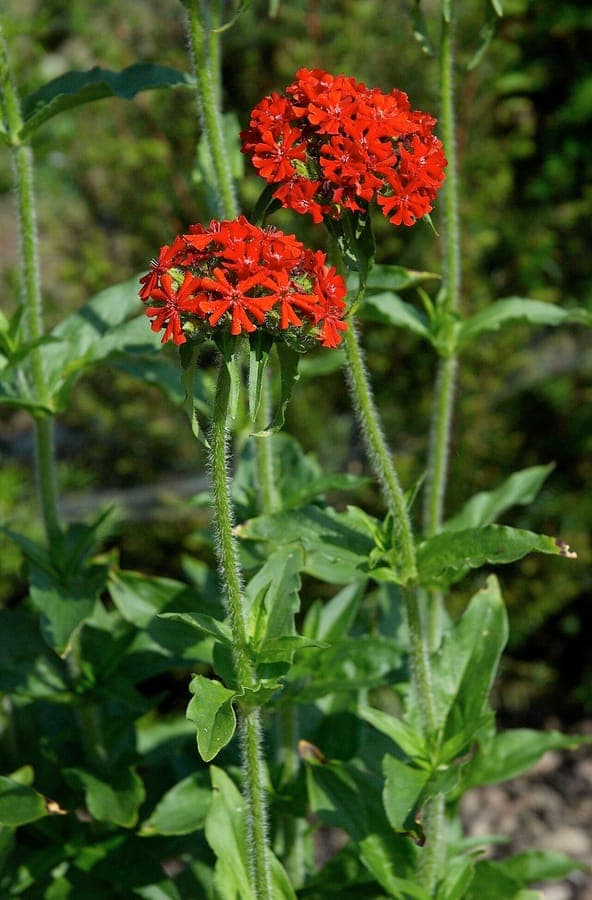
Wouter Hagens / Public domain, via Wikimedia Commons
Silene chalcedonica: complete guide
Silene chalcedonica
Want to see Silene chalcedonica: complete guide in your garden?
1 minute, no credit card
Overview
Silene chalcedonica, better known as Maltese cross or scarlet lychnis, is a highly decorative plant from the Caryophyllaceae family. This plant originates from Eastern Europe to Siberia and China. The plant earns its name from the unique cross-shaped flowers that appear in intense red. This is a robust perennial that excels in temperate gardens and is very winter-hardy.
The Maltese cross is a popular garden plant that has been cultivated in gardens for centuries. The plant is easy to maintain and offers years of beautiful red flowering.
Appearance and bloom
Silene chalcedonica grows as an upright, herbaceous plant with heights of 60 to 100 centimeters. The stems are erect and greenish. The leaves are elongated, sessile and opposite. The flowers are the most striking feature: they form dense, round clusters with several small, red flowers that together appear to form a cross.
The flowering period is long, usually from June to August. The flowers attract pollinators and are suitable for cut flowers. After flowering, seed capsules form that remain interesting and persistent.
Ideal location
Silene chalcedonica thrives best in full sun to partial shade locations. At least 4-6 hours of sunlight daily is ideal. The plant also tolerates some shade, although full sun promotes optimal flowering. A sheltered spot is beneficial.
The plant is very winter-hardy and tolerates large temperature fluctuations well. It can even grow in cold mountainous regions.
Soil quality
Silene chalcedonica is not very fussy about soil but thrives best on well-draining, moderately fertile soil. A pH of 6.5 to 7.5 is ideal. Wet soil should be avoided, as the plant is sensitive to root rot.
Add organic matter, such as garden compost, before planting. The plant also grows well in poor, sandy soils. Regular compost additions ensure long-term growth.
Free design
Want to see Silene chalcedonica: complete guide in your garden? Make a free design now.
Watering
Once established, Silene chalcedonica is drought-tolerant. Water regularly in the first weeks after planting and during dry periods. The plant prefers moist but well-draining soil.
In open ground, water when soil temperature becomes dry. Container-grown plants need more regular watering. Excessive watering should be avoided.
Pruning
Pruning is not always necessary, but removing faded flowers promotes further flowering. After flowering, the plant can be cut back to approximately 15-20 centimeters height. This promotes bushier growth for next season.
Aged plants can be cut back more heavily in spring. This renews the plant and promotes new growth.
Maintenance calendar
March to April: Spring cleanup. Remove dead wood structures. Plant out young seedlings.
May to August: Water regularly, especially during dry periods. Remove faded flowers. Feeding can be applied twice per season.
September to October: Stop feeding. Collect seed for next season. Cut plant back.
November to February: Winter dormancy. No care needed. Plant is fully hardy.
Winter hardiness
Silene chalcedonica is very winter-hardy and can tolerate temperatures down to -20 degrees Celsius. This makes it an ideal plant for cold regions. The plant needs no winter protection.
Even in wet winters where many plants rot, this plant remains healthy thanks to its well-draining root system.
Companion plants
Silene chalcedonica combines beautifully with other red-flowering plants, such as carnations and Heuchera. Yellow-flowering plants such as Rudbeckia provide beautiful contrast with the red Maltese cross.
In hardy gardens, it combines well with blue-flowering plants such as Delphinium and Lupine. White-flowering plants, such as Jasmine and white Phlox, also form lovely combinations.
Closing
Silene chalcedonica is an essential plant for gardeners seeking hardy, long-lasting red flowering color. With minimal maintenance and great winter hardiness, this is a perfect low-maintenance element for any garden design. Visit gardenworld.app for more information about hardy garden plants. Consider this stunning red bloomer for your garden design on gardenworld.app!
Want to see Silene chalcedonica: complete guide in your garden? Make a free design now.
Upload a photo, pick a style, and get a photorealistic design with plant list in under a minute.
No credit card required


Similar plants
Dianthus karami: complete guide
Dianthus karami
Dianthus karami is a rare Lebanese mountain pink with fringed pink blooms on limestone cliffs, ideal for rock gardens and troughs.
Sicilian pink: complete guide
Dianthus siculus
Discover Dianthus siculus, an elegant purple bloomer from Sicily. Cultivation, June-September flowering and garden combinations.
Alpine mouse-ear chickweed: complete guide
Cerastium pedunculatum
Full growing guide for Cerastium pedunculatum: ideal location, soil, watering, winter hardiness, and companion plants for rock gardens.