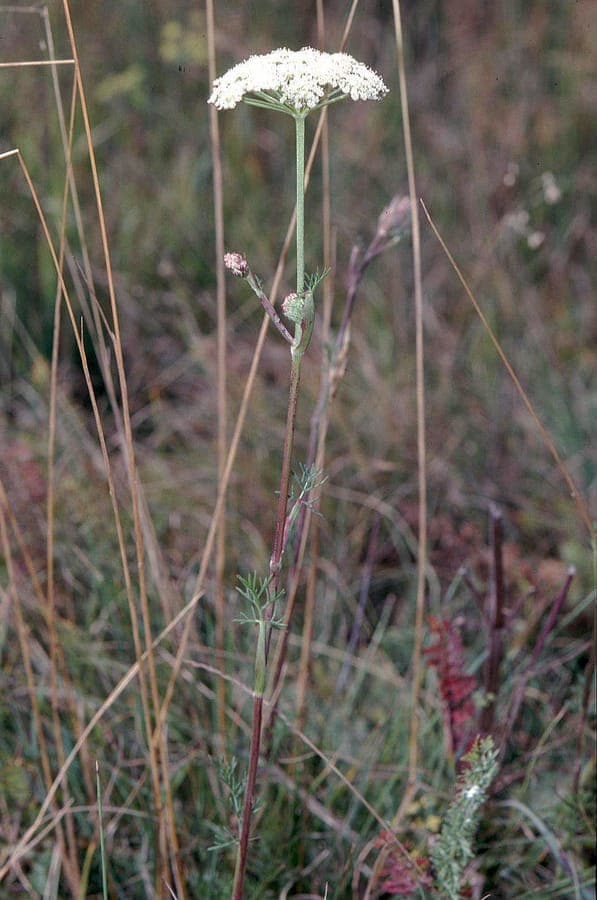
Fornax / Public domain, via Wikimedia Commons
Seseli annuum: complete guide
Seseli annuum
Want to see Seseli annuum: complete guide in your garden?
Full design in HD: €7.99
Look after your Seseli annuum with the GardenWorld app
Identify plants with your camera and get a care calendar with reminders for this plant.


Overview
Annual seseli (Seseli annuum) is an elegant plant species from the Apiaceae family. This herb grows wild throughout Europe, from France and Spain to Russia. With its fine foliage and sunny white to purple flowers, Seseli annuum offers natural elegance in wild gardens and steppe-like planting situations.
Appearance and bloom
This plant grows to about 30-60 centimeters high with fine, hair-like leaves that are divided into fine segments. The stems are slender and elegant. The typical umbel-like flowers appear from June to September in colors ranging from white to purple. The plant is an annual herb that grows easily from seed.
Ideal location
Seseli annuum thrives best in full sun. The plant does not like shade and grows poorly in shaded locations. Ideal in dry beds, in steppe-like locations, or in wild gardens where self-seeding is tolerable. Plant in groups for better effect.
Soil
Well-draining soil is essential. Prefers light, sandy to calcareous soil. The plant grows well in moderately fertile soil and can survive in poor soil. Heavy clay should be improved with sand and gravel. The plant thrives in alkaline to neutral soil.
Watering
Once established, Seseli annuum is very drought-tolerant. Water regularly during the growing season until blooming. After blooming, water minimally. The plant is very adaptable to drought and moisture fluctuations. Excessive water can lead to root rot.
Free preview
Want to see Seseli annuum: complete guide in your garden? Make a free preview of your design.
Pruning
Pruning is generally not necessary. Remove spent flowers if you want to prevent self-seeding. Let the plant maintain its natural form. The plant reveals gracefully and may grow quietly.
Maintenance calendar
Spring: Sow seeds directly in soil or start indoors. Summer: Enjoy blooms from June to September, minimal watering. Fall: Let seeds ripen for self-seeding next year. Winter: Plant dies off after seed formation (annual).
Winter hardiness
Seseli annuum is an annual herb and does not survive winter. The plant grows each year from seed. In milder climates, the plant can sometimes self-seed and provide regrowth the following season. Suitable for all climates.
Companion plants
Combine Seseli annuum with other umbelliferous plants and steppe flora such as Eryngium species and other light, airy plants. This combination creates a natural, wilderness-like garden appearance.
Closing thoughts
Seseli annuum is a prudent choice for those wanting to create wild, lightly maintained gardens. The elegant flowers and self-seeding advantages make it ideal. At local seed suppliers you will find seeds. For garden design inspiration, visit gardenworld.app where experts create wild garden plans. This herb offers elegance, bird food via seed, and virtually no maintenance.
Frequently asked questions about Seseli annuum
Is Seseli annuum winter hardy?
Seseli annuum is an annual herb and does not survive winter. The plant grows each year from seed.
When and how do you prune Seseli annuum?
Pruning is generally not necessary. Remove spent flowers if you want to prevent self-seeding.
How much water does Seseli annuum need?
Once established, Seseli annuum is very drought-tolerant. Water regularly during the growing season until blooming.
Where does Seseli annuum grow best?
Seseli annuum thrives best in full sun. The plant does not like shade and grows poorly in shaded locations.
What soil does Seseli annuum need?
Well-draining soil is essential. Prefers light, sandy to calcareous soil.

See it in your garden
See Seseli annuum in your garden
One photo of your garden and a few questions. You see the result in about a minute.
Try it with a photoIdentify this plant in your own garden. Identify a plant
Similar plants
Astrantia maxima: complete guide
Astrantia maxima
Everything about Astrantia maxima, the masterwort with broad pink ruffs: site, soil, pruning and hardiness for weeks of flowers in partial shade.
Whorled carrot: complete guide
Daucus involucratus
Daucus involucratus is a Mediterranean umbellifer with white flower heads framed by lacy bracts. Growing this gravel garden gem.
Daucus muricatus: complete guide
Daucus muricatus
Daucus muricatus, the spiny wild carrot, grows wild on Mediterranean coasts. Discover sowing, June-July bloom, and wildflower meadow use.
