
Jim Evans / CC BY-SA 4.0, via Wikimedia Commons
Southern Scabious: complete guide
Scabiosa triandra
Want to see Southern Scabious: complete guide in your garden?
1 minute, no credit card
Overview
Scabiosa triandra L., commonly known as the southern scabious or three-stamened scabious, is a perennial herbaceous plant native to central and southern Europe. Its range stretches from the Iberian Peninsula east through France, Switzerland, Austria, Hungary, Italy, Sardinia, Corsica and into the former Yugoslav states. It was first described by Linnaeus in 1753 and belongs to the family Caprifoliaceae. The species name triandra refers to the three stamens visible in each floret. In the wild it grows on dry, calcareous grasslands, rocky hillsides, and stony embankments in full sun. In the garden, it is an excellent choice for sunny, free-draining borders, gravel gardens and rock gardens. On gardenworld.app you will find garden design ideas to help you build a planting scheme that makes the best use of drought-tolerant species like this one.
Appearance and bloom cycle
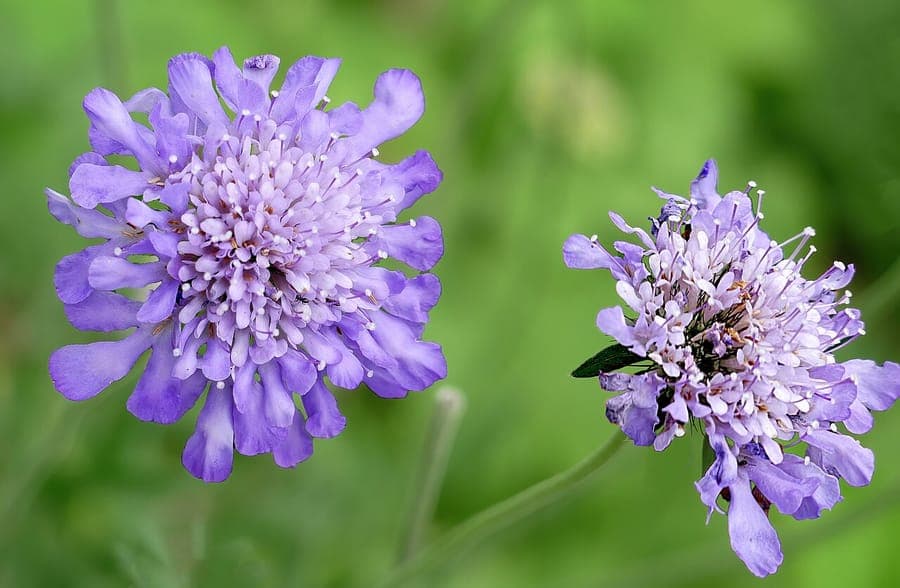
Southern scabious is a slender, upright plant reaching 30 to 60 cm in height. The stems are wiry and branched, carrying finely divided, pinnate leaves that are blue-green or grey-green in colour. Leaves near the base are broader and more deeply cut than the narrow, almost linear leaves higher up the stem. Flowering runs from July through October, making this one of the longest-flowering perennials available for dry borders. The characteristic round flower heads are carried on long, bare stems. Each head is composed of numerous small florets in pale blue to lavender-blue, with the outer florets noticeably larger than the inner ones - a typical feature of the scabious group. The flowers are highly attractive to bumblebees, honeybees and various butterfly species, particularly in late summer when many other nectar sources are dwindling. After flowering, the seed heads remain decorative through autumn and into early winter.
Ideal location
This species demands full sun and a warm, open position. It dislikes shade of any kind and performs poorly in cool, damp corners. In its natural habitat it colonises exposed stony slopes and dry roadsides where competition from taller vegetation is low and the soil dries out quickly between rains. In the garden, this translates to a south- or west-facing border, a gravel garden, a rock garden, or a raised bed with excellent drainage. Good air circulation helps reduce the risk of powdery mildew in humid summers. Avoid waterside plantings or positions where heavy rain collects, as wet roots - especially in winter - are the most common cause of plant loss.
Soil
Southern scabious thrives in calcareous, lean, well-drained soil with a pH of 7.5 to 8.0, reflecting its natural home on limestone-rich terrain. It performs well on sandy or stony soil and does not need added fertiliser once established. Rich, compost-heavy soil leads to lush, leafy growth at the expense of flowers. Heavy clay is unsuitable unless substantially amended with coarse grit or crushed stone. If your soil is naturally acidic, raise the pH by incorporating garden lime before planting. The single non-negotiable requirement is drainage: water sitting around the crown or roots over winter will quickly cause fatal root rot.
Watering
Once established, southern scabious is highly drought-tolerant and rarely needs supplementary watering. In its first season, water once a week to encourage the root system to develop. After that, natural rainfall is usually sufficient in most of northern and western Europe, except during prolonged summer droughts of three weeks or more. When in doubt, water less rather than more - this species is far more likely to suffer from overwatering than from mild drought. In containers, ensure the pot has large drainage holes and never allow water to stand in the saucer.
Free design
Want to see Southern Scabious: complete guide in your garden? Make a free design now.
Pruning
Minimal pruning is needed. In early spring, cut the previous year's dried stems back to just above ground level to encourage fresh, compact new growth. During the flowering season, removing spent flower heads (deadheading) can extend the bloom period by prompting new buds to form on the lateral branches. This is optional but worthwhile if you want the longest possible display. In autumn, consider leaving the ornamental seed heads standing through the winter - they add structure to the garden and provide food for seed-eating birds.
Maintenance calendar
January - February: dormant period; check drainage is functioning correctly during wet spells. March - April: cut back old stems to ground level; new rosettes begin to emerge. Optional: apply a thin top-dressing of horticultural grit. May - June: active growth; keep the area weed-free as seedlings cannot compete with vigorous neighbours. July - October: full flowering season; deadhead if you want extended bloom, otherwise leave for wildlife value. November - December: resting phase; leave the seed heads for ornamental and wildlife value, minimal intervention needed.
Winter hardiness
Southern scabious is rated hardy to USDA zone 6, corresponding to minimum temperatures of around -23 degrees Celsius. In the UK, the Netherlands, Belgium and most of Germany and France, it should survive normal winters without protection provided the drainage is adequate. Winter wetness, not cold, is the real threat. In areas with heavy winter rainfall, consider covering the crown with a layer of 3 to 5 cm of coarse grit to keep moisture away from the stem base. In regions with very harsh winters, a light cover of pine branches gives additional protection without trapping moisture.
Companion plants
In a sunny, dry border or gravel garden, southern scabious combines beautifully with other sun-loving, drought-tolerant perennials. Catmint (Nepeta x faassenii) shares similar soil needs and provides complementary blue-purple tones over a comparable season. Lavender (Lavandula angustifolia) and ornamental sage (Salvia nemorosa) offer structural and colour harmony. Wild marjoram (Origanum vulgare) attracts the same pollinator species. For textural contrast, the silver-leaved cotton lavender (Santolina chamaecyparissus) or the yellow-flowered rock rose (Helianthemum nummularium) work well in close proximity. Stonecrops (Sedum telephium or Sedum spectabile) provide late colour and attract similar insects. On gardenworld.app you can explore planting combination ideas and visualise how these species work together in a garden setting before you plant.
Closing
Scabiosa triandra is an underused perennial that deserves a wider place in gardens across northern and western Europe. Its long flowering season from July to October, its tolerance of drought and poor soil, and its exceptional value for pollinators make it a practical and beautiful choice for any sunny, well-drained spot. It requires little maintenance once established, making it ideal for gardeners who want seasonal colour and wildlife value without intensive upkeep. Look for it at specialist herbaceous nurseries and garden centres - it may not always be on the shelves but is well worth seeking out.
Want to see Southern Scabious: complete guide in your garden? Make a free design now.
Upload a photo, pick a style, and get a photorealistic design with plant list in under a minute.
10,000+ gardens designed already
No credit card required


Similar plants
Yellow honeysuckle (Lonicera tragophylla): complete guide
Lonicera tragophylla
Meet yellow honeysuckle (Lonicera tragophylla): a Chinese climber with large golden flowers that thrives in partial shade.
Lonicera korolkowii: complete guide
Lonicera korolkowii Stapf
Discover blueleaf honeysuckle, a vigorous shrub with beautiful flowers. Guide on growing, shaping and why this Asian climbing plant is perfect for gardens.
Lonicera oblongifolia: complete guide
Lonicera oblongifolia Hook.
Discover swamp fly honeysuckle, a North American woodland plant. Guide on growing, caring and why this native species is valuable for gardens.