
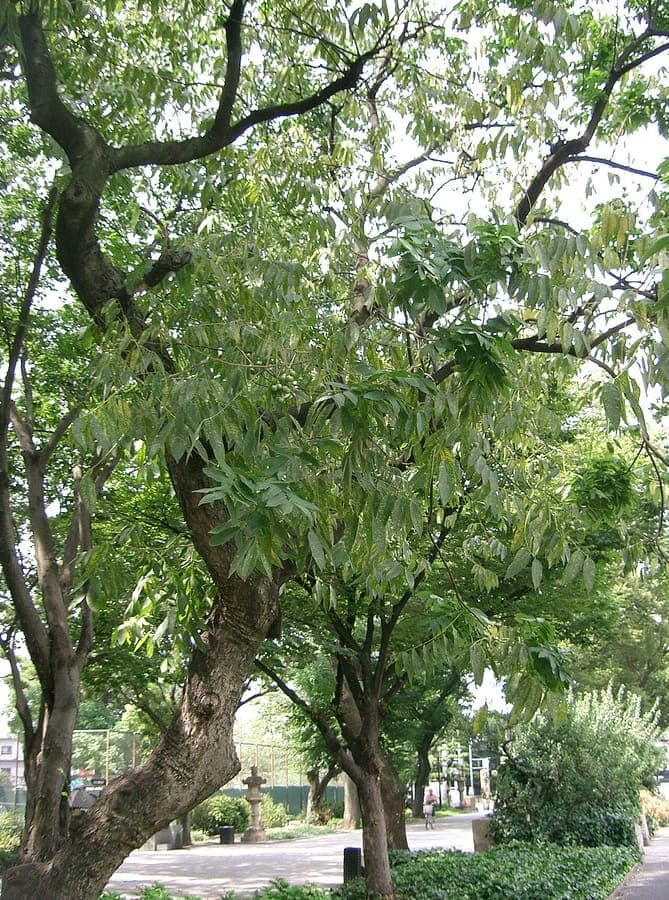
KENPEI / CC BY-SA 3.0, via Wikimedia Commons
Sapindus mukorossi: complete guide
Sapindus mukorossi
Want to see Sapindus mukorossi: complete guide in your garden?
1 minute, no credit card
Overview
Sapindus mukorossi, commonly known as soapnut or reetha, is a remarkable tree from India and East Asia. This species is prized for a unique characteristic: its fruits contain natural saponins that have been used for cleaning and washing for centuries. With an elegant crown and useful fruits, it brings both beauty and sustainability to gardens.
Appearance and bloom
The soapnut tree grows into a medium to large specimen reaching 10-30 meters in height. It features a graceful, spreading crown with compound leaves composed of many small leaflets. The glossy green foliage gives the tree a fine texture. In spring, yellowish-green flowers appear in clusters, followed by round yellow-orange fruits resembling walnuts. These fruits gradually harden and turn dark brown as they mature.
Ideal location
This tree thrives in full sun to partial shade. In European climates, it grows well in warm, sheltered positions, particularly in southern regions. Protect young trees from strong winds to prevent crown damage. As a container plant, it flourishes in a warm, bright location indoors.
Soil
Sapindus mukorossi prefers nutrient-rich, well-draining soil. Sandy or loamy soils with abundant organic matter are ideal. A pH between 5.5 and 7.5 is optimal. Ensure good drainage to prevent waterlogging, especially during rainy periods. Add compost at planting time for enhanced growth.
Free design
Want to see Sapindus mukorossi: complete guide in your garden? Make a free design now.
Watering
During the first growing season, young trees require regular watering to establish a strong root system. Mature trees are fairly drought-tolerant but grow better with consistent moisture during the growing season. Provide supplemental water during exceptionally dry periods. Avoid waterlogging, particularly in winter.
Pruning
Minimal pruning is required. Remove only dead, diseased, or crossing branches that disrupt crown shape. This is best done in spring. For container plants, light shaping may be applied to maintain a compact form.
Maintenance calendar
Spring: Inspect for pests and diseases, prune if needed, apply fertilizer. Summer: Water regularly during dry spells. Autumn: Harvest fruits and remove fallen leaves. Winter: In cold regions, protect against frost damage.
Winter hardiness
Sapindus mukorossi is frost-sensitive and thrives in warm to temperate climates (zones 9-11). In cooler regions, it can be grown as a houseplant. Protect against temperatures below 5 degrees C. Mulch the root zone for winter protection.
Companion plants
Plant this tree alongside other heat-loving species. Low-growing groundcovers can thrive beneath the canopy. Provide adequate space to minimize competition. It suits polyculture and backyard settings well.
Closing
Sapindus mukorossi is a fascinating tree that adds value to any garden meeting the right climate conditions. With its beautiful appearance, sustainable fruits, and minimal maintenance needs, it's an excellent choice for warm regions. Available at most garden retailers. Discover more plant advice at gardenworld.app/en.
Want to see Sapindus mukorossi: complete guide in your garden? Make a free design now.
Upload a photo, pick a style, and get a photorealistic design with plant list in under a minute.
No credit card required


Similar plants
Acer pycnanthum: complete guide
Acer pycnanthum
Acer pycnanthum, the Japanese swamp maple, is a fast-growing tree with early red flowers and brilliant autumn color, ideal for damp garden settings.
Freeman maple: complete guide
Acer × freemanii
Everything about the Freeman maple (Acer x freemanii): a fast-growing shade tree with spectacular autumn colour for large gardens.
Wild ackee: complete guide
Cupania americana
A comprehensive guide to Cupania americana, a tropical tree from the Sapindaceae family with conspicuous white flowers and brown fruits, native to tropical America.