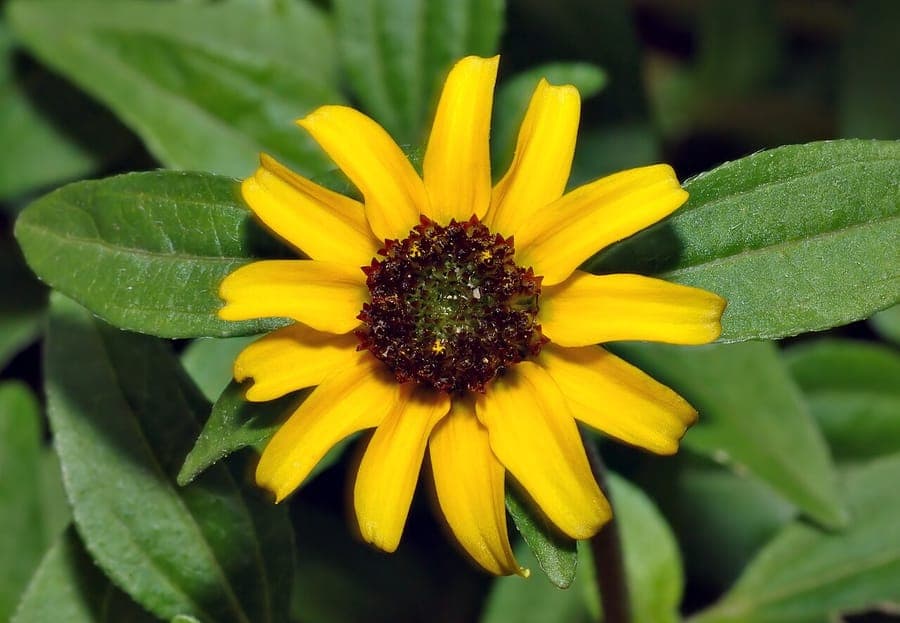
André Karwath aka Aka / CC BY-SA 2.5, via Wikimedia Commons
Sanvitalia procumbens (Mexican creeping-zinnia): complete guide
Sanvitalia procumbens
Want to see Sanvitalia procumbens (Mexican creeping-zinnia): complete guide in your garden?
Full design in HD: €7.99
Look after your Sanvitalia procumbens with the GardenWorld app
Identify plants with your camera and get a care calendar with reminders for this plant.


Overview
Sanvitalia procumbens, better known as Mexican creeping-zinnia, is a delightful annual plant native to Mexico and Guatemala. This creeping-growing plant is renowned for its yellow flowers with dark centers and its spreading, low growth habit. It is ideal as groundcover and filler plant in front yards and container plantings.
Appearance and Bloom
Mexican creeping-zinnia grows as a low, spreading plant with small, oval green leaves. The flowers are small, about two centimeters in diameter, yellow with dark red to brown centers. Flowers appear continuously from summer to first frost. The plant reaches about 20-30 centimeters in height and spreads to 45 centimeters.
Ideal Location
Choose a sunny location with at least six hours of direct sunlight. This plant grows best in full sun. In warmer climate, it appreciates some afternoon shade. Ensure well-ventilated location but shelter from harsh winds.
Soil
Sanvitalia thrives in well-draining, moderately fertile soil. Neutral to slightly acidic (pH 6.0-7.0) is ideal. The plant accepts less nutrient-rich soils. For better blooming, you can add light organic material. Ensure perfect drainage.
Free preview
Want to see Sanvitalia procumbens (Mexican creeping-zinnia): complete guide in your garden? Make a free preview of your design.
Watering
Water moderately regularly, keeping soil consistently moist but not wet. During hot periods, daily watering may be needed. Mulch helps retain moisture and regulate temperature. Excessive water can cause root rot.
Pruning
Pruning is usually unnecessary, but you can remove faded flowers for continuous bloom. Cut back long stems for more compact form. Regular deadheading encourages prolonged flowering throughout the season.
Maintenance Calendar
Spring: Plant after frost danger. Summer: Water regularly, deadhead regularly. Autumn: Reduce water as temperature drops. Winter: Annual plant dies after frost.
Winter Hardiness
Sanvitalia procumbens is annual and frost-sensitive. In colder climates, it dies after first frost. In warmer climate, it can survive as a half-hardy annual. In very warm regions, it can self-seed and return next season.
Companion Plants
Combine with other summer bloomers like portulaca, zinnias and salvias. Perfect as groundcover or hanging basket plant. Functions beautifully in containers, borders and alpine troughs.
Closing
Sanvitalia procumbens is a versatile, low-growing plant perfect for sunny front yard locations. With minimal care, this plant delivers long-lasting yellow blooming. Find plant material at specialized garden centers.
Discover more on gardenworld.app/en about low-growing summer bloomers!
Frequently asked questions about Sanvitalia procumbens
Is Sanvitalia procumbens winter hardy?
Sanvitalia procumbens is annual and frost-sensitive. In colder climates, it dies after first frost.
When and how do you prune Sanvitalia procumbens?
Pruning is usually unnecessary, but you can remove faded flowers for continuous bloom. Cut back long stems for more compact form.
How much water does Sanvitalia procumbens need?
Water moderately regularly, keeping soil consistently moist but not wet. During hot periods, daily watering may be needed.
Where does Sanvitalia procumbens grow best?
Choose a sunny location with at least six hours of direct sunlight. This plant grows best in full sun.
What soil does Sanvitalia procumbens need?
Sanvitalia thrives in well-draining, moderately fertile soil. Neutral to slightly acidic (pH 6.0-7.0) is ideal.

See it in your garden
See Sanvitalia procumbens in your garden
One photo of your garden and a few questions. You see the result in about a minute.
Try it with a photoIdentify this plant in your own garden. Identify a plant
Similar plants
Frikart's aster (Aster × frikartii): complete guide
Aster × frikartii
Everything about Frikart's aster (Aster × frikartii): position, soil, pruning and hardiness of the aster that flowers lavender-blue from July to October.
False aster (Boltonia asteroides): complete guide
Boltonia asteroides
False aster (Boltonia asteroides) covers itself in white daisies from late August to October. How to plant, cut back and combine this tough, tall perennial.
Daisy bush (Brachyglottis greyi): care guide
Brachyglottis greyi
Brachyglottis greyi, formerly Senecio greyi, pairs silver felted leaves with yellow summer daisies. Advice on position, soil, pruning, hardiness and companions.
