
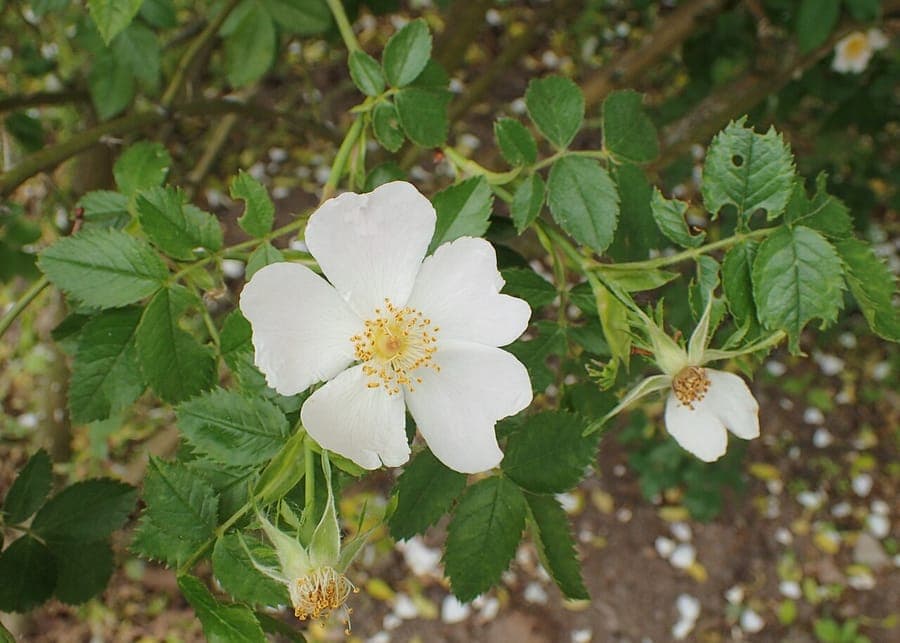
Krzysztof Ziarnek, Kenraiz / CC BY-SA 4.0, via Wikimedia Commons
Rosa balsamica: complete guide
Rosa balsamica
Want to see Rosa balsamica: complete guide in your garden?
1 minute, no credit card
Overview
Rosa balsamica, commonly known as Balseam rose or Downy rose, is a robust, deciduous rose native to Europe extending to the Caucasus Mountains and North Africa. This plant is celebrated for its fragrant flowers and strong growth habit. Unlike many modern roses, this species is a true wild rose with natural growth patterns.
The plant typically reaches 1.5-2.5 meters in height and spread. During summer and early fall, numerous small pink flowers appear, attracting many pollinators. The plant is extremely winter-hardy and requires minimal artificial feeding.
Appearance and Bloom
Rosa balsamica is a shrub with fine, gray-green foliage that turns yellow-orange in fall. The flowers are small to medium-sized, approximately 3-4 cm diameter, usually pink to light red. They appear in clusters and have a pleasant, sweet fragrance.
After blooming, small red fruits (rose hips) form, providing bird food in fall and winter. This contributes to garden biodiversity. The plant has small thorns on stems, typical of wild roses.
Ideal Location
Choose a full sun location for this rose (at least 6 hours direct sunlight daily). The plant tolerates partial shade but flowers less abundantly. Ensure good air circulation to prevent fungal diseases.
Windbreak protection helps, although this rose is quite wind-tolerant. Plant in an open, non-stifled area. The plant also grows well against a wall or fence.
Soil Requirements
Rosa balsamica grows in nearly all soils but prefers neutral to slightly acidic soil (pH 6-7). Well-drained, amended soil is ideal. The plant tolerates even poor soils if well-draining.
Add organic matter to improve water-holding capacity. However, this rose is not as nutrient-demanding as modern varieties. Minimal feeding is usually sufficient.
Free design
Want to see Rosa balsamica: complete guide in your garden? Make a free design now.
Watering
Once established, this rose is drought-tolerant. Water regularly during the first growing year. Thereafter, deep water once weekly or less, depending on rainfall.
During extremely dry periods, more watering may be needed. Drip irrigation or ground-level watering prevents leaf diseases. Don't water foliage.
Pruning
Pruning is straightforward. In March/April, cut the plant back to about two-thirds of its size. This promotes dense, healthy growth. Remove dead, damaged, or very thin branches.
The plant can also be pruned more lightly if you prefer more height. After blooming, spent flowers can be removed. This extends the flowering period.
Maintenance Calendar
March-April: Heavy pruning. Check for frost damage. Top up mulch.
May-June: First bloom period. Regular feeding (optional). Monitor for pests.
July-August: Warm months. Water during drought. Deadhead spent flowers.
September-October: Fall bloom. Reduce watering. Rose hips form.
November-February: Rest. Minimal care. Check winter damage.
Winter Hardiness
Rosa balsamica is very winter-hardy, tolerating temperatures to -20C. Suitable for all Dutch and Belgian gardens. No special frost protection needed for mature plants.
Young plants can be protected in extreme frosts, but actually unnecessary. The plant is much hardier than modern roses.
Companion Plants
Combine Balseam rose with:
- Lavender for color and scent contrast
- Salvia species for bloom complementarity
- Geranium for underplanting
- Low shrubs for texture
- Clematis species to climb on
- Companion perennials
- Native flowers for pollinators
Conclusion
The Balseam rose is an excellent choice for those seeking a robust, low-maintenance rose that provides bird food and attracts pollinators. With minimal intervention, it grows prolifically in almost all situations.
Its European origin and natural robustness make it suitable for ecological gardens. Gardenworld.app helps you design a biodiverse front yard where this beautiful rose excels.
Receive tailored advice via our garden planner and create a balance between beauty and nature!
Want to see Rosa balsamica: complete guide in your garden? Make a free design now.
Upload a photo, pick a style, and get a photorealistic design with plant list in under a minute.
No credit card required


Similar plants
Siberian crab apple: complete guide
Malus x robusta
Complete guide to the Siberian crab apple (Malus x robusta): location, soil, pruning, winter hardiness and the best companion plants for your garden.
Chinese flowering crabapple (Malus x spectabilis): complete guide
Malus x spectabilis
Meet the Chinese flowering crabapple (Malus x spectabilis): a classic spring bloomer with carmine buds and pink blossom.
Potentilla crassinervia: complete guide
Potentilla crassinervia
Potentilla crassinervia, the Corsican cinquefoil, grows wild on Corsica and Sardinia's peaks. Discover how to grow this hardy alpine rock garden gem.