
Wikimedia Commons / CC BY-SA 3.0, via Wikimedia Commons
Creeping yellow cress: complete guide
Rorippa sylvestris
Want to see Creeping yellow cress: complete guide in your garden?
1 minute, no credit card
Overview
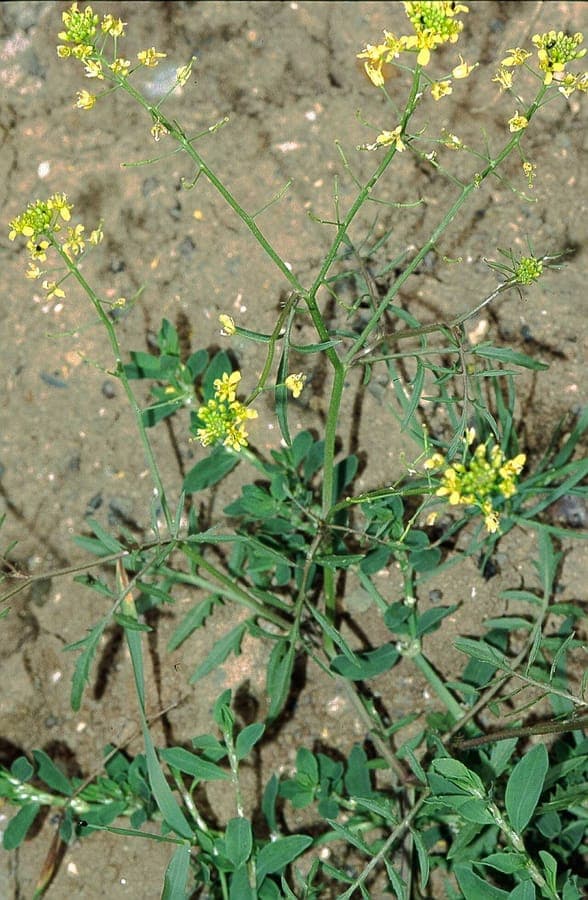
Creeping yellow cress (Rorippa sylvestris) is a remarkable, strongly spreading plant native to Europe through West Himalaya. This dynamic plant grows along water edges, on wet soils and in marshes, rapidly spreading horizontally. With its yellow flowers and resilient growth habit, this plant offers an interesting ecological planting. The plant reaches only 8 to 20 inches in height but can spread for yards, making it perfect for large wet areas.
Appearance and Bloom
Creeping yellow cress distinguishes itself through its thin, resilient stems that spread horizontally over the ground. The leaves are highly variable in form, from very finely divided (in underwater growth) to more undivided (in dry conditions). This makes the plant highly adaptive to different habitats.
Yellow flowers appear from May to October in small, dense clusters. The flowers are small but extremely numerous and attractive to pollinators. After flowering, elongated seed pods form.
Ideal Location
Creeping yellow cress thrives best along water edges, in shallow waters and on permanently wet soils. Sunny to partially shaded locations give the best growth. This plant is perfect for water garden designs where horizontal spreading is desired.
Soil
Creeping yellow cress accepts diverse soils as long as they are permanently moist. Silty, organic soils with plenty of decomposing plant material are ideal. The plant can even grow in water.
No additional feeding is required; moderately polluted waters can even be favorable for nutrient absorption.
Free design
Want to see Creeping yellow cress: complete guide in your garden? Make a free design now.
Watering
Permanent moisture is essential for this plant. The plant thrives in shallow waters and on wet marshes. In dry periods, growth will weaken, although the plant can survive.
Ensure the water level stays high, especially during the growing season.
Maintenance
Creeping yellow cress requires minimal maintenance but can grow aggressively. Regular pruning is needed to keep spreading under control, especially in enclosed water systems. Remove dead plant material in spring.
Be cautious with invasive potential; monitor growth in closed ecosystems.
Maintenance Calendar
March: Cleanup and preparation. May-October: Flowering period; yellow flowers appear. October-November: Seed formation. December-February: Minimal activity; plant remains underwater.
Winter Hardiness
Creeping yellow cress is very winter-hardy and overwinters underwater or on wet soils. The plant can tolerate temperatures down to -13 degrees Fahrenheit.
Companion Plants
Creeping yellow cress pairs well with:
Other waterside plants: Reeds, cattails, and persistent marsh plants form natural bank vegetation.
Floating aquatics: Floating plants add highlights.
Marsh iris and other iris species: Vertical elements create nice contrast.
Groundcover marsh plants: Water pepper and speedwell form layers.
Final Thoughts
Creeping yellow cress is a perfect plant for those who want a natural, ecological water feature. With its yellow flowers and rapid spreading, this plant offers biological value. However, planting choices should be carefully considered due to potentially invasive characteristics.
Available at: Water garden centers, aquatic plant specialists
Want to learn more about waterside plants? Visit gardenworld.app for more advice. Visit gardenworld.app for more advice.
Want to see Creeping yellow cress: complete guide in your garden? Make a free design now.
Upload a photo, pick a style, and get a photorealistic design with plant list in under a minute.
No credit card required


Similar plants
Brassica cretica: complete guide
Brassica cretica
Brassica cretica, the Cretan cabbage, grows wild on Aegean cliffs. Discover how to grow this drought-tolerant, yellow-flowered Mediterranean perennial.
Corsican cabbage: complete guide
Brassica insularis
Corsican cabbage is a rare Mediterranean rock cabbage with white flowers and blue-green leaves. Location, soil and winter protection.
Prostrate cabbage: complete guide
Brassica procumbens
Prostrate cabbage is a creeping North African cliff plant with yellow flowers. Discover location, soil type and winter protection.