
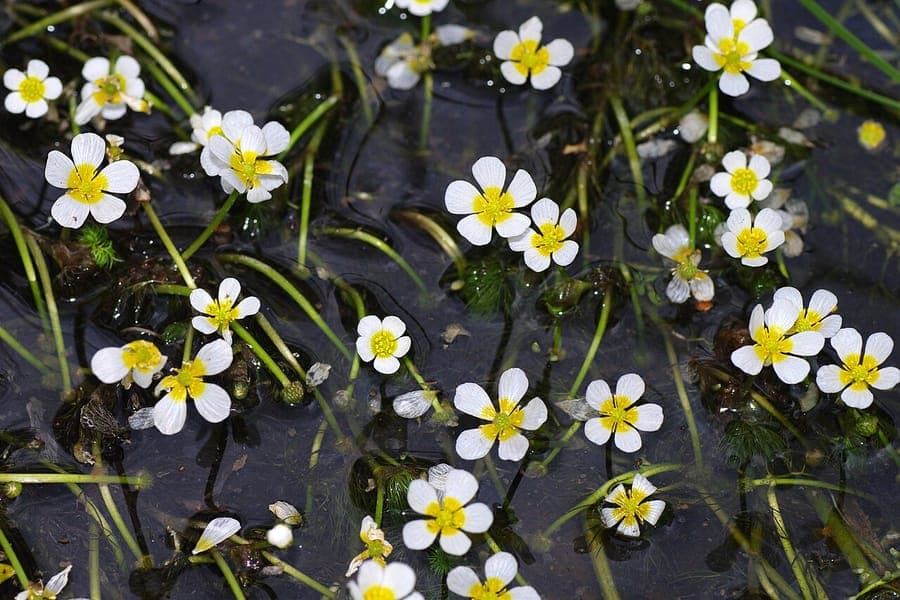
Christian Fischer / CC BY-SA 3.0, via Wikimedia Commons
Ranunculus trichophyllus: complete guide
Ranunculus trichophyllus
Want to see Ranunculus trichophyllus: complete guide in your garden?
1 minute, no credit card
Overview
Ranunculus trichophyllus, commonly known as threadleaf crowfoot, is a delicate aquatic plant found throughout Europe. This submerged plant naturally inhabits shallow waters, ditches, and wetlands where it plays a vital role in aquatic ecosystems. The plant is instantly recognizable by its exceptionally fine, hair-like submerged foliage that creates an ethereal underwater appearance.
This aquatic species is perfect for water gardeners seeking to establish healthy ponds and wetlands. It provides excellent underwater oxygen production and creates important habitat for aquatic insects and small fish. Ranunculus trichophyllus helps maintain water clarity and reduces algae growth naturally.
Appearance and Blooming
Threadleaf crowfoot grows 30 to 60 centimeters above water level. The distinctive leaves are extremely finely divided into hair-like segments, giving the plant a delicate, feathery underwater structure. These leaves are completely submerged and remarkably flexible, swaying gracefully with water currents.
Small white flowers with yellow stamens appear from May through July, measuring about 1 centimeter across. Blooms emerge just above the water surface in succession throughout the season. Following flowers, small seed capsules develop and disperse naturally through water. The blooms attract water insects and aquatic pollinators.
Ideal Location
This plant thrives in full sun to partial shade environments. Provide at least 4 to 6 hours of direct sunlight daily for optimal growth. Plant it in shallow water depths ranging from 20 to 60 centimeters deep. Ranunculus trichophyllus also works beautifully in water troughs and fountain basins.
The species is ideal for bird baths, ornamental ponds, and wildlife water features. It performs exceptionally well in ecosystems where water clarity and oxygen levels must be maintained consistently.
Soil Requirements
This aquatic plant prefers nutrient-rich, muddy substrate beneath water. The plant is not fussy about pH levels and grows equally well in neutral and slightly acidic waters. Incorporate organic matter to enhance growth. In artificial settings, aquarium sand works effectively.
The plant derives nutrition from dissolved minerals in water. In clean water sources, apply slow-release fertilizer once yearly in spring. Avoid excess nutrients that promote undesirable algal blooms.
Free design
Want to see Ranunculus trichophyllus: complete guide in your garden? Make a free design now.
Watering
As an aquatic species, Ranunculus trichophyllus requires consistent water coverage year-round. Maintain clean, oxygen-rich water through regular water changes in small containers. For larger ponds, natural water replenishment through rainfall and evaporation typically suffices.
Keep water depth consistent at 20 to 60 centimeters. Fluctuating water levels stress the plant. During extended dry periods, supplemental water may be necessary.
Pruning
Ranunculus trichophyllus grows vigorously and often requires trimming to prevent overgrowth. Remove dead portions and excess growth in June and August. Regular pruning encourages denser, healthier development.
Remove leaves covering stagnant water areas. This helps maintain oxygen levels in water. A fine net works well for surface maintenance tasks.
Maintenance Calendar
March-April: Growth season begins. Monitor water quality and add nutrients if needed.
May-July: Flowering period. Enjoy blooms and trim regularly.
August-September: Continued growth. Maintain clean, oxygen-rich water.
October-November: Growth slows. Remove dead material.
December-February: Dormant season. Plant can remain under ice if water doesn't freeze solid.
Winter Hardiness
Ranunculus trichophyllus is extremely hardy, tolerating temperatures down to -10 degrees Celsius. In regions with severe winters and thick ice cover, ensure ice doesn't compress the plant. Break ice holes with a stick regularly.
In very cold climates, lift plant material and store in cold frames. Replant in spring. The species survives most British and Dutch winters outdoors.
Companion Plants
Combine Ranunculus trichophyllus with other aquatics like Potamogeton, Callitriche, and Myriophyllum. These combinations create healthy aquatic ecosystems. Add marginal plants like iris and hostas for visual structure.
Swimming ponds benefit tremendously from these plant combinations. Together they combat algae and maintain water quality naturally.
Closing Thoughts
Ranunculus trichophyllus is an excellent choice for anyone with a water feature. It requires minimal maintenance and contributes significantly to healthy aquatic environments. Visit garden centres for plant material and expert advice.
Learn more about aquatic gardening at gardenworld.app. Follow our guides on gardenworld.app for additional water gardening tips and plant identification resources.
Want to see Ranunculus trichophyllus: complete guide in your garden? Make a free design now.
Upload a photo, pick a style, and get a photorealistic design with plant list in under a minute.
No credit card required


Similar plants
Drummond's anemone: complete guide
Anemone drummondii
Discover Drummond's anemone (Anemone drummondii): a silvery-grey mountain plant for cool rock gardens and alpine troughs.
Korean clematis: complete guide
Clematis serratifolia
Clematis serratifolia is a hardy climber with fragrant yellow bell flowers in August-September. Pruning group 3, location and care tips.
Aquilegia brevistyla: complete guide
Aquilegia brevistyla
Discover Aquilegia brevistyla, the elegant North American columbine. Growing tips, shade tolerance, and design ideas for woodland and shadowed gardens.