
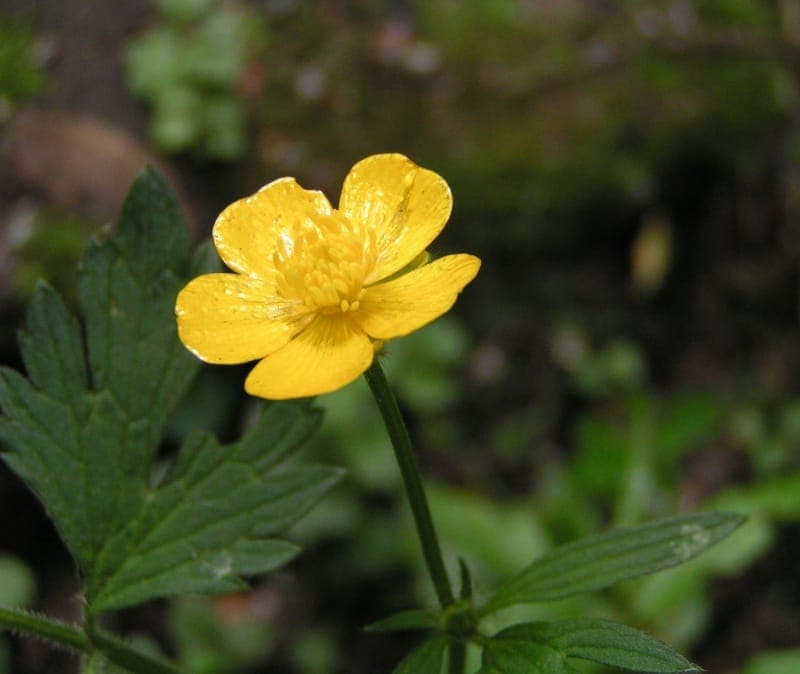
Wikimedia Commons / CC BY-SA 3.0, via Wikimedia Commons
Creeping buttercup: complete guide
Ranunculus repens
Want to see Creeping buttercup: complete guide in your garden?
1 minute, no credit card
Overview
Creeping buttercup (Ranunculus repens) is a vigorous, fast-growing groundcover with bright yellow glossy flowers. This European wildflower is famous for its ability to spread rapidly via stolons and rooting plantlets. With its attractive flowers and extensive growth form, creeping buttercup is ideal for unused spaces, banks and moist areas.
Appearance and bloom
Creeping buttercup grows 15-30 centimeters tall but can spread much wider via horizontal stems. The leaves are trifoliate with a glossy dark green surface. Flowers are bright yellow with five glossy petals and characteristic sheen. They appear from April to June in luxuriant bloom. The plant produces abundant seed, contributing to its colonizing ability.
Ideal location
Creeping buttercup thrives in full sun to partial shade in virtually any location. It is extremely tolerant of various conditions. The plant grows better in moist environments but tolerates drier situations. This makes it perfect for banks, ditches and moist areas. In moderate garden areas it works well, though moister preferences are given. Plant in spots where other plants struggle to grow.
Soil
Creeping buttercup is very resilient regarding soil. It thrives in almost any soil type, from sand to clay, fertile to poor. Moist soils are preferred, making this plant perfect for wet and boggy areas. Sow on moist meadows and along banks. The plant spreads much faster in fertile, moist soils. In dry sandy soil it grows more moderately. Drainage is less important than for most buttercups.
Watering
Keep soil consistently moist, especially during growing period. Creeping buttercup spreads in moist conditions and spreads faster in wet zones. Add mulch to retain moisture and nutrition. However, the plant tolerates temporary drier periods. Excess water is not needed in average garden conditions. In very dry summers, supplemental watering can improve growth. Watch for waterlogging in winter.
Free design
Want to see Creeping buttercup: complete guide in your garden? Make a free design now.
Pruning
Creeping buttercup requires regular pruning to keep it in hand. Trim back unwanted spread, especially along banks and path edges. This can be done by simply removing runners. Deadhead spent flowers for neater appearance. In autumn, the plant can be cut back to prevent winter desiccation. This is not an easy plant to keep small, so consider placement planning carefully.
Maintenance calendar
Spring: Apply mulch and add water as temperatures rise. Summer: Trim regularly to keep spread in check. Deadhead flowers. Autumn: Reduce watering slowly. Winter: Minimal care after cutting back. In early spring, seed from spent flower heads can be guided for next season.
Winter hardiness
Creeping buttercup is very hardy and thrives in most temperate climates. In very cold regions the plant may retreat in winter and regrow in spring. In mild climates the plant can stay green year-round. Snow normally protects the plant in winter. No special protection needed in most areas.
Companion plants
Creeping buttercup combines well with other groundcovers and moist garden plants. Group with creeping primrose and water mint for wet areas. Silene adds white contrast. Bank protection plants like cypress and willow work well. Avoid planting with expensive, slow-growing plants where creeping buttercup dominates. This is a strong grower that can overtake other plants.
Conclusion
Creeping buttercup is a practical choice for difficult garden spots, especially wet zones and banks. Its rapid growth and abundant bloom make it valuable despite its invasive tendency. With proper placement and regular maintenance, you will control this vigorous plant. Visit gardenworld.app for more ideas on groundcovers and bank plants. More information about creeping buttercup at gardenworld.app.
Want to see Creeping buttercup: complete guide in your garden? Make a free design now.
Upload a photo, pick a style, and get a photorealistic design with plant list in under a minute.
No credit card required


Similar plants
Drummond's anemone: complete guide
Anemone drummondii
Discover Drummond's anemone (Anemone drummondii): a silvery-grey mountain plant for cool rock gardens and alpine troughs.
Korean clematis: complete guide
Clematis serratifolia
Clematis serratifolia is a hardy climber with fragrant yellow bell flowers in August-September. Pruning group 3, location and care tips.
Aquilegia brevistyla: complete guide
Aquilegia brevistyla
Discover Aquilegia brevistyla, the elegant North American columbine. Growing tips, shade tolerance, and design ideas for woodland and shadowed gardens.