
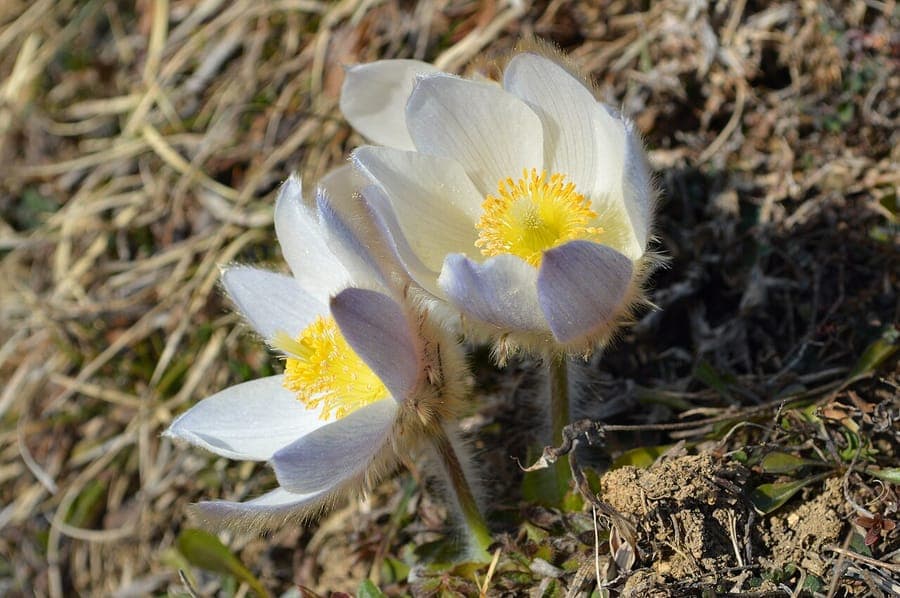
DimiTalen / CC0, via Wikimedia Commons
Spring pasque flower: complete guide
Pulsatilla vernalis
Want to see Spring pasque flower: complete guide in your garden?
1 minute, no credit card
Overview
Pulsatilla vernalis, the spring pasque flower, is one of the most captivating early-blooming mountain plants in Europe. A member of the Ranunculaceae family and a close relative of the common pasque flower (Pulsatilla vulgaris), it stands apart through its diminutive stature, its characteristic silvery-white silky-haired flower buds, and its extraordinary timing: the flowers emerge in late winter or early spring, sometimes pushing through the last remnants of snow.
The plant grows naturally from Norway and Sweden in the north through Germany, France, Switzerland, and Austria to Spain and Bulgaria, occurring on alpine and subalpine grasslands, open rocky slopes, calcareous hillsides, and dry mountain heaths between 1000 and 3000 metres above sea level. The species name vernalis is Latin for 'of spring', a direct reference to this early flowering period.
In cultivation, Pulsatilla vernalis is a challenging but exceptionally rewarding choice for the rock garden or alpine trough. It demands sharply draining, lean, calcareous soil and cannot tolerate waterlogged or stagnant conditions. Given these requirements, however, it rewards its grower with spectacular white to pale lilac flowers in April-May, followed by the ornamental feathery seed heads that extend the plant's appeal well into summer. Browse rock garden design ideas at gardenworld.app.
The species is legally protected in several European countries due to population decline from habitat loss, overgrazing, and climate change. Always buy certified nursery plants and never collect specimens from the wild.
Appearance & bloom cycle
Pulsatilla vernalis forms a small basal rosette of pinnately divided, deeply cut leaves, 5-15 cm tall at flowering time. The leaves are finely hairy and deep green; they develop fully after the flowers open. Flower stems are 5-15 cm tall, densely covered in long, silvery-white silky hairs that give the whole plant a distinctive shimmer in early sunlight.
Each stem carries a single upright flower with six to seven sepals. The outer surface of the sepals is silvery-white hairy; the inner surface is white to pale lilac, occasionally with a faint pink tinge. Fully open flowers measure 3-5 cm across. In the sharp alpine light, the contrast between the gleaming white inner surface and the silver outer covering is particularly striking.
In its natural habitat, flowering occurs in April-May as snow melts. In garden cultivation at lower altitudes, flowering begins somewhat earlier, from late March to mid-May depending on the site and year. After flowering, the characteristic plumed seed heads develop, with long, curving, hairy tails that catch the light and remain ornamental for weeks - sometimes well into July. The plant grows slowly and reaches its full ornamental potential only after three to five years, when a mature specimen with ten to fifteen simultaneous flower stems creates a spectacular display.
Ideal location
Pulsatilla vernalis requires a site that comes as close as possible to its alpine habitat: full sun, outstanding drainage, shelter from drifting leaves and organic debris, and a cool, airy environment. The best positions in the garden are:
- A steeper south- or south-west-facing slope in a rock garden, with stones or rocks that retain warmth during the night.
- A raised bed with a coarse, calcareous substrate and a gravel mulch layer around the stem base.
- An alpine trough with a specialised substrate placed in a sunny, exposed position.
The plant cannot tolerate deep shade from large trees or neighbouring tall plants. Air circulation is essential to keep the neck and root zone dry during humid periods. In winter, the plant must be able to drain completely: consider constructing a small glass or acrylic rain shelter over the plant to keep the root zone dry without blocking air circulation.
In lowland gardens in the Netherlands and Belgium, this species succeeds best when overwintered in a lightly ventilated cold greenhouse or cold frame (minimum -10 °C, maximum +10 °C in winter) and moved outdoors only after the last hard frost. Find more inspiration for alpine and rock garden design at gardenworld.app.
Soil requirements
Soil requirements for Pulsatilla vernalis are highly specific. The plant needs lean to moderately nutrient-poor, sharply draining, slightly acidic to mildly calcareous soil with a pH of 6.0-7.5.
The recommended substrate mix for rock gardens and troughs:
- 40% coarse grit or granite chips (4-8 mm particle size)
- 30% sharp sand (river sand or quartz sand)
- 20% well-rotted compost or leaf mould
- 10% loamy topsoil
Never add fresh manure, nitrogen-rich compost, or artificial fertiliser. Excess nutrients cause lush leafy growth and weak, susceptible roots. The substrate must never hold water: the root zone should drain freely within an hour of rain.
A 3-5 cm layer of coarse grit or granite gravel placed directly around the stem base is strongly recommended. This keeps the crown dry, prevents rotting, and moderates extreme soil temperature fluctuations.
Watering
Pulsatilla vernalis is a drought-tolerant plant that naturally inhabits environments with a pronounced dry summer after snowmelt. In the garden, the plant must never stand in wet or water-retaining soil. Watering is rarely necessary when drainage is good and the site is not exposed to prolonged heat and dryness.
During the flowering period (April-May) and shortly after, the plant is actively growing and moderately sensitive to desiccation. Water lightly once every two weeks with 0.3-0.5 litres per plant if it has not rained for more than two weeks. After flowering and through summer, water needs decrease sharply: in a well-drained rock garden or trough, additional watering is generally unnecessary.
Avoid watering after 4 pm and never water when the soil is already moist. Morning watering at the base (not over the leaves or flowers) is the safest method. In autumn and winter, all artificial watering should be completely avoided; the plant must remain as dry as possible throughout this season.
Free design
Want to see Spring pasque flower: complete guide in your garden? Make a free design now.
Pruning
Pulsatilla vernalis requires almost no active pruning. After flowering, spent stems are left in place as long as the plumed seed heads retain ornamental value - this may be until June or July. Once they have dried, cut the stems back to just above the leaf rosette base.
In late autumn (November), remove dead above-ground leaf material. Leave the small, partially evergreen leaf rosette, which may stay partly green through mild winters, in place as protection for the root crown. Remove any leaf showing signs of decay immediately: the narrow neck of the plant is vulnerable to Botrytis grey mould when rotting organic material accumulates.
Do not divide the plant: Pulsatilla vernalis has a tap root that does not divide well. Propagation is by fresh seed sown immediately after ripening (June-July) in a cold frame or unheated greenhouse. Young nursery plants sold in spring are the most reliable option for establishing new plants.
Maintenance calendar
January - February: Check that no leaves or organic debris have blown around the plant. Remove immediately. Keep as dry as possible. During prolonged hard frost without snow cover, a loose layer of dry conifer branches can protect the root zone without trapping moisture.
March - April: Flowering period approaches. Remove any protective materials as night frosts ease. Check for slug activity. Add a thin layer of fresh granite grit around the stem base if needed.
May: Flowering and seed development. Enjoy the plumed seed heads. No feeding. Water lightly once every two weeks during dry spells.
June - July: Seed plumes dry. Remove dry stems. Collect seed for sowing as soon as ripe (pale brown, dry). Keep surroundings free of blown leaves and organic debris.
August - September: Summer dormancy. Minimal watering. Check for fungal infections. Protect from accidental disturbance.
October - November: Remove dead above-ground material. Apply winter protection if needed (dry, not airtight). Check drainage.
December: Full rest phase. No watering. No feeding.
Winter hardiness
Pulsatilla vernalis is superbly cold hardy in its alpine home habitat, surviving temperatures to -30 °C or below under a deep insulating snow cover. In garden cultivation, USDA zones 4-7 apply.
The challenge in lowland cultivation is not cold itself but the combination of cold and wet. Mild, wet winters without a proper frost period, common in Dutch and Belgian maritime climates, pose more risk than hard but dry alpine winters. The root crown can be attacked by Pythium or Phytophthora root rot at temperatures just above freezing when persistently wet conditions prevail.
Key protective measures:
- Excellent drainage at the planting site (see Soil requirements)
- A dry overhead shelter over the plant base in winter (to exclude precipitation only, not cold or air)
- No organic mulch layer directly around the stem base
- Maintain the 3-5 cm grit layer around the stem base
Overwintering in containers in an unheated but frost-free storage area (minimum 0 °C, maximum 5 °C) is the safest option during wet winters.
Companion plants
Pulsatilla vernalis thrives best alongside other alpine or subalpine plants that share its preference for dry, nutrient-poor, well-drained conditions. Excellent rock garden companions include:
- Pulsatilla vulgaris (Common pasque flower) - a close relative with near-identical growing conditions, flowering in purple to crimson; together they create a superb early spring display.
- Dryas octopetala (Mountain avens) - white flowers in May-June, evergreen leaf mat, excellent in the same calcareous rocky beds.
- Saxifraga oppositifolia (Purple saxifrage) - early-blooming, in purple-pink, for the same rocky crevices and dry calcareous slopes.
- Gentiana verna (Spring gentian) - intensely blue, flowering in April-May on the same calcareous, well-drained rocky grasslands.
- Thymus serpyllum (Creeping thyme) - a ground cover that fills the gaps in the rock garden without competing significantly with larger alpine plants.
- Sempervivum tectorum (Common houseleek) - rosette-forming succulent for full sun and dry, lean soil; ideal companion for pulsatilla in the rock garden.
Space Pulsatilla vernalis plants 20-30 cm from neighbouring plants. Keep the immediate surroundings free of strongly spreading species such as creeping thyme that could crowd the root zone.
Conclusion
Pulsatilla vernalis is one of the most fascinating and rare early-blooming alpine plants available to European gardeners. The combination of the enchanting white flowers with their silvery silky hairs, the distinctive plumed seed heads, and the extraordinary early bloom time in the spring landscape make this a genuine treasure for the specialist garden. The species asks for specific growing conditions but repays that care with an annually recurring bloom of incomparable beauty.
Would you like to create an alpine atmosphere in your front or back garden? Visit gardenworld.app and discover how a professional rock garden design can be created that respects the specific needs of alpine plants like the spring pasque flower while elevating the overall character of your outdoor space.
Want to see Spring pasque flower: complete guide in your garden? Make a free design now.
Upload a photo, pick a style, and get a photorealistic design with plant list in under a minute.
10,000+ gardens designed already
No credit card required


Similar plants
Drummond's anemone: complete guide
Anemone drummondii
Discover Drummond's anemone (Anemone drummondii): a silvery-grey mountain plant for cool rock gardens and alpine troughs.
Korean clematis: complete guide
Clematis serratifolia
Clematis serratifolia is a hardy climber with fragrant yellow bell flowers in August-September. Pruning group 3, location and care tips.
Aquilegia brevistyla: complete guide
Aquilegia brevistyla
Discover Aquilegia brevistyla, the elegant North American columbine. Growing tips, shade tolerance, and design ideas for woodland and shadowed gardens.