
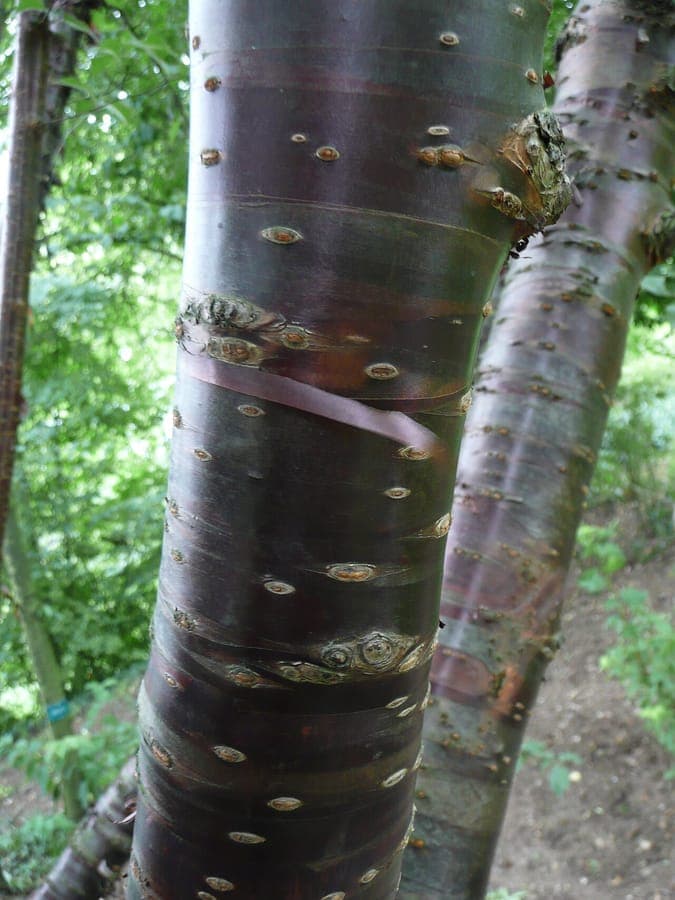
Liné1 / CC BY-SA 3.0, via Wikimedia Commons
Hoary Cherry: complete guide
Prunus canescens
Want to see Hoary Cherry: complete guide in your garden?
1 minute, no credit card
Overview
Prunus canescens, commonly called Hoary Cherry or Gray-leaf Cherry, is a refined shrub originating from the mountains of South-Central China (Hubei and Sichuan provinces). Named for the distinctive silvery-grey bloom covering its young leaves, this ornamental Prunus species brings sophisticated elegance to temperate garden settings. It thrives across USDA zones 5-8 and has become increasingly popular with gardeners seeking robust, four-season interest without fussy maintenance demands.
Appearance and Bloom
The defining characteristic is the hoary (frosty) grey-white coating on new foliage, which gradually fades to green as leaves mature. Spring brings abundant small white flowers (April-May), creating a delicate floral display that attracts pollinators. Plants typically reach 4-5 meters in height and spread with a compact, rounded habit. Summer foliage is a soft grey-green. Autumn transitions to subtle yellows and oranges. Small dark fruits develop post-bloom but are not showy; however, they provide food for birds throughout autumn and early winter.
Ideal Location
Choose a spot with full sun to light shade (4-6 hours direct sunlight daily). Morning sun is preferable to prevent leaf scorch. Sheltered positions away from strong winds protect delicate spring flowers. In cooler climates, south or southwest exposure accumulates heat beneficial for ripening wood. Avoid deep shade, which reduces flowering and promotes weak growth.
Soil Requirements
While adaptable, Prunus canescens prefers well-draining soil with neutral to slightly acidic pH (6.5-7.5). Heavy clay soils must be amended with coarse sand or gravel (30-40% by volume) to prevent waterlogging. Incorporate 2-3 buckets of mature compost per planting hole. Avoid compacted ground where water stagnates.
Free design
Want to see Hoary Cherry: complete guide in your garden? Make a free design now.
Watering
Established plants are moderately drought-tolerant. Young plants (first 2-3 years) need regular water during dry spells - approximately 20-30 liters weekly during heat waves. Apply 5-7 cm of mulch (wood chips or compost) to retain moisture and regulate soil temperature. Overwatering is more harmful than underwatering; ensure drainage is always present. Reduce watering after the first year once roots develop.
Pruning
Minimal pruning required. The plant maintains a natural shape. Remove dead or diseased wood in late winter (February-March) or immediately after flowering. Light shaping after bloom (May-June) is acceptable for formal effects, but avoid heavy cutting which delays healing. Never remove more than 15% of the plant's structure annually.
Maintenance Calendar
FEBRUARY-MARCH: Assess winter damage; light pruning of dead wood. APRIL-MAY: Peak bloom period; apply balanced fertilizer. JUNE-JULY: Active growth; water regularly during dry weeks. AUGUST-SEPTEMBER: Final fertilizer application for autumn wood ripening. OCTOBER-NOVEMBER: Remove fallen leaves; check for pests. DECEMBER-JANUARY: Winter dormancy; minimal intervention.
Winter Hardiness
Hoary Cherry is extremely cold-hardy (USDA zones 5-9, withstanding -25C). In regions without consistent snow cover, apply 10 cm of leaf mulch to the base. Young plants benefit from winter protection in severe climates. The species' origin in Chinese highlands ensures excellent adaptation to continental winters.
Companion Plants
Pair with other spring bloomers: Deutzia, Weigela, Japanese flowering cherry. Underplant with ground covers (Euonymus fortunei, Vinca minor). Use evergreen structure plants like Buxus sempervirens for formality. Avoid strong nitrogen-feeders that compete for nutrients.
Closing
Hoary Cherry deserves wider recognition as a sophisticated, trouble-free addition to temperate gardens. Its elegant foliage, spring flowers, and graceful form provide four-season interest with minimal care. Garden centres and specialist nurseries increasingly stock young plants. Invest in this underrated gem for a lifetime of quiet elegance!
Want to see Hoary Cherry: complete guide in your garden? Make a free design now.
Upload a photo, pick a style, and get a photorealistic design with plant list in under a minute.
No credit card required


Similar plants
Siberian crab apple: complete guide
Malus x robusta
Complete guide to the Siberian crab apple (Malus x robusta): location, soil, pruning, winter hardiness and the best companion plants for your garden.
Chinese flowering crabapple (Malus x spectabilis): complete guide
Malus x spectabilis
Meet the Chinese flowering crabapple (Malus x spectabilis): a classic spring bloomer with carmine buds and pink blossom.
Potentilla crassinervia: complete guide
Potentilla crassinervia
Potentilla crassinervia, the Corsican cinquefoil, grows wild on Corsica and Sardinia's peaks. Discover how to grow this hardy alpine rock garden gem.