
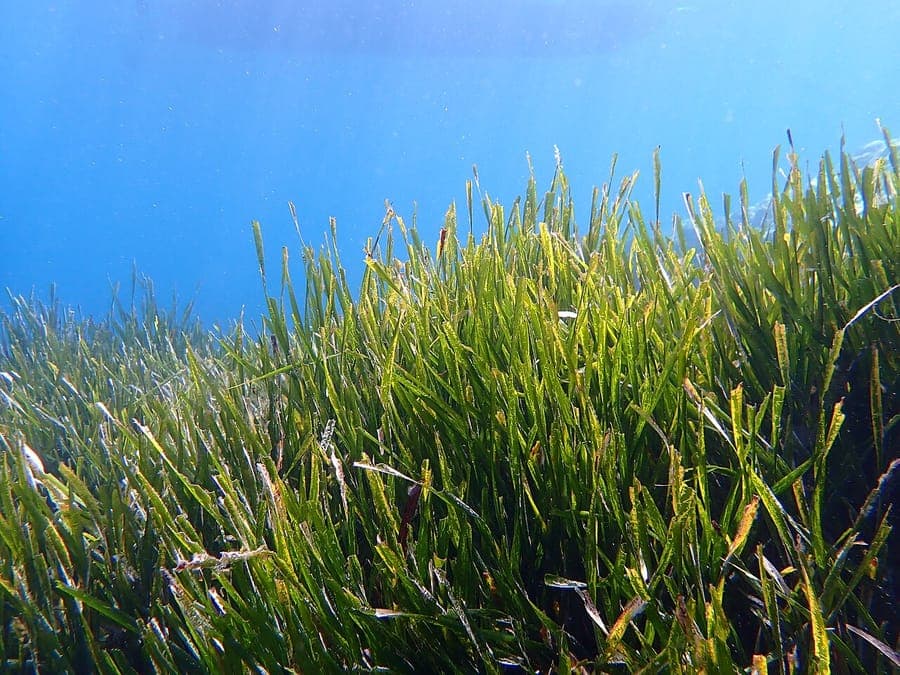
Frédéric Ducarme / CC BY-SA 4.0, via Wikimedia Commons
Posidonia oceanica: complete guide
Posidonia oceanica
Want to see Posidonia oceanica: complete guide in your garden?
1 minute, no credit card
Posidonia oceanica, commonly known as Neptune grass or Mediterranean seagrass, is one of the most valuable seagrass species in the Mediterranean region. Although not a true alga but rather a flowering plant, it plays an indispensable role in marine ecosystems. This guide covers what you need to know about this exceptional underwater plant.
Overview
Posidonia oceanica is an endemic seagrass found exclusively throughout the Mediterranean Sea. Its range extends from North Africa to the Greek archipelago, including areas around Spain, Italy, and France. The plant grows underwater at depths ranging from 2 to 35 meters, typically on sandy or rocky substrates. It forms extensive underwater meadows that function as nurseries for countless fish species and invertebrates.
The ecological value is immense. Posidonia oceanica meadows produce more oxygen than many terrestrial forests and serve as carbon storage ecosystems of global importance. One square kilometer of Posidonia meadows can sequester 10 to 60 tons of organic carbon annually. For aquarium enthusiasts and coastal safety, these grasslands are invaluable.
Appearance and Bloom
Posidonia oceanica develops long, ribbon-like blade growth between 30 and 150 centimeters in length. The blades are dark green to bluish-green and grow in bundles from rhizomes (underground stems). Each blade features parallel veining and a soft texture. The plant flowers from October to December, which is exceptional for seagrasses. The flowers are tiny, greenish-yellow, and can drift on the water surface.
The fruits are greenish-brown and notably bouyant. These contain seeds that can disperse via ocean currents. Winter appearance often shows shredded material derived from broken leaves - this so-called Neptune grass straw was once highly valued for traditional crafts.
Ideal Location
In its natural environment, Posidonia oceanica thrives in clean, clear water with minimal pollution. The plant performs best in coastal areas where water temperature remains stable around 13 to 18 degrees Celsius. Depth is critical - the plant requires light and cannot grow deeper than areas where less than 10% of surface sunlight penetrates.
On terrestrial sites, cultivation is challenging due to specific water temperature requirements and salt concentrations. For enthusiasts with coastal properties or specially designed saltwater tanks, propagation can occur experimentally, provided strict regulations are followed - many countries legally protect Posidonia meadows.
Soil and Water
Posidonia oceanica grows on diverse substrates: pure sand, fine sediment, and rocky bases. The root system (the rhizome) is complex and can extend deep to 60 centimeters. This anchoring system withstands the strongest water currents.
Water parameters are crucial. The plant requires salinity of approximately 38 ppt (practical salinity units), matching full seawater. pH must remain between 8 and 9. Nutrient content - nitrogen and phosphorus - must be low, as elevated levels promote unwanted algae growth that inhibits Posidonia development. Sulfides in anaerobic sediment are harmful and indicate poor water quality.
Free design
Want to see Posidonia oceanica: complete guide in your garden? Make a free design now.
Watering
In the sea, Posidonia oceanica experiences natural water movement through waves, tides, and currents. This provides gas exchange and nutrient distribution. In artificial environments (aquaria), a strong circulation system is essential.
Water quality must be consistently managed. Regular testing for ammonia, nitrite, and nitrate is essential. In artificial setups, pollution must remain minimal - industrial wastewater, sewage, and agricultural runoff are lethal to meadows. Water changes should be minimal, as this plant grows slowly and cannot quickly adapt to disturbances.
Maintenance
Posidonia oceanica requires minimal management in natural habitats. In protected areas, regular monitoring of coverage and health occurs. Pollution, damage from boat anchors, and tourism-related trampling are primary threats.
In artificial environments, maintenance includes regular checks for leaf shedding, epiphytes (parasitic algae), and disease symptoms. Moderate pruning can be useful to prevent tangles, though this should be minimal. Nutrient supplementation is usually unnecessary and can be counterproductive.
Maintenance Calendar
Months January through March mark low-growth periods in temperate waters; expect minimal new blade development. April and May bring rising water temperatures and increased growth. June through September is peak growing season with maximum photosynthesis. October through December is flowering and reproduction period.
Annual monitoring schedule includes: fall - monitor seed production; winter - assess plant health; spring - stimulate new growth via water quality management; summer - minimize algae coverage.
Winter Hardiness
Posidonia oceanica is excellently adapted to Mediterranean conditions but unsuitable for cold climates. Water below 8 degrees Celsius is harmful. In arctic or temperate oceans, this plant cannot survive. However, within the Mediterranean, it survives severe winters easily.
Sea ice, though rare, can be destructive. In artificial setups, temperature must be maintained between 13 and 18 degrees Celsius.
Conclusion
Posidonia oceanica is an extraordinary plant that largely falls outside conventional horticulture. For those with maritime interests, it offers incredible opportunities for education and scientific study. Protection of natural Posidonia meadows must be a top priority given their invaluable ecological value. For GardenWorld users seeking to improve coastal resilience or restore marine habitat, collaboration with marine biologists and coastal protection agencies is advisable.
Want to see Posidonia oceanica: complete guide in your garden? Make a free design now.
Upload a photo, pick a style, and get a photorealistic design with plant list in under a minute.
No credit card required


Similar plants
Acer pycnanthum: complete guide
Acer pycnanthum
Acer pycnanthum, the Japanese swamp maple, is a fast-growing tree with early red flowers and brilliant autumn color, ideal for damp garden settings.
Freeman maple: complete guide
Acer × freemanii
Everything about the Freeman maple (Acer x freemanii): a fast-growing shade tree with spectacular autumn colour for large gardens.
Silver vine: complete guide
Actinidia polygama
Discover silver vine (Actinidia polygama): a hardy climbing plant with silvery foliage, loved by gardeners and cats alike.