
Fritzflohrreynolds / CC BY-SA 3.0, via Wikimedia Commons
Ditch Stonecrop: complete guide
Penthorum sedoides
Want to see Ditch Stonecrop: complete guide in your garden?
1 minute, no credit card
Overview
Penthorum sedoides, commonly called ditch stonecrop or Virginia stonecrop, is an underappreciated wetland perennial native to central and eastern North America, where it lines the muddy margins of streams, ditches, and seasonal pools from Manitoba to Florida and as far west as Kansas. The species is the sole representative of the family Penthoraceae and was formerly lumped with the stonecrops (Sedum) based on superficial resemblance, though it is now firmly placed in its own small family. Despite its modest appearance, ditch stonecrop is a rewarding plant for anyone managing a wet garden edge, a rain garden, or a pond planting scheme. It is robust, ecologically valuable, and surprisingly ornamental through three seasons. At gardenworld.app you can design a wetland garden planting and see how ditch stonecrop integrates with other moisture-loving species.
Appearance and bloom cycle
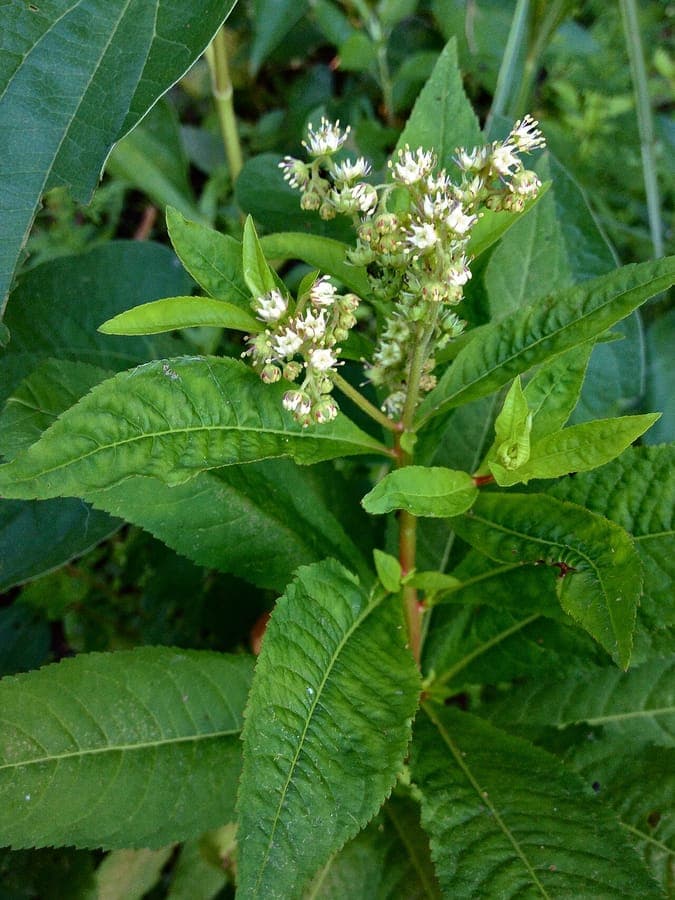
Ditch stonecrop grows as an upright, lightly branched herb reaching 30 to 60 cm in height. The stems are smooth and somewhat succulent in appearance, holding lance-shaped, finely serrated leaves that alternate along the stem. The foliage is mid-green and creates a fine-textured, feathery effect in a planting. From mid-July through September the plant produces distinctive curved flower spikes bearing small, pale yellow to cream-white flowers in the manner of a scorpioid cyme - each spike curls at the tip like an uncurling fern frond before the flowers open. The blooms are modest but attractive to small pollinators, including hoverflies and sweat bees. After flowering, the plant develops star-shaped capsular fruits that persist on the stems and add subtle winter interest. In late summer and autumn the foliage takes on warm red and crimson tones, giving the plant a second season of decorative appeal before it dies back for winter.
Ideal location
Ditch stonecrop performs best in positions with consistent moisture or standing water. The classic setting is at the edge of a garden pond or wildlife pond, where the roots can sit in shallow water up to around 5 cm deep, or in permanently moist soil just at water level. It also grows well in rain gardens, bog gardens, and along drainage channels. The plant tolerates partial shade but produces the best colour and most compact growth in a position that receives full sun for at least half the day. In the wild it occupies both open sunny marshes and the shaded edges of stream banks under deciduous trees. It is not suitable for a dry, well-drained border.
Soil
This species is not demanding about soil composition as long as moisture is guaranteed. It thrives in heavy clay, silty loam, and peaty soils, all of which are common at pond and ditch edges. The preferred pH range is between 5 and 7, meaning both mildly acidic and neutral soils suit it well. The stoloniferous growth habit allows plants to spread gently along an oever margin, knitting together into a low groundcover over time. Rich organic matter is beneficial but not essential: ditch stonecrop survives and flowers even on relatively poor waterlogged ground.
Watering
At a naturally wet site, such as a pond edge or ditch margin, no supplemental watering is needed at all. When grown in a container or aquatic basket for a pond, keep several centimetres of water in the saucer or outer pot at all times. If planted in a rain garden or bioswale, natural rainfall and surface runoff will generally be sufficient in most temperate climates. During exceptional summer dry spells, when pond margins may temporarily recede, established plants will show some stress but recover fully once moisture returns. Ditch stonecrop is not suited to border conditions unless the area is reliably wet.
Free design
Want to see Ditch Stonecrop: complete guide in your garden? Make a free design now.
Cutting back
The plant dies back to the rootstock each winter. Old stems can be left standing through winter for a degree of visual structure and to provide insect shelter, then cut back to near ground level in late winter or early spring before new shoots emerge. Plants will regrow vigorously from the spreading rootstock. Mid-season trimming of wayward runners is optional and easy; simply cut them back where they encroach on neighbouring plants. No formal cutting programme is needed beyond the single annual tidy-up in late winter.
Maintenance calendar
March-April: New shoots emerge from the rootstock. Remove previous year's dead stems if not done in autumn. Divide or replant overcrowded clumps.
May-June: Rapid vegetative growth. Ensure the planting site remains adequately moist. No feeding required at a naturally wet site.
July-September: Flowering period. Small pollinators visit the curved flower spikes. The plant spreads by stolons along the margin.
October-November: Foliage turns red to crimson. Leave stems standing for late-season structure and wildlife value.
December-February: Dormant period. The plant overwinters in the rootstock below soil level.
Winter hardiness
Ditch stonecrop is reliably cold-hardy to USDA zone 4, tolerating sustained temperatures well below freezing without any protection. In practical terms this means it is suitable for virtually all of northern and central Europe, including the Netherlands, Belgium, Germany, and France. The rootstock survives even when the surrounding soil and water freeze solid, as it naturally experiences hard winters throughout its native range in the northern and central United States and Canada. In milder zones 8 and 9, the plant may remain partially evergreen through winter.
Companion plants
Ditch stonecrop combines naturally with a range of wetland and marginal plants. For height contrast, try it alongside narrow-leaved bulrush (Typha angustifolia) or yellow flag iris (Iris pseudacorus). For a naturalistic North American wetland feel, plant it near Joe-pye weed (Eutrochium maculatum) or boneset (Eupatorium perfoliatum). Low-growing companions at similar height include marsh marigold (Caltha palustris) for spring colour and watercress (Nasturtium officinale) for edible interest. Avoid planting too close to aggressive spreaders such as common reed (Phragmites australis), which can overwhelm it. The plant works well at garden centres that stock native wetland plants. Visit gardenworld.app to plan a complete pond-edge scheme using ditch stonecrop alongside other moisture-loving natives.
Closing thoughts
Penthorum sedoides is a plant that deserves far wider use in wetland gardens and managed pond edges. Sturdy, insect-friendly, and quietly attractive through three seasons, it fills a niche that few garden plants can match: the permanently wet margin where most ornamentals refuse to grow. Its autumn colour alone makes it a worthwhile addition to any garden pond planting. For gardeners who want ecological value without sacrificing ornamental interest, ditch stonecrop is an excellent choice.
Want to see Ditch Stonecrop: complete guide in your garden? Make a free design now.
Upload a photo, pick a style, and get a photorealistic design with plant list in under a minute.
10,000+ gardens designed already
No credit card required


Similar plants
Acer pycnanthum: complete guide
Acer pycnanthum
Acer pycnanthum, the Japanese swamp maple, is a fast-growing tree with early red flowers and brilliant autumn color, ideal for damp garden settings.
Freeman maple: complete guide
Acer × freemanii
Everything about the Freeman maple (Acer x freemanii): a fast-growing shade tree with spectacular autumn colour for large gardens.
Silver vine: complete guide
Actinidia polygama
Discover silver vine (Actinidia polygama): a hardy climbing plant with silvery foliage, loved by gardeners and cats alike.