
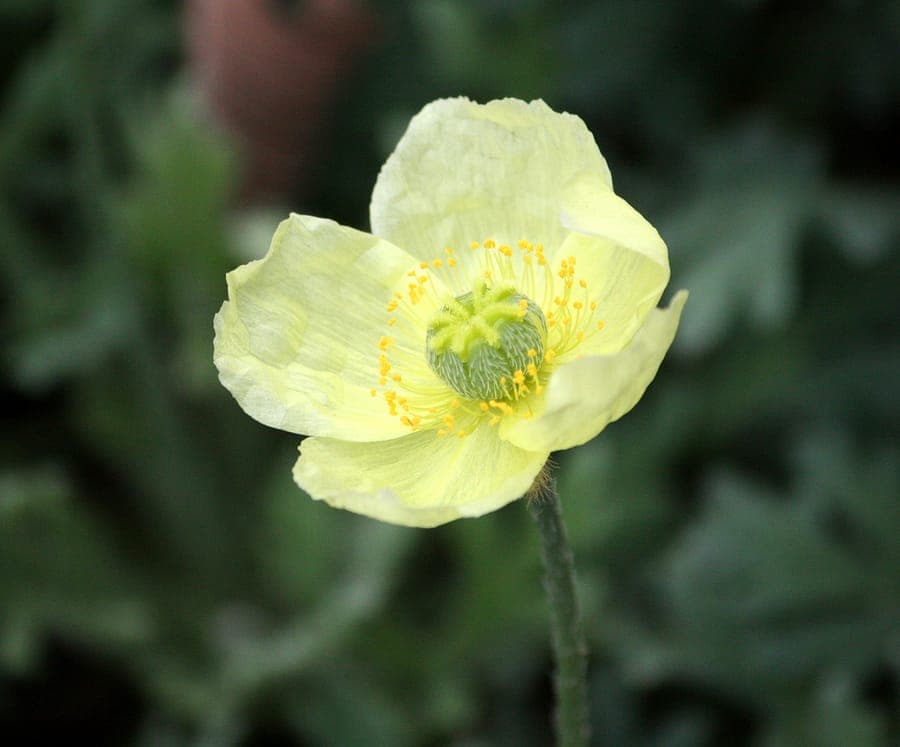
Takeo Goto / CC BY 2.0, via Wikimedia Commons
Papaver lapponicum: complete guide
Papaver lapponicum
Want to see Papaver lapponicum: complete guide in your garden?
1 minute, no credit card
Overview
Papaver lapponicum, the Lapland Poppy, is an extremely rare and fascinating alpine plant from the Papaveraceae family (poppy). This tiny flower grows naturally in subarctic regions - in the Arctic areas of North America, Greenland, and northern Russia.
This is a plant for true plant enthusiasts: small, fragile, and difficult to cultivate. But for those who succeed in bringing this Arctic treasure into bloom, it is an unforgettable reward. The plant represents the rugged beauty of subarctic flora.
Appearance and bloom
Papaver lapponicum is a miniature plant, usually no taller than 5-15 cm. It grows as a compact rosette of leaves close to the ground. The leaves are deeply incised, greyish-green, and have a silky texture.
The flowers are the highlight: lemon yellow to pale yellow, with four gently wavy petals. Each flower is relatively large compared to plant size, making them prominent in their mountain habitat. Blooming occurs during the short Arctic summer, typically June to July in natural environment.
After pollination, characteristic seed capsules form that later open to disperse seeds.
Ideal location
This alpine specialist thrives best in cold, well-drained conditions. A location with full sun is essential - at least 6-8 hours of direct sunlight daily. In warm climates, some protection from intense afternoon sun may even be necessary.
The plant loves strong air circulation. Place it in an elevated location or in a ventilated greenhouse where cold mountain winds can blow through.
Temperature is critical. The plant prefers cold winters and short, cool growing seasons. Average summer temperatures above 20 degrees Celsius can be problematic. This makes it difficult to grow in warm climates.
Soil
Extreme drainage is absolutely crucial. Use a very coarse soil mix: mixture of alpine growing medium, gravel, lava stones, and sand (1:1:1:1). This must be extremely porous.
A pH of 6.0-7.0 is ideal. The soil should be nutrient-poor - mineral-rich but not organically rich. Too much feeding promotes leaf growth at the expense of flowers.
Free design
Want to see Papaver lapponicum: complete guide in your garden? Make a free design now.
Watering
Water carefully. This plant accepts somewhat dry conditions. Let the soil dry thoroughly between waterings - actually prefers to be dry rather than wet.
During the growing period (spring-summer) water moderately only when soil is completely dry. In winter, practically no watering.
Ensure water doesn't stagnate around the rosette - this leads directly to rotting. Use a terracotta pot with very large drainage holes.
Pruning
Pruning is not applicable. The plant is already miniature. Remove faded flowers to prevent seed waste, which diverts plant energy.
Maintenance calendar
January-March: Complete rest. No water, no feeding. April-May: Begin careful watering when growth starts. Very light feeding once monthly. June-July: Flowering period. Water carefully. No extra feeding. August-September: Seed collection. Minimal watering. October-December: Preparation for rest. Gradually reduce watering.
Winter hardiness
Papaver lapponicum is very winter hardy - it is after all an Arctic plant. In fact, it needs cold winters for reproduction. This is an advantage in Northern Europe.
The problem is not cold, but too warm summers. In warm climates, the plant must be kept in a cooler environment (e.g., alpine house) with artificial cooling.
Companion plants
This is a solitary plant. Combine with other alpine miniatures of similar temperament:
- Draba species (rock flowers)
- Saxifraga (Stonebreaker)
- Dianthus alpestris (Alpine carnation)
- All Arctic alpine flowers
Closing
Papaver lapponicum is not a plant for everyone. It requires patience, knowledge of alpine horticulture, and willingness to fail. But for passionate plant lovers, it offers a unique opportunity to grow a piece of Arctic flora in your garden or greenhouse.
Seed can sometimes be found through specialized seed suppliers. Good luck with this Arctic beauty! Discover more plant guides on gardenworld.app.
Want to see Papaver lapponicum: complete guide in your garden? Make a free design now.
Upload a photo, pick a style, and get a photorealistic design with plant list in under a minute.
No credit card required


Similar plants
Papaver gorodkovii: complete guide
Papaver gorodkovii
Papaver gorodkovii, the arctic poppy, thrives from Alaska to Russia's Far East. Discover how to grow this rare, extremely cold-hardy rock garden treasure.
Papaver setiferum: complete guide
Papaver setiferum
Papaver setiferum is a hardy giant Caucasian poppy with fiery red blooms. Discover siting, soil, deadheading and winter hardiness.
Pale Poppy: complete guide
Papaver alboroseum
Discover pale poppy (Papaver alboroseum) - rare alpine poppy with white-pink flowers. Precious beauty from Kamchatka. Cultivation in alpine and rock gardens.