
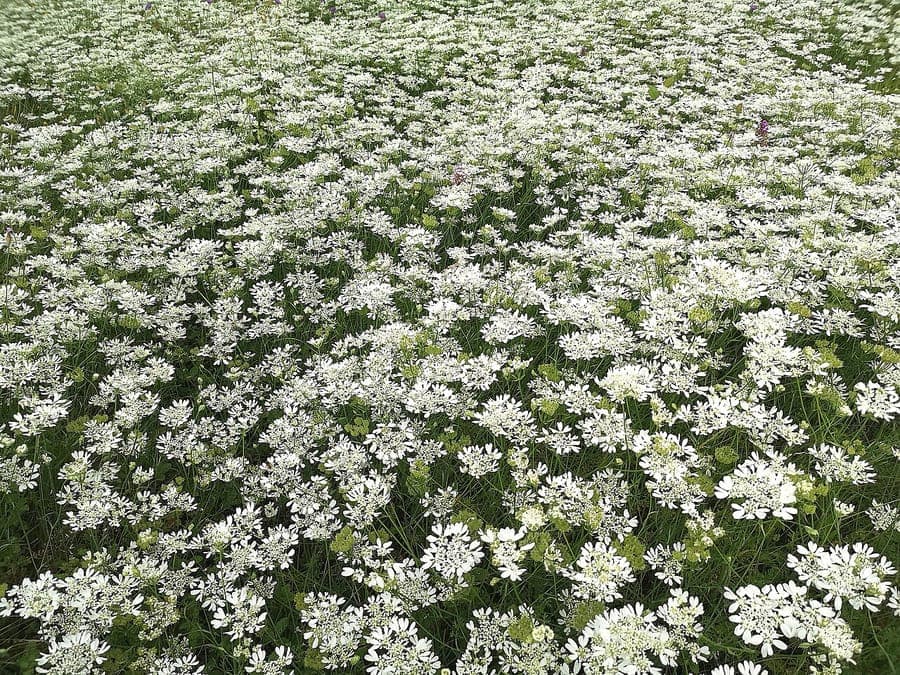
Garonzi Stefania / CC BY 4.0, via Wikimedia Commons
Orlaya grandiflora: complete guide
Orlaya grandiflora
Want to see Orlaya grandiflora: complete guide in your garden?
1 minute, no credit card
Orlaya grandiflora: complete guide
Overview
Orlaya grandiflora, also known as white lace flower or large-flower orlaya, is an elegant biennial plant from the Apiaceae (carrot family). This attractive plant propagates itself anew from seed each year, making it a reliable choice for gardeners seeking years of blooms without needing to resow seed. The fine, delicate flowers are widely used in cut flower arrangements and add finesse to any front garden.
Appearance and bloom
Orlaya grandiflora grows to about 50-80 centimetres tall, with thin, grassy leaves that are finely divided and light. The plant resembles wild carrots in appearance. The flowers are the highlight: small, white flowers grouped in flat umbels (botanically speaking), resembling lace. Each flower is small but numerous, creating a very fine texture. Blooming begins in May or June and can continue until September with regular removal of spent flowers. The plant feels very light and airy.
Ideal location
Orlaya grandiflora thrives best in full sun, where it receives at least six hours of direct sunlight. Without adequate sun, the plant will grow weak and floppy. Well-ventilated locations are important, as the plant is sensitive to fungal diseases in humid, poorly ventilated conditions. It can grow in semi-shade but will produce far fewer flowers.
Soil
The white lace-flower is quite flexible regarding soil type. It grows well in both nutrient-rich and moderate soils, provided drainage is good. Loose, workable soil is strongly preferred. Preferably neutral to slightly acidic pH. Excessive feeding promotes leaf growth at the expense of flowering, so aim for modest nutrient conditions.
Watering
Orlaya grandiflora requires regular watering when young, especially as seedlings emerge. Once established it requires moderate watering, particularly during dry periods. The plant dislikes waterlogging; ensure good drainage. During periods of heavy rain, additional watering may be unnecessary. Consistent moisture, neither too dry nor too wet, is ideal.
Free design
Want to see Orlaya grandiflora: complete guide in your garden? Make a free design now.
Pruning
Pruning is not necessary, but regular removal of spent flowers promotes continued flowering and prevents self-seeding if you do not want it. Cut off flower tips as soon as they fade. If you want the plant to self-seed for next year, allow some flowers to go to seed and cut them off once they turn brown.
Maintenance calendar
January to March: Preparation for sowing. March to May: Sowing seed, possibly starting indoors. May to September: Flowering, regular harvesting of flowers. October to December: Allow some plants to seed for next season, or remove dead stems.
Winter hardiness
Orlaya grandiflora is a cold-preferring biennial. The plant grows better in cooler seasons and can tolerate significant frost periods. In fact, it often blooms better after winter cold. In very mild climates, it can be sown in very early autumn so it establishes before winter with spring flowering.
Companion plants
The white lace-flower combines beautifully with other Mediterranean annuals and biennials, especially blue forms such as bachelor buttons (Centaurea cyanus), cornflowers and Nigella. Silver-leaved plants also provide good contrast. The fine texture of Orlaya works well to break up stiffer groups. It fits perfectly in cut-flower gardens.
Closing
Orlaya grandiflora is the ideal choice for gardeners seeking elegant, airy flowers and simple maintenance requirements. The plant self-seeds in subsequent years, making it an economical, practical option. Plant it and enjoy years of fine, white bloom. For more information, visit gardenworld.app for complete garden tips.
For more garden tips and plant selection, visit gardenworld.app for personalized garden designs.
Want to see Orlaya grandiflora: complete guide in your garden? Make a free design now.
Upload a photo, pick a style, and get a photorealistic design with plant list in under a minute.
No credit card required


Similar plants
Whorled carrot: complete guide
Daucus involucratus
Daucus involucratus is a Mediterranean umbellifer with white flower heads framed by lacy bracts. Growing this gravel garden gem.
Daucus muricatus: complete guide
Daucus muricatus
Daucus muricatus, the spiny wild carrot, grows wild on Mediterranean coasts. Discover sowing, June-July bloom, and wildflower meadow use.
Daucus pumilus: complete guide
Daucus pumilus
Daucus pumilus is a dwarf wild carrot relative with white lacy umbels, thriving on dunes and coastal rock in poor, fast-draining soil.