
penarc / Public domain, via Wikimedia Commons
Onopordum acanthium: complete guide
Onopordum acanthium
Want to see Onopordum acanthium: complete guide in your garden?
1 minute, no credit card
Overview
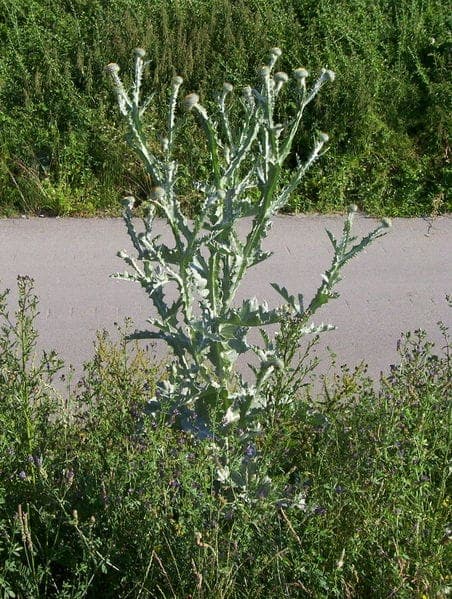
Onopordum acanthium, commonly known as the cotton thistle or scotch thistle, is an impressive biennial plant from the Asteraceae family (daisy or thistle family). This remarkable plant originates from Europe and the Mediterranean region, but has become a familiar sight in many gardens thanks to its characteristic grey-silver foliage and striking purple-pink flowers. The cotton thistle rightfully deserves a place in ornamental, naturalistic or wildflower gardens with its architectural form and undeniable garden presence.
The plant owes its name to the downy, white-silver hairs that cover its leaves and stems, giving it a cotton-like appearance. This feature makes the cotton thistle highly conspicuous in garden design. On gardenworld.app you can easily have a garden plan created where this characterful plant reaches its full potential, alongside other robust species.
Appearance and bloom
Onopordum acanthium is a notably large plant that in its second year can reach a height of 1.5 to 2.5 metres. The stems are densely covered with sharp thorns and coated with the same grey-silver hairs as the leaves. The leaves are large, 20 to 40 centimetres long, heavily spined and have a distinctly serrated profile. They form an attractive rosette at ground level in the first year.
Blooming occurs from July to September of the second growing year. The flowers are purple-pink to purple-violet and grow in clustered flowerheads at the branch tips. These flowers are highly attractive to bees and butterflies, making the plant a valuable food and nectar source. After blooming, the plant produces abundant seed that is dispersed far and wide thanks to its downy seed pappus.
Ideal location
Onopordum acanthium is not a fussy plant regarding location. The plant grows best in a sunny spot, where at least 6 to 8 hours of direct sunlight per day is available. Full sun leads to the most compact growth and richest flowering. In partial shade the plant certainly grows taller, but may become more sensitive to wind and the flower clusters less impressive.
It must be noted that this plant is extremely wind-resistant. The strong, downy stems offer considerable resistance to wind gusts, making the cotton thistle excellently suited for exposed locations, roof gardens or windy sites. The plant can also grow well in coastal areas where sea spray and higher salt concentrations would normally be problematic.
Soil requirements
The cotton thistle makes minimal demands on soil quality. The plant thrives on virtually all soil types, from poor sandy soils to heavy clay soils. In fact: on nutrient-rich, mulch-heavy soils the plant sometimes grows too vigorously, which can result in less flowering. However, a well-drained soil is essential; waterlogged spots are not tolerated well.
The pH can vary from slightly acidic to neutral to slightly alkaline. In the case of very acidic soils, some lime fertiliser can help, but this is usually unnecessary. Thanks to its deep root system, the cotton thistle is actually quite drought-resistant once established and can go long periods without supplementary water.
Free design
Want to see Onopordum acanthium: complete guide in your garden? Make a free design now.
Watering
Onopordum acanthium, once well established, is an extremely drought-tolerant plant. During the first growing year, the plant requires regular watering until the root system is well developed (approximately until August or September). During dry periods in this phase, watering 1 to 2 times per week may be beneficial.
In the second year, as the plant is in full growth, watering can usually be limited to natural rainfall. Only in very dry summers (more than two weeks without rain) can supplementary water be advantageous, especially if the plant is still forming flower buds. Standing water must certainly be avoided, so ensure good drainage.
Pruning and maintenance
Onopordum acanthium is a biennial plant and does not form woody material that needs removal. In the first year the plant grows to a basal rosette without any maintenance being necessary. In the second year, any dead leaves from the previous year can optionally be removed when fully withered.
Because it is a self-seeding plant, it can be useful to cut off some faded flowerheads before the seed ripens, if you do not want the plant to spread everywhere in your garden. This prevents the plant from becoming invasive. In some regions this is even recommended. For those who enjoy the self-spreading habit, you can let the plant go about its business.
Maintenance calendar
March-April: Sow seeds in the location where the plant should grow, or pot on seedlings. May-June: Water young plants regularly if it doesn't rain. July-September: Plants from previous year bloom; enjoy the beauty. October: Harvest seed from suitable plants (optional). November-February: Winter dormancy; little activity.
Winter hardiness
Onopordum acanthium is very hardy down to approximately -15 degrees Celsius. As a biennial plant it overwinters in its first year as a basal rosette without any problems in very cold winters. In the second year the plant grows rapidly and produces seed before the first hard frosts. In the case of extremely severe winters seed may naturally germinate in spring.
Thanks to its strong root system the plant can also recover well after winters with severe frost-heaving. It is not a plant that needs extra protection in typical northern European winters.
Companion plants
Onopordum acanthium combines well with other robust and drought-tolerant plants. Excellent perennial companions include:
- Echium (vipers-bugloss): same growing conditions, comparable height
- Sedum spectabile: lovely bloom colour contrast
- Phlomis fruticosa: same preference for sun and dry soil
- Agapanthus: both attract bees, pleasing colours together
- Cynara cardunculus (cardoon): same family, similar character
In more informal wildflower gardens the cotton thistle looks striking amongst Salvias, Liatris and native ornamental grasses like Stipa gigantea.
Closing
Onopordum acanthium is a plant that does not go unnoticed. With its impressive height, unique grey-silver appearance and valuable flowers, the cotton thistle creates a strong accent in any garden. The plant makes minimal demands, is extremely drought-tolerant and attracts beneficial insects.
Want to include the cotton thistle in your garden plan? On gardenworld.app you can easily have a professional garden design created that takes into account the possibilities and characteristics of the cotton thistle and other robust plant combinations. Start your dream garden today!
Want to see Onopordum acanthium: complete guide in your garden? Make a free design now.
Upload a photo, pick a style, and get a photorealistic design with plant list in under a minute.
No credit card required


Similar plants
Calendula stellata: complete guide
Calendula stellata
Complete guide to Calendula stellata, the star-flowered marigold from Sicily: location, soil, watering and companion planting tips.
Korean chrysanthemum: complete guide
Chrysanthemum x rubellum
Chrysanthemum x rubellum is a hardy autumn perennial with single pink to copper flowers from August to November. Care and combinations.
Helianthus divaricatus: complete guide
Helianthus divaricatus
Helianthus divaricatus is a North American woodland sunflower with yellow summer blooms, ideal for naturalistic borders and shady edges.