
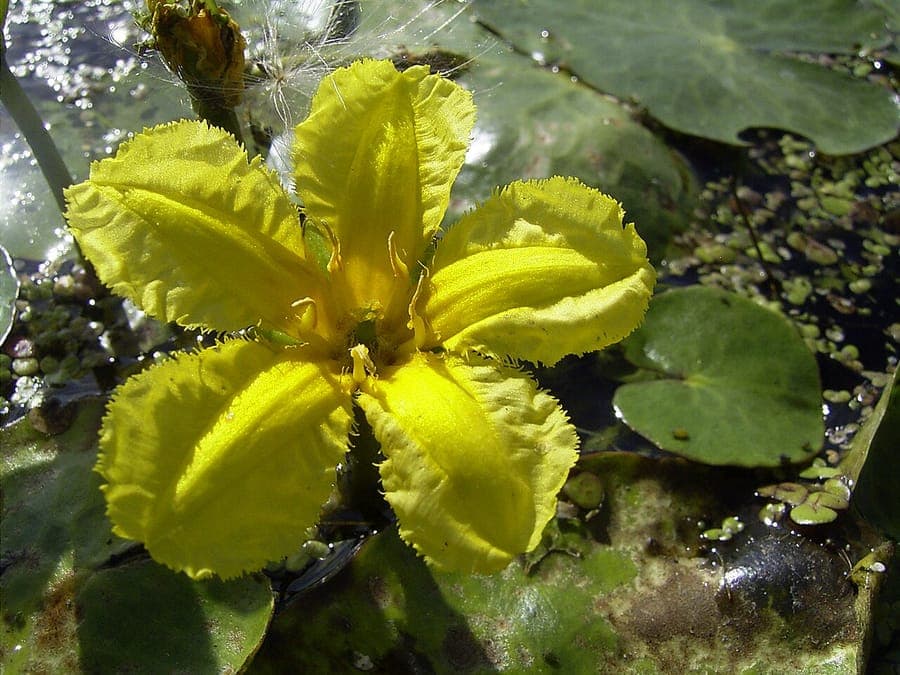
TeunSpaans at Dutch Wikipedia / CC BY-SA 3.0, via Wikimedia Commons
Yellow floatingheart: complete guide
Nymphoides peltata
Want to see Yellow floatingheart: complete guide in your garden?
1 minute, no credit card
Overview
Yellow floatingheart (Nymphoides peltata) is an exquisite aquatic plant from the Menyanthaceae family. Growing naturally in shallow waters and ponds, this charming plant is prized by gardeners for its graceful appearance and minimal care requirements.
Appearance and bloom
Yellow floatingheart captivates with distinctive shield-shaped leaves that float on the water surface. Leaves are round to heart-shaped, typically dark green with striking red undersides. The plant produces abundant delicate yellow star-shaped flowers that rise above the water. Blooms appear from June to September and attract numerous pollinators.
Ideal location
Yellow floatingheart thrives in full sun to partial shade. Position this aquatic gem in shallow zones of garden ponds where water depth reaches 30-60 cm. Ensure adequate light for optimal flowering. The plant suits still or very slowly moving water bodies.
Soil
Yellow floatingheart grows in nearly all aquatic substrates but performs best in nutrient-rich mediums. Use specialized aquatic potting soil or incorporate organic matter into your pond bottom. The plant tolerates various pH levels, thriving in neutral to slightly acidic water.
Watering
Like all aquatic plants, yellow floatingheart requires constant water. Maintain consistent water levels, especially during dry periods. Garden ponds rarely need supplemental watering. Stable water levels keep your plant healthy and actively growing.
Free design
Want to see Yellow floatingheart: complete guide in your garden? Make a free design now.
Pruning
Yellow floatingheart needs minimal pruning. Regularly remove dead or damaged leaves and spent flowers. In autumn, carefully trim excess growth to prevent overwhelming your pond. Cutting stems below the water surface stimulates vigorous new growth.
Maintenance calendar
Spring (March-May): Plant once ice has melted. Add nutrients to water. Summer (June-August): Remove spent flowers and fading foliage. Monitor for excessive growth. Autumn (September-November): Remove fallen leaves. Winter (December-February): Minimal care needed.
Winter hardiness
Yellow floatingheart displays moderate winter hardiness across Western Europe. In severe winters, protect using deep water zones. In mild climates, it remains active throughout the year.
Companion plants
Yellow floatingheart pairs beautifully with other aquatic specimens. Combine with water lilies for extended blooming periods. Marsh iris and wetland perennials make excellent edge companions. Submerged aquatic plants maintain healthy water balance.
Closing thoughts
Yellow floatingheart is an invaluable addition to any pond. Its yellow blooms and floating foliage deliver years of enjoyment. Find yellow floatingheart at quality garden centers. Visit gardenworld.app for inspiration and expertise. With proper care, your yellow floatingheart will flourish beautifully.
Want to see Yellow floatingheart: complete guide in your garden? Make a free design now.
Upload a photo, pick a style, and get a photorealistic design with plant list in under a minute.
No credit card required


Similar plants
Acer pycnanthum: complete guide
Acer pycnanthum
Acer pycnanthum, the Japanese swamp maple, is a fast-growing tree with early red flowers and brilliant autumn color, ideal for damp garden settings.
Freeman maple: complete guide
Acer × freemanii
Everything about the Freeman maple (Acer x freemanii): a fast-growing shade tree with spectacular autumn colour for large gardens.
Silver vine: complete guide
Actinidia polygama
Discover silver vine (Actinidia polygama): a hardy climbing plant with silvery foliage, loved by gardeners and cats alike.