
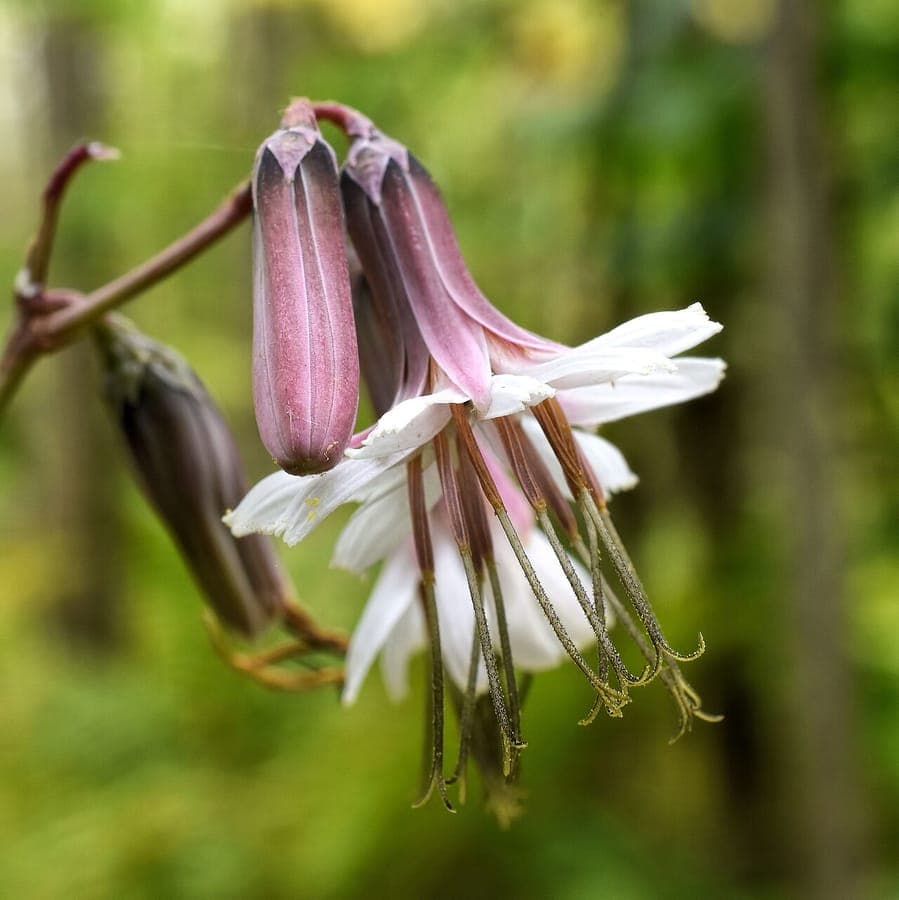
(c) davecz2, some rights reserved (CC BY-SA) / CC BY-SA 4.0, via Wikimedia Commons
White rattlesnakeroot: complete guide
Nabalus albus
Want to see White rattlesnakeroot: complete guide in your garden?
1 minute, no credit card
Overview
Nabalus albus, commonly known as white rattlesnakeroot, lion's foot, or white lettuce, is a graceful herbaceous perennial belonging to the family Asteraceae. Native to eastern North America, its range stretches from Manitoba and Saskatchewan in Canada south through most of the eastern United States - reaching as far south as Georgia, Tennessee, and Arkansas. Despite this broad native distribution, the plant remains little known outside of botanical gardens and woodland restoration projects.
The botanical genus Nabalus takes its name from a Greek word referring to the distinctive structure of the flower heads. The species epithet 'albus' is Latin for white, describing the cream-white flower colour that sets this plant apart from its relatives. It has been known under several synonyms over the years, most notably Prenanthes alba, which still appears in older horticultural texts. On gardenworld.app, you can explore how this plant fits into cohesive shade garden designs.
Appearance and bloom cycle
White rattlesnakeroot is an upright perennial that typically reaches 60 to 150 cm in height when grown under optimal conditions. The stems are sturdy and sometimes lightly flushed with purple. Like all members of the chicory tribe within Asteraceae, the plant contains a milky white latex sap that oozes from cut stems and leaves.
The foliage is highly variable. Lower leaves are large - sometimes 15 to 20 cm across - and may be deeply lobed or triangular with a broad base, similar in shape to a maple or arrowhead. Upper stem leaves are smaller and progressively simpler. This leaf variability was part of the reason why early botanists described multiple separate species that are now treated as a single, variable taxon.
Flowering occurs in late summer and autumn, typically from August through October. The nodding flower heads are arranged in a loose, open panicle at the top of the stem. Each individual head contains 8 to 15 ray flowers and no disc flowers - a feature typical of the genus. The colour is cream-white to pale yellow and the heads are only a few millimetres across individually, but collectively they create a soft, feathery display that brings late-season interest to shaded borders. After flowering, wind-dispersed achenes with white pappus bristles (similar to dandelion seeds) carry the next generation across the garden.
Ideal location
As a species of forest understorey, white rattlesnakeroot thrives in partial to full shade. It grows naturally beneath the canopies of deciduous forests dominated by oaks, maples, and beeches, where it enjoys dappled light and high atmospheric humidity. In the garden, it works excellently as understorey planting beneath large deciduous trees, in a woodland garden corner, or along a north-facing fence or wall.
Direct midday sun causes scorching and rapid desiccation. Gentle morning sun or filtered light through a tree canopy is acceptable and even beneficial for flowering. Hardiness-wise, the plant is rated USDA zones 3 to 7, making it extremely cold-hardy and suitable for gardens across temperate North America and most of northern Europe.
Soil
Nabalus albus prefers humus-rich, consistently moist, well-draining soil. In its native woodland habitat, it grows in the deep organic layer formed by years of leaf litter decomposition. Before planting, improve sandy or heavy clay soils by incorporating generous amounts of garden compost or well-aged leaf mould.
The preferred soil pH is slightly acid to neutral, ideally between 5.5 and 7.0. Highly alkaline or compacted soils should be avoided. The plant does not demand high fertility - in fact, overly rich soils can encourage excessive leafy growth at the expense of flowering. A mulch layer of chopped leaves or bark around the base of the plant helps retain soil moisture and moderates soil temperature.
Watering
Consistent moisture is one of the key requirements for this shade perennial. White rattlesnakeroot is not drought-tolerant and will show its stress clearly through wilting leaves and reduced flowering when moisture is lacking. In a shaded position, the soil naturally dries out more slowly, which reduces the need for supplementary irrigation.
During dry spells in summer, check the soil regularly and water deeply when the top 3 to 5 cm feels dry. Water at the base of the plant rather than overhead to reduce the risk of fungal leaf disease. Established plants in permanently moist woodland soil may rarely need irrigation at all. In containers, water more frequently as pots dry out much faster than open garden ground.
Free design
Want to see White rattlesnakeroot: complete guide in your garden? Make a free design now.
Pruning
Pruning requirements for Nabalus albus are minimal. After the flowering period ends in late September or October, the dried flower stems can be cut back to the base. However, many gardeners choose to leave the stems standing through winter: the dried panicles add delicate structural interest to the frost-covered garden, and the achenes provide food for birds.
In early spring, as soon as new basal growth becomes visible, remove the old overwintered stems cleanly at ground level. Any yellowing or diseased leaves can be removed at any time during the growing season. The plant does not benefit from hard pruning or cutting back mid-season and responds best when allowed to follow its natural growth rhythm without interference.
Maintenance calendar
March - April: Remove old stems from the previous year once new leaf shoots emerge from the base. Apply a fresh layer of compost or leaf mulch around the plant. This is also the ideal time to divide overcrowded clumps.
May - June: Active growth phase. Monitor soil moisture and water during dry periods. The deep shade around the plant naturally suppresses most weed competition.
July - August: Flower buds begin to form. Keep soil evenly moist. Remove any damaged or badly affected leaves.
September - October: Full bloom. Enjoy the graceful, nodding white flower panicles. Wind-dispersed seeds begin to spread after flowering.
November - February: The plant dies back completely above ground. Stems can remain as winter structure or be removed. No winter protection is needed in zones 4 to 7.
Winter hardiness
Nabalus albus is exceptionally cold-hardy. Field observations confirm reliable survival in USDA zones 3 to 7, meaning the plant tolerates minimum temperatures down to approximately -37 degrees Celsius in zone 3. In the milder maritime climates of western Europe, including the Netherlands, Belgium, and the United Kingdom, no winter protection is required.
The plant is a true herbaceous perennial - it dies completely to the ground in autumn and regrows each spring from the persistent root crown. A mulch layer of shredded leaves or bark over the root zone in zones 3 and 4 provides useful additional insulation during the harshest winters. In warmer zones, mulching is primarily beneficial for moisture retention rather than frost protection.
Companion plants
White rattlesnakeroot is a natural partner for other shade-loving woodland perennials. Hostas, with their bold architectural foliage, provide a strong textural contrast to the more delicate, upright form of Nabalus albus. Astilbes offer similar feathery flower plumes in shades of white, pink, and red, but bloom earlier in the season - extending the display from June through October.
Ferns such as ostrich fern (Matteuccia struthiopteris) add vertical structure and fine texture, while Epimedium species create a low, ground-covering layer with semi-evergreen foliage. Shade-tolerant cranesbills like Geranium macrorrhizum complete the lower planting layer. For a native planting design, pair white rattlesnakeroot with other eastern North American woodland plants such as Canada mayflower, trillium, or goldenrod for a naturalistic late-season meadow effect under trees. On gardenworld.app, you can visualise how these companion planting combinations work together in a complete garden design.
Closing
Nabalus albus is an underappreciated gem for shade gardeners seeking late-season interest. Its elegant nodding white flower panicles appear in August and September precisely when most woodland perennials have finished flowering, bringing life and movement to the darkest garden corners. Combined with outstanding winter hardiness, low maintenance requirements, and genuine shade tolerance, this plant deserves a place in any woodland or shade border.
Whether you want to recreate the atmosphere of a North American forest understorey, fill an awkward shaded corner, or simply extend the flowering season of your shade border into autumn, white rattlesnakeroot delivers on all counts. Consider adding it to your next garden plan.
Want to see White rattlesnakeroot: complete guide in your garden? Make a free design now.
Upload a photo, pick a style, and get a photorealistic design with plant list in under a minute.
10,000+ gardens designed already
No credit card required


Similar plants
Calendula stellata: complete guide
Calendula stellata
Complete guide to Calendula stellata, the star-flowered marigold from Sicily: location, soil, watering and companion planting tips.
Korean chrysanthemum: complete guide
Chrysanthemum x rubellum
Chrysanthemum x rubellum is a hardy autumn perennial with single pink to copper flowers from August to November. Care and combinations.
Helianthus divaricatus: complete guide
Helianthus divaricatus
Helianthus divaricatus is a North American woodland sunflower with yellow summer blooms, ideal for naturalistic borders and shady edges.