
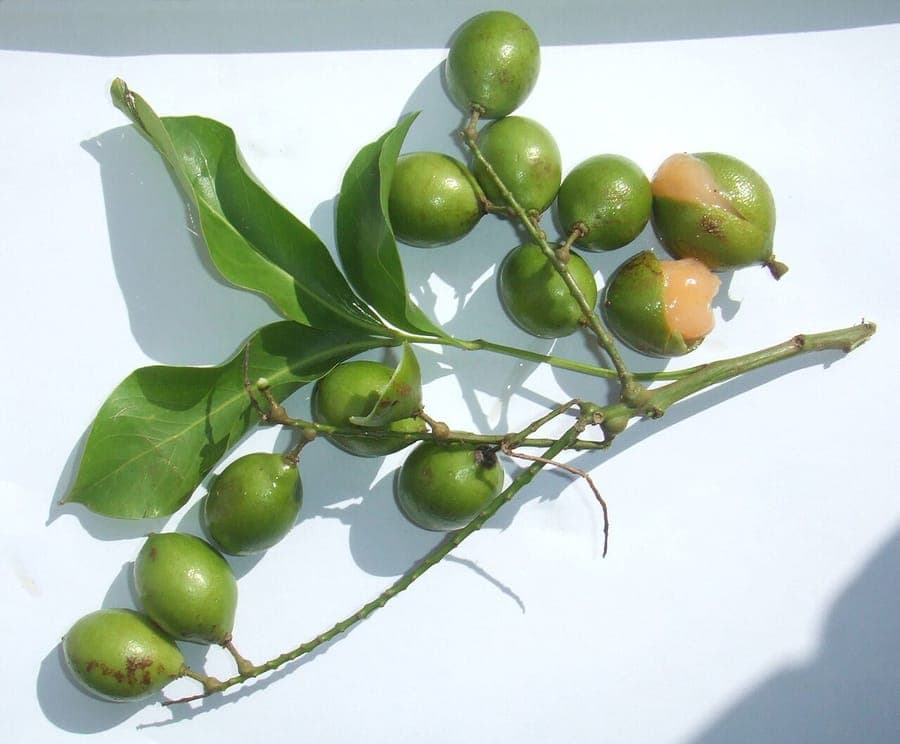
No machine-readable author provided. Hans B.~commonswiki assumed (based on copyright claims). / Public domain, via Wikimedia Commons
Genip: complete guide to honeyed fruit bliss
Melicoccus bijugatus
Want to see Genip: complete guide to honeyed fruit bliss in your garden?
1 minute, no credit card
Overview
The genip (Melicoccus bijugatus), also called honeyberry or Spanish lime, is an impressive fruit tree native to Colombia and Venezuela. Prized for its unique, honey-flavored fruits, the genip thrives in tropical and subtropical climates. Perfect for adventurous gardeners seeking exotic fruits, a mature genip provides decades of sweet harvests.
Appearance and bloom
Genip grows into an impressive tree reaching 8 to 10 meters with lush, elegant foliage. Leaves are compound, composed of paired leaflets, glossy green. Small, inconspicuous flowers appear in spring clusters. These develop into green, round fruits resembling plums, with thin skin and sweet, honey-like pulp inside.
Ideal location
Genip requires full sun and warm conditions. Plant where it receives 6+ hours of direct sunlight daily. The tree is moderately wind-tolerant; partial shelter helps. Subtropical zones suit genip well; avoid frost-prone areas.
Soil
Genip thrives in well-draining, fertile soil with pH 4.0-7.5. Incorporate organic matter: compost and aged manure. Heavy clay: add sand for better structure. The tree shows moderate salt tolerance, suitable for coastal regions. Ensure good drainage.
Free design
Want to see Genip: complete guide to honeyed fruit bliss in your garden? Make a free design now.
Watering
Water regularly during growth and dry seasons. Allow soil to dry slightly between waterings. Mature trees show moderate drought tolerance. Reduce watering in winter. Ensure drainage to prevent fungal diseases.
Pruning
Pruning is optional but helps maintain shape. Prune after harvest or in early spring. Remove dead wood and vigorous shoots disturbing the framework. Maintain an open structure for good air circulation.
Maintenance calendar
Spring: Growth season begins, apply fertilizer, check for pests. Summer: Regular watering, support heavy fruit clusters. Autumn: Reduce feeding, adjust water for ripening. Winter: Minimal care.
Winter hardiness
Genip is tropical. Protect below 10C. Caribbean zones or Mediterranean climates allow outdoor cultivation. Northern zones: container growing, move indoors for winter.
Companion plants
Successful combinations with other fruit trees like mango and avocado. Grows well beneath large shade trees.
Closing
The genip brings tropical fruit and warmth to your garden. With care, your trees flourish into full productivity. Start your genip journey today! Visit gardenworld.app/en for more guides.
Want to see Genip: complete guide to honeyed fruit bliss in your garden? Make a free design now.
Upload a photo, pick a style, and get a photorealistic design with plant list in under a minute.
No credit card required


Similar plants
Acer pycnanthum: complete guide
Acer pycnanthum
Acer pycnanthum, the Japanese swamp maple, is a fast-growing tree with early red flowers and brilliant autumn color, ideal for damp garden settings.
Freeman maple: complete guide
Acer × freemanii
Everything about the Freeman maple (Acer x freemanii): a fast-growing shade tree with spectacular autumn colour for large gardens.
Wild ackee: complete guide
Cupania americana
A comprehensive guide to Cupania americana, a tropical tree from the Sapindaceae family with conspicuous white flowers and brown fruits, native to tropical America.