
Cwmhiraeth / CC BY-SA 4.0, via Wikimedia Commons
Field wood-rush: complete guide
Luzula campestris
Want to see Field wood-rush: complete guide in your garden?
1 minute, no credit card
Overview
Field wood-rush (Luzula campestris) is a grass-like plant belonging to the Juncaceae family, also known as rushes. This species is widely distributed across Europe and North Africa, growing spontaneously in meadows, fields, and woodland margins. Although a modest beauty, Luzula campestris deserves recognition for its ecological value and practical garden applications. When gardeners visit gardenworld.app seeking insight into native plant species, they discover inspiration for integrating plants like Luzula campestris into their landscapes.
Field wood-rush is easy to cultivate, requiring minimal attention once established. This grass-like plant fits excellently in wild gardens, wildflower meadows, and as groundcover in difficult-to-access corners. The plant contributes to biodiversity and provides food and nesting sites for numerous bird species, from which its common name derives. In natural plant communities, Luzula campestris frequently grows alongside mosses and low herbs.
Historically, field wood-rush was utilized by farmers in hay production and grazing. The plant contains nutritious foliage readily consumed by livestock. In modern gardening, it is valued for its role in ecological landscape design and its reputation for long-term stability without demanding maintenance secrets.
Appearance & bloom cycle
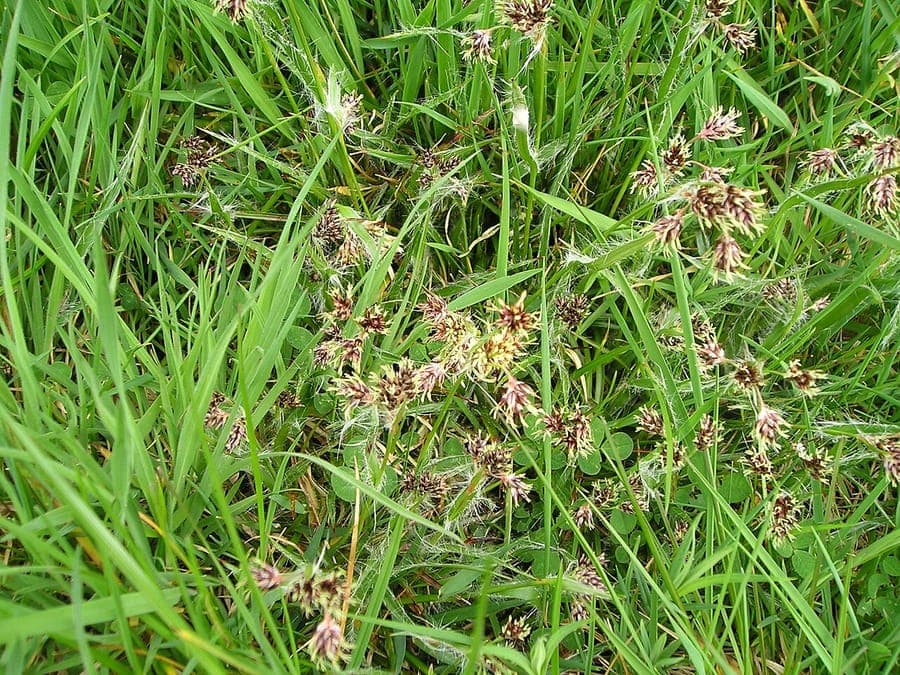
Field wood-rush forms compact rosettes of thin, linear leaves. The blades measure approximately 2-3 millimeters wide and reach heights of 15-40 centimeters depending on growing conditions. The leaf possesses characteristic hairs along the margins, distinguishing it from other grass types. In spring, flower stems emerge above the foliage.
The flowering period is relatively extended, stretching from April through June, peaking in May. Flowers are small, brownish-red to red colored, growing in dense, rounded clusters at stem tips. Each individual flower measures mere millimeters in diameter containing three stamens and a three-lobed stigma. The complete flower spike reaches heights of 20-50 centimeters above the leaf canopy.
Following bloom, small triangular seed capsules form containing light-red to brown seeds. These seeds disperse easily by wind and animals, explaining why Luzula campestris establishes so readily in gardens. Seeds ripen in July-August.
The plant retains foliage through winter, though leaves become brownish-tinged. This evergreen character provides Luzula campestris winter landscape value. In early spring, the plant renews foliage with fresh green growth.
Ideal location
Field wood-rush grows well across a very broad location range, from full sun to part shade. The plant thrives with minimum 3-4 hours direct sunlight daily. In deeper shade, the plant becomes weaker and less compact. A location with morning sun and afternoon shade, such as near deciduous trees, is ideal in warm climates.
The plant tolerates wind very well and can be planted on windy sites without difficulty. This makes it particularly useful for gardening in coastal regions or exposed situations. Luzula campestris fits beautifully in prairie gardens and wild bird garden compositions.
Although Luzula campestris prefers somewhat moister locations, it tolerates drier situations once established. This renders the plant exceptionally versatile for different garden scenarios.
Soil requirements
Field wood-rush grows on a broad range of soils, including poor acidic soils where many other plants struggle. The plant thrives on sandy, clay, and loamy soils as long as drainage is reasonably good. The ideal pH range is 5.5-7.0; the plant also thrives in acidic soils to pH 5.0.
The plant prefers somewhat moister soils but tolerates drier conditions. In very wet, waterlogged soils, root rot can occur. Fertilization is generally unnecessary; the plant grows in nutrient-poor fields in nature.
One-time incorporation of compost around planting holes improves water-retention properties of very poor sandy soils. Mulching is not essential but a thin layer of leafmold in autumn improves soil quality.
Free design
Want to see Field wood-rush: complete guide in your garden? Make a free design now.
Watering
Once established, field wood-rush requires minimal supplemental watering. Under normal growing conditions with regular rainfall, additional irrigation is unnecessary. During prolonged dry periods, especially in the first two growing seasons, the plant benefits from weekly waterings.
The plant prefers somewhat moist yet well-draining soils. Waterlogging causes problems; ensure good drainage. In containers and pots, regular watering is necessary as potting soil dries faster.
Young plantlets in their first year deserve extra attention regarding moisture balance. Once the root system penetrates deeply, water requirements decrease substantially.
Pruning
Field wood-rush requires very little pruning. In late winter or early spring, dead foliage can be removed by cutting the plant close to the ground. This stimulates new growth and maintains a compact, neat appearance.
Whenever possible, gently pull dead leaves from the rosette rather than cutting them. This provides a more natural appearance. Pruning is only necessary if the plant becomes overgrown or dead foliage accumulates.
Avoid pruning during early growth (March-April) as this disrupts flowering. The best time is after flowering finishes, approximately July.
Maintenance calendar
Spring (March-May): Cut dead foliage back to ground level in March. Plant young plantlets in April. Monitor moisture balance. Add compost around established plants in April.
Summer (June-August): Add water during dry periods, especially for young plantlets. Observe flowering and seed formation. Harvest seeds in August if desired.
Autumn (September-October): Add leafmold around plantlets. Reduce watering as rainfall increases. Prepare plants for winter.
Winter (November-February): Little maintenance required. Monitor for water stagnation on very wet sites. Plant survives under snow without problem.
Winter hardiness
Field wood-rush is fully winter-hardy in temperate zones (USDA zones 3-8). The plant tolerates temperatures to -25 degrees Celsius without difficulty. This evergreen character means the plant remains visually present even in hard winters.
In very southern climates where winters are mild, Luzula campestris remains greener year-round. This also makes it suitable for warm temperate zones.
Ice and snow do not harm the plant. Flexible leaves bend under snow and recover as snow melts.
Companion plants
Field wood-rush combines well with other wildflowers and grass species. Small lilies such as Erythronium and wild hyacinths (Hyacinthoides) grow beautifully between Luzula campestris. Yellow spring cowslip (Primula veris) and blue auricula (Primula auricula) are excellent companions.
In grassy compositions, field wood-rush works well with other grass species such as fine red fescue (Festuca rubra) and soft brome (Holcus mollis). Together they create a natural meadow effect.
The plant also enhances ecological border value. Legumes such as clover (Trifolium) and vetchling (Vicia) grow well alongside it. These assemblages attract pollinators and other beneficial insects.
Closing remarks
Field wood-rush deserves recognition as an undervalued plant with significant practical value. This grass-like plant grows easily, demands minimal maintenance, and significantly contributes to garden ecological richness. For gardeners visiting gardenworld.app seeking ideas about native plant applications, Luzula campestris is an excellent choice for wild gardens, wildflower meadows, and ecological landscapes. The plant offers years of stability and value without requiring constant attention, making it perfect for busy gardeners.
Want to see Field wood-rush: complete guide in your garden? Make a free design now.
Upload a photo, pick a style, and get a photorealistic design with plant list in under a minute.
No credit card required


Similar plants
Short-fruited Rush (Juncus brachycarpus): complete guide
Juncus brachycarpus
Complete guide to Juncus brachycarpus: wet soil, pond margins, bloom season, division and winter care for this North American rush in garden ponds.
Smallhead rush: complete guide
Juncus brachycephalus
Smallhead rush (Juncus brachycephalus) - a slender North American wetland plant for pond margins and boggy garden zones. Full care guide.
Mertens' rush: complete guide
Juncus mertensianus
Mertens' rush (Juncus mertensianus) - a compact alpine wetland plant with purple-brown flower heads for cool pond margins. Full growing guide.