
Eric Hunt / CC BY-SA 4.0, via Wikimedia Commons
Yellow honeysuckle: complete guide
Lonicera flava
Want to see Yellow honeysuckle: complete guide in your garden?
1 minute, no credit card
Overview
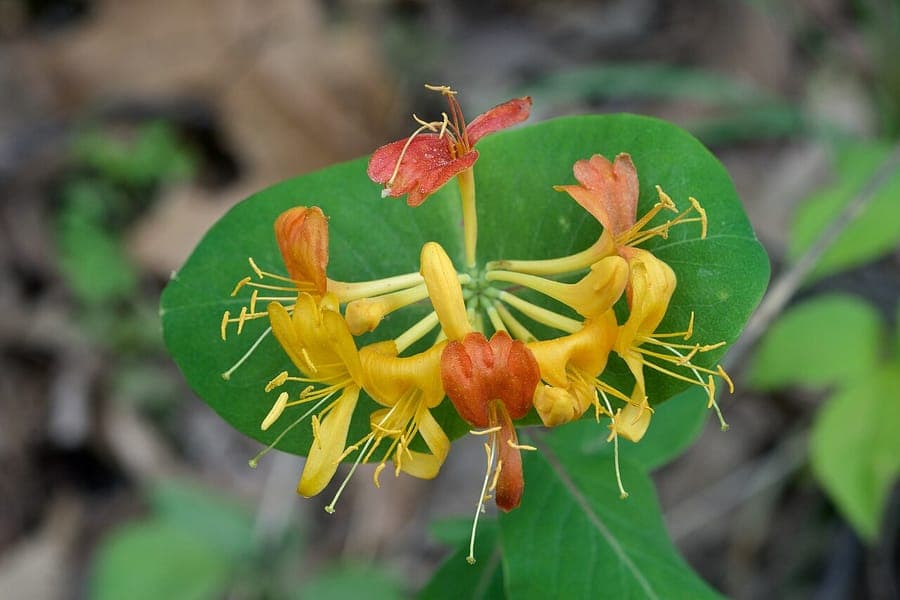
Yellow honeysuckle (Lonicera flava) is a beautiful native American shrub found throughout the central and eastern United States, including Alabama, Arkansas, Georgia, Illinois, Kansas, Missouri, North Carolina, Ohio, Oklahoma, South Carolina, and Tennessee. This versatile shrub is renowned for its bright yellow flowers that appear in spring.
This is a flexible plant that can grow as an upright shrub or be trained as a climbing specimen. Yellow honeysuckle attracts numerous bird species and is perfect for gardens where you want to encourage wildlife.
Appearance and Bloom
Yellow honeysuckle typically grows as a medium to large shrub or can be trained into a climbing specimen. The flowers are bright yellow and highly fragrant, attracting pollinators and hummingbirds. The flowers appear in dense clusters, creating a spectacular spring display.
The leaves are oval to lance-shaped and dark green. Following bloom, dark red berries form that attract various bird species. Fall color can be light yellow to orange before leaves drop.
Blooming begins in April or May, depending on local climate, and can continue through June.
Ideal Location
Yellow honeysuckle grows best in full sun to partial shade locations. In warmer southern climates, some afternoon shade helps cool the plant during hot summers.
The plant thrives in protected locations. If you want to train it as a climber, position it against a solid structure where it can find support. In open gardens, it grows well as a standalone shrub.
Soil
Yellow honeysuckle grows in a wide range of soil conditions, from sandy to clay. The plant prefers moderately fertile soil but can survive in poor soils. However, good drainage is essential.
Although the plant enjoys moisture, waterlogging and wet feet in winter can lead to diseases. A little mulch around the plant helps retain moisture during dry periods.
Free design
Want to see Yellow honeysuckle: complete guide in your garden? Make a free design now.
Watering
Yellow honeysuckle needs regular moisture, especially in its first growing season. Water the plant well when planting, and keep the soil moist throughout the growing season.
Once established, the plant is much more drought-tolerant, though regular rainfall leads to better performance. During dry spells in summer, supplemental water may be needed, especially in warm regions.
Pruning
Minimal pruning is needed for healthy growth. Remove dead or damaged branches in spring. If you want to restrict the plant to a certain size, light formative pruning can be performed after blooming.
If cultivating the plant as a climber, you can trim the sides to maintain the desired shape. Avoid heavy pruning during the growing season because this removes many flowers.
Maintenance Calendar
Spring: Check for frost damage. Remove dead wood. Add mulch. Summer: Water regularly, especially in dry conditions. Fall: Reduce watering toward the end of the growing season. Winter: In cold regions, young plants may need protection.
Winter Hardiness
Yellow honeysuckle is very winter-hardy in its native range through zones 4 to 8. In zone 3, it can survive but may suffer some frost damage to tips.
In warmer climates, this plant grows well, though it does not like very hot dry summers without supplemental water.
Companion Plants
Yellow honeysuckle grows well with many native plants that require similar growing conditions:
Native hydrangeas form a beautiful contrast with their white or pink flowers. Dogwoods with red branches offer winter beauty. Native butterfly shrubs like Sambucus provide structure. Low-growing groundcovers like violets and asarum fill the understory.
Closing Thoughts
Yellow honeysuckle is a valuable addition to any garden where you want to encourage birds and add fragrance. With its flexibility to grow as a shrub or climber, this plant helps you adapt your garden plan. Find this sample of native beauty at garden centers.
For more advice and design help, visit gardenworld.app where professionals can help you get the most from your garden.
Want to see Yellow honeysuckle: complete guide in your garden? Make a free design now.
Upload a photo, pick a style, and get a photorealistic design with plant list in under a minute.
No credit card required


Similar plants
Yellow honeysuckle (Lonicera tragophylla): complete guide
Lonicera tragophylla
Meet yellow honeysuckle (Lonicera tragophylla): a Chinese climber with large golden flowers that thrives in partial shade.
Lonicera korolkowii: complete guide
Lonicera korolkowii Stapf
Discover blueleaf honeysuckle, a vigorous shrub with beautiful flowers. Guide on growing, shaping and why this Asian climbing plant is perfect for gardens.
Lonicera oblongifolia: complete guide
Lonicera oblongifolia Hook.
Discover swamp fly honeysuckle, a North American woodland plant. Guide on growing, caring and why this native species is valuable for gardens.