
Franz Xaver / CC BY-SA 3.0, via Wikimedia Commons
Purple toadflax: complete guide
Linaria purpurea
Want to see Purple toadflax: complete guide in your garden?
1 minute, no credit card
Purple Toadflax: Cultivation and Care
Overview
Linaria purpurea, commonly known as Purple toadflax, is an elegant and refined plant native to central and southern Italy and Sicily. Belonging to the Plantaginaceae family, this flower is celebrated for its delicate purple blooms and upright growth habit. Purple toadflax adds height and sophistication to gardens and is excellent for borders and beds.
Appearance and Bloom
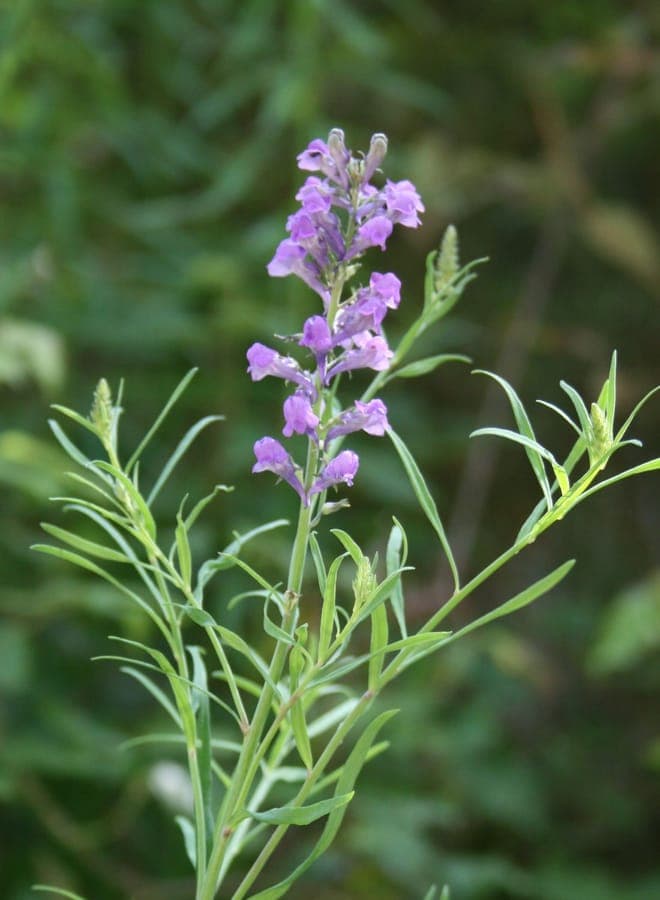
Purple toadflax grows as an upright, slender plant reaching 60-90 cm in height. The plant produces abundant purple flowers along long, rigid stems. The flowers are small and trumpet-shaped, appearing in dense spikes and blooming from May through October. The deep purple tones vary from dark violet-purple to lighter rose-purple, with some cultivars displaying bi-color effects.
Ideal Location
Purple toadflax thrives in full sun. Position the flower where it receives at least 6-8 hours of direct sunlight daily. In very hot climates, some afternoon shade is beneficial. Protect from strong winds, as the tall stems are somewhat fragile.
Soil Requirements
This plant is undemanding and grows in most soils. Well-draining, moderately fertile soil produces optimal results. Target a pH between 6.5 and 7.5. Avoid heavy clay soils that cause waterlogging. Well-draining rocky or sandy soils are ideal.
Watering
Water young plants regularly until well-established. Once growing, moderate watering in temperate climates usually suffices. During dry spells, especially with high temperatures, water regularly. Excessive moisture causes problems. Avoid wetting the foliage.
Free design
Want to see Purple toadflax: complete guide in your garden? Make a free design now.
Deadheading
Deadheading spent flowers encourages continuous blooming. After flowering, cut stems back to 15 cm height. In some years this triggers a second flowering flush. In early spring, the plant can be cut back drastically.
Maintenance Calendar
- January-February: Spring pruning; remove dead stems
- March-April: New growth emerges; start watering
- May-June: Flowering begins; deadhead regularly
- July-September: Continue deadheading; water during dry periods
- October: Flowering continues; possible second cutting
- November-December: Winter preparation; minimal watering
Winter Hardiness
Purple toadflax is moderately winter-hardy, surviving to USDA zones 5-6. In colder zones, winter protection may be necessary. Mulching helps in wet winters. In southern regions, it thrives as a reliable perennial.
Companion Plants
Purple toadflax pairs beautifully with:
- Yellow tones: Yellow linaria for yellow-purple contrast
- White flowers: Artemisia 'Powis Castle' for silvery foliage
- Silver foliage: Lamb's ears (Stachys byzantina)
- Blue flowers: Speedwell (Veronica)
Conclusion
Purple toadflax is an elegant choice for vertical accents in gardens. With its long flowering season and refined purple blooms, it adds depth and sophistication to borders. Visit gardenworld.app to discover professional garden designs that incorporate height variation and purple accents. Get inspired creating a sophisticated front yard design at gardenworld.app.
With suitable growing conditions and regular deadheading, your purple toadflax will bloom from May through October!
Want to see Purple toadflax: complete guide in your garden? Make a free design now.
Upload a photo, pick a style, and get a photorealistic design with plant list in under a minute.
No credit card required


Similar plants
Balkan toadflax: complete guide
Linaria dalmatica
Discover the Balkan toadflax (Linaria dalmatica), a striking yellow-flowered plant from Southeast Europe. Read our comprehensive cultivation and care guide.
Yellow toadflax: complete guide
Linaria vulgaris
Discover the Yellow toadflax (Linaria vulgaris), a hardy robust plant with bright yellow flowers from Europe to Siberia. Complete cultivation guide.
Striped toadflax: complete guide
Linaria repens
Discover the Striped toadflax (Linaria repens), a low creeping groundcover from Northwest Europe with delicate white and purple flowers.