
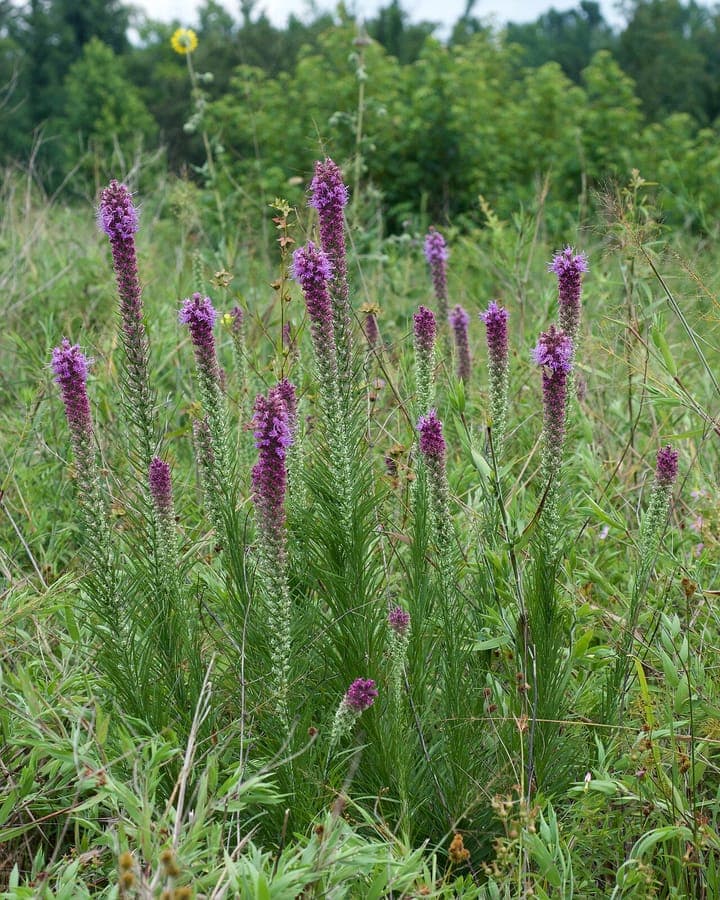
Eric Hunt / CC BY-SA 4.0, via Wikimedia Commons
Liatris pycnostachya: complete guide
Liatris pycnostachya
Want to see Liatris pycnostachya: complete guide in your garden?
1 minute, no credit card
Overview
Liatris pycnostachya, better known as prairie liatris or blazing star, is a beautiful native American wildflower. This slender perennial produces striking thick spikes of bright purple flowers that bloom from bottom to top. This gives the plant an almost firework-like effect when in full bloom. The plant is incredibly attractive to butterflies and bees, making it an essential plant for ecologically responsible gardens.
If you're looking for a robust perennial with a long blooming period and minimal maintenance requirements, Liatris pycnostachya is absolutely a top candidate. In this guide, you'll learn everything you need to successfully cultivate this American wildflower beauty.
Appearance and Bloom
Liatris pycnostachya is a striking plant with a very characteristic growth pattern. The plant grows as a slender column reaching approximately 60-90 centimeters tall with very fine, linear foliage growing upward from the root. This gives the plant an elegant, almost grass-like appearance.
The flowers are undoubtedly the highlight. They appear in dense, cylindrical spikes of brilliant purple flowers. What makes Liatris unique is that the flowers bloom from bottom to top - this creates a striking effect where the plant almost looks like it's burning from bottom to top.
The blooming period is long - typically from July to September - which means your garden benefits from this spectacular blooming for a considerable time. Even when the flowers fade, the seedheads remain attractive and can be interesting during the winter months.
Ideal Location
Liatris pycnostachya thrives optimally in full sun conditions. The plant needs at least 6 hours of direct sunlight daily for optimal growth and blooming. In partial shade, the plant will grow, but you'll get weaker, less densely flowering spikes.
The plant is ideal for borders, prairie gardens, or planted in groups for maximum visual effect. The slender form makes it perfect for narrow spaces or along pathways. Liatris pycnostachya also combines beautifully with other prairie flora like coneflowers or black-eyed Susans.
Due to its robust nature, the plant can handle rougher conditions well. It's ideal for front yard designs where you want low maintenance.
Soil
Liatris pycnostachya is a plant that enjoys growing in well-drained soil. In fact, the plant will grow better in slightly drier, poorer soil than in rich, moist soil. This makes it excellent for difficult growing conditions.
Neutral to slightly acidic soils (pH 6.0 to 7.8) are ideal for this plant. However, the plant can grow in many more extreme pH values without major problems. The main requirement is well-draining soil - heavy clay can lead to waterlogging in winter, which can be fatal to the plant.
Improve heavy soils with sand, gravel, or organic material to create better drainage. The plant grows better in nutrient-poor soil, so don't overdo the compost addition.
Free design
Want to see Liatris pycnostachya: complete guide in your garden? Make a free design now.
Watering
Once Liatris pycnostachya is established, it's a very drought-tolerant plant. During the first growing period, ensure regular watering until it's well-established, but afterward it needs little extra water.
During normal rainy periods, the plant will thrive without extra water. Only during prolonged droughts do you need to provide extra water - and even then, the plant will probably survive without extra help.
Actually, overwatering is the greatest threat to this plant. Too much moisture, especially in winter, can lead to root rot. In any case, ensure water can drain easily.
Once well-established, you can practically forget about your Liatris and it will thrive.
Pruning
Liatris pycnostachya is very low-maintenance and needs almost no pruning. You don't even need to remove the flowers - they fall off naturally when they fade.
If you want to retain seedheads (which are attractive to birds and for winter appearance), just leave them. Only in early spring can you remove old growth when you see new growth appearing.
If you want cut flowers, you can cut stems at any time during the blooming period - this will even encourage the plant to produce more flowers.
Maintenance Calendar
March-April: Preparing for growing season. Remove old growth from previous year.
May-June: Beginning of growth. Ensure regular watering if dry.
July-September: Blooming period. Ensure regular watering during dry periods. Enjoy the beautiful purple flowers.
October-November: Seed formation. Leave seedheads for birds and winter appearance. Prepare for winter.
December-February: Resting period. Minimal care needed.
Winter Hardiness
Liatris pycnostachya is very winter-hardy and can easily tolerate temperatures down to minus 20 degrees Celsius. In most climates, the plant will survive without problems.
However, the plant doesn't like wet winters. Waterlogging combined with frost can be problematic. So make sure water drains well during winter.
Mulching around the plant in late autumn can provide some extra protection. The plant will also regularly spread seeds, so you can expect young seedlings to naturally come up in your garden.
Companion Plants
Liatris pycnostachya combines beautifully with other prairie flora. Black-eyed Susans (Rudbeckia) make an excellent color combination - yellow against purple. Coneflowers (Echinacea) also offer nice complementary effects.
The plant works well with other silhouette-forming plants like ornamental grasses. White flowers like phlox also provide nice contrast. Liatris also helps create vertical interest in borders.
Plant Liatris in groups of at least 3-5 for maximum effect. This creates a much more dramatic appearance in your garden.
Closing Thoughts
Liatris pycnostachya is an essential plant for everyone's prairie or natural garden. With its long blooming period, attraction to butterflies and bees, and minimal maintenance requirements, it's a plant that enriches your garden both ecologically and aesthetically. Whether you're an experienced gardener or just starting out, Liatris pycnostachya will certainly be a valuable addition. Available at gardenworld.app.
Want to see Liatris pycnostachya: complete guide in your garden? Make a free design now.
Upload a photo, pick a style, and get a photorealistic design with plant list in under a minute.
No credit card required


Similar plants
Calendula stellata: complete guide
Calendula stellata
Complete guide to Calendula stellata, the star-flowered marigold from Sicily: location, soil, watering and companion planting tips.
Korean chrysanthemum: complete guide
Chrysanthemum x rubellum
Chrysanthemum x rubellum is a hardy autumn perennial with single pink to copper flowers from August to November. Care and combinations.
Helianthus divaricatus: complete guide
Helianthus divaricatus
Helianthus divaricatus is a North American woodland sunflower with yellow summer blooms, ideal for naturalistic borders and shady edges.