
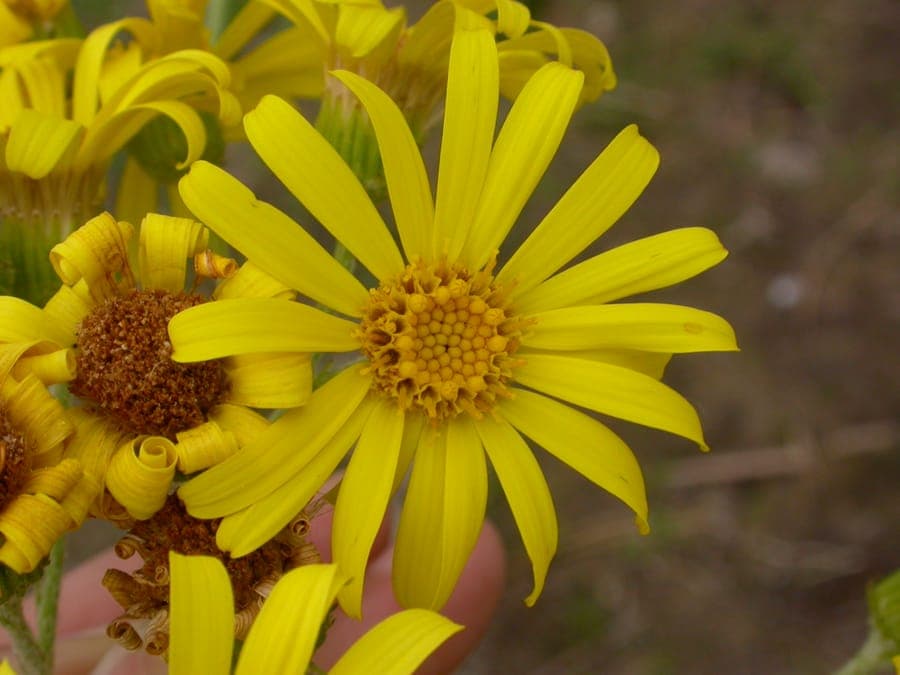
Pieter Pelser / CC BY 3.0, via Wikimedia Commons
Fen Ragwort: complete guide
Jacobaea paludosa
Want to see Fen Ragwort: complete guide in your garden?
1 minute, no credit card
Fen Ragwort (Jacobaea paludosa) is a European native plant from the Asteraceae family, celebrated for its vigor in moisture-rich garden environments. This mid-sized specimen thrives alongside pond edges, in wetland gardens with high water tables, and in natural borders where moisture is abundant.
Belonging to the genus Jacobaea, this distinctive plant stands out for its robust growth pattern and attractive bright yellow flower clusters that peak in July. Landscape architects and gardeners prize it for strengthening ecosystems and promoting water-loving flora in designed spaces.
Appearance and bloom
Fen Ragwort reaches moderate heights, developing as a herbaceous plant with sturdy stems. Leaves are elongated with a slightly rough texture characteristic of Asteraceae family members. Yellow, daisy-like flower clusters appear in July, attracting pollinators and providing valuable nectar resources.
The flowering season extends across several weeks, offering summer-long visual interest in wet terrains. The golden blooms persist for weeks, creating bright accents throughout the growing season in boggy landscapes.
Ideal location
This species thrives in full sun to partial shade. While moisture-loving, it appreciates adequate sunlight for optimal flowering. Position it in areas that remain wet for extended periods, such as beside pond edges, in shallow ditches, or wetland gardens with elevated water levels.
For properties in low-lying regions with high groundwater, this plant offers an ideal choice. It performs equally well along reed beds and in semi-aquatic borders where conventional plants struggle.
Soil
Fen Ragwort prefers slightly neutral to alkaline soil with pH between 7 and 7.5. Moist, nutrient-rich substrate is essential. Heavy clay soils with adequate organic matter are ideal for establishment.
Ensure good water retention while avoiding prolonged waterlogging around root zones. Mulch beds with compost to maintain moisture and enhance soil fertility. Regular organic matter additions sustain the nutritional profile of the growing medium.
Watering
While moisture-loving, regular irrigation remains important during dry periods. Water deeply and consistently when surface soil dries out. Don't hesitate regarding excess moisture, as this species excels in swampy and waterlogged conditions.
During typical summer rainfall, supplemental watering may be minimal. After heavy rains, excess water should drain away. Aquatic plants integrate well with Fen Ragwort along pond margins.
Free design
Want to see Fen Ragwort: complete guide in your garden? Make a free design now.
Pruning
Minimal pruning is required. Remove spent flower clusters after blooming to maintain neat appearance and eliminate unsightly biomass. This also encourages sporadic reblooming in favorable years.
In autumn as the plant declines, remove dead stems and foliage. This clears space for renewed spring growth. For neater appearance, rejuvenating pruning can be applied in late winter.
Maintenance calendar
January to February: No action needed; plant dormant. Begin spring preparations as groundwater rises. March to May: As temperatures warm, new growth emerges. Apply compost and maintain adequate moisture. June to August: Flowering peaks in July. Water regularly and deadhead spent blooms. September to December: Growth slows. Leave dead stems for winter structure; complete pruning in February.
Winter hardiness
Fen Ragwort is extremely cold-hardy and suitable for European and northern climates. The plant survives winter freezes without protection and returns reliably each spring. In regions with extreme frost periods, additional mulching provides extra insurance, though unnecessary in typical northern zones.
The plant doesn't form evergreen foliage but retains architectural character in winter landscapes. This makes it valuable for winter interest in borders.
Companion planting
Fen Ragwort grows beautifully alongside other moisture-lovers like reed species (Phragmites australis) and ornamental sedges. Marsh ferns also thrive in identical conditions. Smaller aquatic plants create attractive understory planting.
Perfect combinations include Bog Myrtle, Marsh Marigold, and native grasses for authentic wetland aesthetics. These pairings create ecological connectivity and support local fauna.
Closing remarks
Fen Ragwort is invaluable for gardeners with moisture-rich soils seeking summer color and ecological benefit. The plant requires minimal maintenance, poses no toxicity risks to pets, and supports environmental health. By choosing Fen Ragwort, you invest in a garden that adapts to local water conditions.
Gardenworld recommends: Visit specialty nurseries for seeds or mature specimens and expert guidance on moisture-tolerant borders. On gardenworld.app you'll find pre-designed gardens incorporating water-loving species for your yard. For inspiration and expert support, visit gardenworld.app and plan your dream wetland garden today!
Want to see Fen Ragwort: complete guide in your garden? Make a free design now.
Upload a photo, pick a style, and get a photorealistic design with plant list in under a minute.
No credit card required


Similar plants
Calendula stellata: complete guide
Calendula stellata
Complete guide to Calendula stellata, the star-flowered marigold from Sicily: location, soil, watering and companion planting tips.
Korean chrysanthemum: complete guide
Chrysanthemum x rubellum
Chrysanthemum x rubellum is a hardy autumn perennial with single pink to copper flowers from August to November. Care and combinations.
Helianthus divaricatus: complete guide
Helianthus divaricatus
Helianthus divaricatus is a North American woodland sunflower with yellow summer blooms, ideal for naturalistic borders and shady edges.