
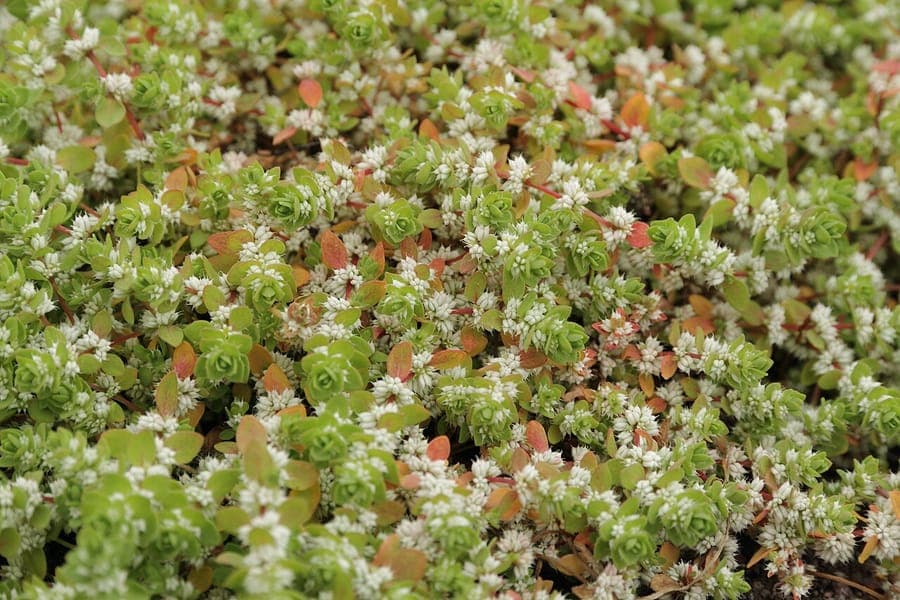
C T Johansson / CC BY-SA 3.0, via Wikimedia Commons
Coral-necklace: complete guide
Illecebrum verticillatum
Want to see Coral-necklace: complete guide in your garden?
1 minute, no credit card
Overview
Coral-necklace (Illecebrum verticillatum) is a rare, tiny groundcover from the Caryophyllaceae family, known colloquially as coral-necklace due to its characteristic red button-shaped fruits. This Atlantic moisture-lover is a low, highly branched plant that feels most at home in wet, damp locations. With its hairy green leaves and minute white flowers, coral-necklace offers color and texture throughout the summer season. Despite limited popularity, this plant deserves more attention: it is ideal for bog gardens, waterside zones, and permaculture projects. Coral-necklace demands virtually no maintenance and helps prevent erosion.
Appearance & bloom period
Coral-necklace grows merely 5-15 cm tall and forms low, dense mossy mats. The plant bears very small, round, greenish-yellow leaves arranged in whorls around thin stems (verticillata = whorled arrangement). The flowers are inconspicuously tiny and white to pale red, but the real showstopper is the abundance of red, button-shaped fruits appearing like beads on a necklace. These fruits appear from June through September and give the plant botanical fame. The entire plant grows low against the ground, promoting soil erosion stabilization.
Ideal location
Coral-necklace feels ideal in moisture-rich, wet soils along water, in wetlands, and in low-drainage zones. Full sun to partial shade: both work, but partial shade in warm-dry gardens is nicer. In dry gardens coral-necklace performs less well. The plant thrives near ponds, garden pools, and damp meadow edges. Also on wet paths between plants or in stream banks it remains beautiful. Avoid high-draining, sandy locations without moisture sources. In containers with permanent moisture maintenance, coral-necklace grows equally well.
Soil
Coral-necklace requires moisture-rich to moisture-retaining soil. Heavy clay soils are no problem and even advantageous for moisture retention. Sandy soils without moisture sources are inadvisable. The plant accepts acidic to neutral pH (5.5-7.0). Adding ripened compost and peat or peat substitute makes poor soils suitable. In containers use moisture-retaining potting soil. Avoid sandy mixes. Coral-necklace is undemanding regarding nutrients.
Free design
Want to see Coral-necklace: complete guide in your garden? Make a free design now.
Watering
Although coral-necklace nominally requires moisture-retaining setups, the soil should remain regularly moist (not waterlogged). During dry periods water regularly to maintain consistent soil moisture. For potted plants: check daily as evaporation rapidly depletes pot moisture reserves. Nighttime misting helps but isn't strictly necessary. Summers during prolonged dry spells require daily watering. During rainy periods sometimes no maintenance is needed. For bog gardens, establish auto-irrigation or rainwater buffers: coral-necklace then grows maintenance-free.
Pruning
Coral-necklace requires virtually no pruning. Let the plant grow freely; it spreads beautifully into mats. Only removal of very old, dead stem sections in May aids renewal. After frost periods remove dead parts. For pot cultivation: light pruning after winter keeps forms compact, but isn't necessary. The plant naturally forms its own shape. Preserving natural form gives more character.
Maintenance calendar
May-June: Purchase potted plants or sow seed (seed is very fine; direct sowing in moist soil works best). June-August: Plant out at 30cm spacing in moisture-rich zones. Summer: Monitor moisture levels and water as needed. September: Fruits ripen and natural spread occurs. October-April: Plant remains low and inconspicuous; minimal maintenance. October: Possibly gather own seed from red fruits. November-March: Dormancy; no maintenance needed.
Winter hardiness
Coral-necklace is frost-hardy to about -8°C. In most Benelux regions it overwinters outdoors without protection. In harsh alpine areas light protection with fallen leaf litter helps. In very mild regions (coastal zones) with permaculture approach coral-necklace thrives completely. Moderate frost causes no harm. Protection against winter waterlogging (good drainage preventing stagnation) matters more than frost protection.
Companion plants
Coral-necklace harmonizes beautifully with other moisture-loving plants like marsh violet and sedges without direct competition. In water zones: combine with watermint, damp ferns, and small water visitors. In permaculture: understory for taller wetland shrubs. For gardens without water zones, coral-necklace gives silver-foliage effects and ground stabilization between other plants. You'll find seeds at specialized nurseries; potted plants also at garden centers (rare). Gardenworld.app advises on groundcover combinations for wet zones.
Conclusion
Coral-necklace is not an ordinary groundcover but a wonderfully rare, moisture-loving gem that enriches any damp front garden. Seed sowing is economical. For wet-spot gardens: coral-necklace is ideal. Combine with other moisture-lovers for cohesive wetland aesthetic. Gardenworld.app helps you elegantly transform wet garden zones.
Want to see Coral-necklace: complete guide in your garden? Make a free design now.
Upload a photo, pick a style, and get a photorealistic design with plant list in under a minute.
No credit card required


Similar plants
Dianthus karami: complete guide
Dianthus karami
Dianthus karami is a rare Lebanese mountain pink with fringed pink blooms on limestone cliffs, ideal for rock gardens and troughs.
Sicilian pink: complete guide
Dianthus siculus
Discover Dianthus siculus, an elegant purple bloomer from Sicily. Cultivation, June-September flowering and garden combinations.
Alpine mouse-ear chickweed: complete guide
Cerastium pedunculatum
Full growing guide for Cerastium pedunculatum: ideal location, soil, watering, winter hardiness, and companion plants for rock gardens.