
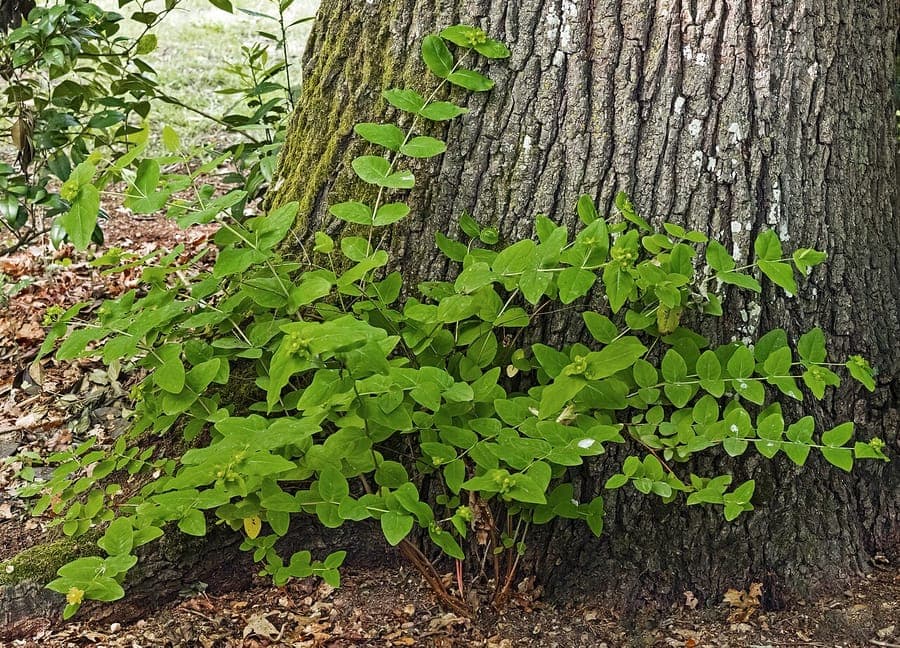
Didier Descouens / CC BY-SA 4.0, via Wikimedia Commons
Tutsan: complete guide
Hypericum androsaemum
Want to see Tutsan: complete guide in your garden?
1 minute, no credit card
Overview
Hypericum androsaemum, commonly called tutsan or saint john's wort, is a charming shrub native to western and southern Europe, extending to northern Iran and North Africa. This semi-deciduous to semi-evergreen shrub belongs to the Hypericaceae family and is prized for its beautiful combination of golden flowers, glossy green foliage, and especially its striking berries that change color from red to black. Tutsan is a popular choice for gardens in temperate climates, largely due to its extended season of interest: flowers in summer and colorful berries in autumn.
Want to create a garden with year-round color, flowers, and structure? Visit gardenworld.app to design a personalized garden plan that perfectly positions shrubs like tutsan for maximum visual impact. This plant brings elegance and movement to your outdoor space.
Appearance & bloom
Tutsan grows into a rounded shrub typically 60-120 cm tall and wide. Stems are green, eight-angled, and glossy. Leaves are opposite, oval to elongated, 4-8 cm long, adorned with many translucent dots that provide interesting texture. The foliage has a healthy, glossy appearance and colors to red and brown tones in autumn.
Flowers are brilliant yellow, approximately 2 cm in diameter, with numerous prominent yellow stamens. They appear from June to August in small clusters at branch tips. The flowers are fragrant and attract bees and insects. After flowering, fleshy berries develop that change from blood-red to deep purple-black as they ripen - a spectacular effect lasting weeks.
Ideal location
Tutsan thrives in full sun to light dappled shade (minimum 4 hours direct sunlight). While the plant tolerates partial shade, it produces more flowers and better berry coloration in sunny placement. Protect from intense midday sun in very hot climates.
Soil
The plant is not fussy and grows well on most soils, from acidic to neutral. It prefers well-drained soil and tolerates dry conditions once established. On heavy clay soils, adding organic matter can improve drainage.
Free design
Want to see Tutsan: complete guide in your garden? Make a free design now.
Watering
Tutsan is drought-sensitive when young and requires regular watering during the first growing season. Once established, it has average water needs. Water deeply but infrequently rather than frequent light sprinkles. During dry spells, water to prevent leaf and berry drop.
Pruning & maintenance
Tutsan requires minimal pruning. Prune lightly after flowering to maintain compact growth, or let it grow naturally for a more airy form. Remove dead or damaged branches in early spring.
Maintenance calendar
- April-May: Check frost-damaged branches carefully; assess winter damage
- June-August: Flowering period; enjoy the golden yellow blooms
- September-November: Berries develop and change color; peak season for aesthetic interest
- December-March: Plant is semi-deciduous; may require light maintenance
Winter hardiness
Hypericum androsaemum has moderate cold hardiness and grows best in USDA zones 6-9. In the Netherlands and Belgium (zones 8-9), it usually overwinters well, though very cold winters can cause significant frost damage. In frost-prone areas, protect against strong westerly winds and severe frost.
Companion plants
Tutsan combines beautifully with other autumn-interest plants: asters, cape-gooseberry, ornamental grasses, and other late-blooming plants. Also combine with low green like ajuga or vinca for contrast.
Final thoughts
Hypericum androsaemum (tutsan) is a versatile shrub proving that one plant can deliver four seasons of visual interest. From its golden summer flowers to brilliant autumn berries, tutsan adds elegance, color, and structure to any temperate garden. With minimal maintenance requirements and good tolerance for various growing conditions, tutsan is a smart choice for creating an attractive, low-maintenance garden. Discover more flowering and fruit-bearing shrubs on gardenworld.app to keep your garden interesting year-round.
Want to see Tutsan: complete guide in your garden? Make a free design now.
Upload a photo, pick a style, and get a photorealistic design with plant list in under a minute.
10,000+ gardens designed already
No credit card required


Similar plants
Hypericum coris: complete guide
Hypericum coris
Complete guide to Hypericum coris, the heath-leaved St John's wort from the Alps: location, soil, watering and rock gardens.
St. Peter's-wort: complete guide
Hypericum crux-andreae
St. Peter's-wort is a low-growing North American shrub with yellow flowers, ideal for acidic, damp soil and naturalistic borders.
Hypericum densiflorum: complete guide
Hypericum densiflorum
Hypericum densiflorum is a dense-flowering American shrub with bright yellow summer blooms, well suited to damp gardens, rain gardens, and pollinator borders.