
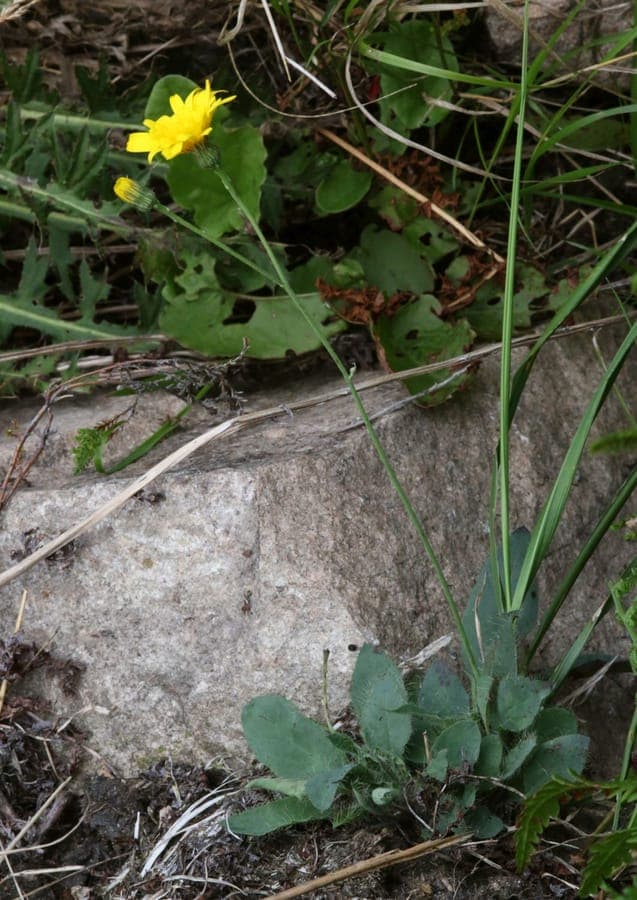
Vojtěch Zavadil / CC BY-SA 4.0, via Wikimedia Commons
Hieracium schmidtii: complete guide
Hieracium schmidtii
Want to see Hieracium schmidtii: complete guide in your garden?
1 minute, no credit card
Overview
Hieracium schmidtii, commonly called Schmidt's hawkweed, is a compact perennial belonging to the Asteraceae family. It was formally described by the botanist Tausch in 1828 and named in honour of the botanist Schmidt. Within the vast and taxonomically complex genus Hieracium - the hawkweeds - this species stands out for its preference for extremely poor, slightly acid soils in stony, rocky habitats. Its native range spans most of Europe: from Portugal and Spain in the west to Ukraine and Turkey in the east, and from Norway and Iceland in the north all the way down to Greece, Sardinia, and Crete in the south.
The species holds the synonyms Hieracium pallidum subsp. schmidtii (Tausch) Zahn and Hieracium rupicola var. hispanicum Willk., reflecting the considerable taxonomic interest it has attracted over its almost two-century-long recorded history. For gardeners and landscape designers, this hawkweed is a genuinely underused plant with significant ornamental and ecological value, particularly for dry, low-maintenance plantings on gardenworld.app-style projects where authenticity and plant character matter.
Appearance and bloom cycle
The plant forms a compact basal rosette of oval to lance-shaped leaves, each measuring approximately 5–12 cm in length and 1–3 cm in width. The leaves are densely clothed in soft, whitish hairs that give the foliage a characteristic grey-green appearance. This indumentum - botanical term for the hairy covering - serves a crucial ecological function: it reduces water loss through transpiration and reflects excessive solar radiation, allowing the plant to thrive where more tender species would quickly scorch.
Flowering stems emerge from the rosette in July and August, typically reaching 20–40 cm in height, though in very poor conditions they may remain as low as 15 cm. Each stem carries a loose cluster of bright yellow, dandelion-like flower heads, each roughly 2–2.5 cm across. The flowers are a clean, sharp lemon-yellow with no orange tint, making them a striking contrast to the grey-green foliage. After flowering, the typical feathery achenes of the Asteraceae disperse on the wind, allowing the plant to colonise suitable cracks and gaps around its parent rosette over time.
Ideal location
Schmidt's hawkweed demands a position in full sun. The Trefle light rating of 6 corresponds to at least six hours of direct sunlight per day. South- or south-west-facing slopes, dry stone walls, rock garden ledges, extensive green roofs with a thin substrate layer of 6–12 cm, and sunny gravel gardens all suit this plant perfectly. In partial shade, plants become etiolated and flower only sparingly.
The site should be dry to moderately moist; waterlogging even for short periods is damaging and can lead to crown rot. Drainage is the single most important consideration when siting this plant. In a natural setting, Schmidt's hawkweed grows on rock faces, thin-soiled limestone ledges, and open, gravelly grassland. Windy positions are tolerated well - the hairy leaf covering provides good protection against desiccation by wind. In garden contexts, planting it in the gaps of a retaining wall or at the top of a rocky bank gives excellent results.
Soil requirements
The soil must be poor, sharply draining, and slightly acid. The Trefle data specifies a pH range of 5.0–5.5, and a nutrient score of just 3 out of 10, confirming that this species is genuinely adapted to infertile ground. On rich garden soil or fertilised beds, it is quickly outcompeted by coarser-growing species and weeds.
For a rock garden or gravel planting, mix approximately 60% coarse grit or crushed stone (4–8 mm grade), 20% lean topsoil, and 20% coarse sand. A small addition of peat or acidified bark helps to lower the pH into the target range. No compost or fertiliser should be added; this would directly harm the plant's ability to thrive. A top-dressing of fine gravel or granite chippings (1–2 cm deep) after planting stabilises the surface, suppresses annual weed seedlings, and keeps the rosette collar dry - preventing the fungal problems that can occur when foliage sits on damp soil.
Watering
Once established - typically after the first six to eight weeks post-planting - Schmidt's hawkweed is almost completely self-sufficient. During establishment, water sparingly once or twice a week with approximately 0.5–1 litre per plant, using a fine rose can or a drip system; never pour water directly onto the rosette centre, as this can encourage rotting in the crown.
Mature plants survive extended dry spells without supplemental watering. In northern European climates with normal summer rainfall, no irrigation is needed at all. On very thin green roofs or south-facing walls in continental climates with hot, dry summers, a supplemental watering once every two weeks during sustained heat above 35°C will prevent premature senescence of the leaves. The most dangerous period is wet winter weather combined with cold: standing water around the roots in combination with frost is the primary cause of plant loss. Always ensure the drainage layer beneath the planting medium is fully functional before the first frosts.
Free design
Want to see Hieracium schmidtii: complete guide in your garden? Make a free design now.
Pruning
This species requires almost no pruning. Once the flowers have finished and the achenes have formed - usually by late August or early September - cut the spent flower stems back to just above the rosette, leaving approximately 1 cm of stalk. This keeps the plant compact and prevents excessive self-seeding in smaller garden settings. If you want the plant to spread naturally and fill gaps in a dry stone wall or gravel path, leave the stems standing until the seeds have dispersed.
The basal rosette leaves do not need to be cut. In autumn, older leaves turn light brown and can be gently removed by hand to keep the plant tidy over winter. Take care not to disturb the fine hairs on the remaining leaves; they are important for cold-weather insulation and moisture regulation. No hard pruning, cutting to the ground, or division is necessary or recommended for this species.
Maintenance calendar
January–February: the plant is dormant. Check that drainage around the root zone is clear and that no accumulations of fallen leaves from nearby shrubs or trees are smothering the rosette. Remove debris by hand.
March–April: new leaves emerge from the rosette centre. Remove any encroaching annual weeds before they establish. If you want to raise new plants from seed, sow into shallow trays of gritty, lean compost in a cold frame; cover seeds only very lightly - a dusting of fine grit is sufficient - and do not heat the propagation environment.
May–June: active vegetative growth. Watch for slugs, which can damage young rosettes in wet spring conditions. Apply a top-dressing of additional gravel if the existing layer has thinned. Do not fertilise.
July–August: the flowering season. Enjoy the lemon-yellow flower display. If self-seeding is undesirable, remove spent stems before the achenes mature and disperse.
September–October: the plant begins to wind down. Seeds disperse. Check surrounding areas for seedlings if you do not want spread.
November–December: full dormancy. No maintenance required beyond ensuring drainage is unrestricted.
Winter hardiness
Schmidt's hawkweed is exceptionally winter-hardy. Its native range includes Norway, Iceland, and high-altitude sites in the mountains of central and southeastern Europe, indicating frost resistance of at least -25°C, corresponding to USDA hardiness zone 4 or even zone 3. In the Netherlands, Belgium, and the United Kingdom - zones 7–8 - there is no risk of frost damage under any normal winter conditions.
The only genuine winter risk is crown rot caused by water standing around the plant base during freezing weather. A drainage layer of coarse grit or crushed stone, 5–10 cm deep, beneath the planting medium eliminates this risk almost entirely. Snow cover is not a problem; the plant survives extended periods under snow without difficulty. No winter protection, fleece, or mulching of the crown is necessary.
Companion plants
Schmidt's hawkweed combines beautifully with other species that share its preference for poor, dry, slightly acid conditions. Sedum acre (biting stonecrop), Sedum album, and Sedum spurium all thrive in the same gritty environment and create a multi-textured tapestry of different leaf forms and flower colours when mixed with Hieracium schmidtii. The bloom periods complement each other well: sedums typically flower in May–June, while Schmidt's hawkweed follows in July–August, extending the season of interest.
Thymus serpyllum (wild thyme) is another excellent companion: identical soil requirements, a similarly low-growing habit, and mauve-pink flowers that contrast strikingly with the yellow hawkweed blooms. Armeria maritima thrives in lean, dry conditions and contributes small, deep-pink flower globes on thin stems. For vertical accents in the rock garden, Festuca glauca (blue fescue) and various Sempervivum cultivars are ideal; the geometric rosettes of sempervivums echo the form of the hawkweed rosette in a pleasing way and survive the same extreme drought and heat.
Avoid pairing this species with moisture-loving or nutrient-demanding plants such as hostas, astilbes, or roses. Not only are the cultural requirements incompatible, but the richer soil those plants require would actually suppress the hawkweed. Browse gardenworld.app for design ideas that match the character and ecological preferences of Schmidt's hawkweed in a cohesive rock or dry garden scheme.
Closing
Hieracium schmidtii is a small but highly rewarding plant for gardeners willing to think beyond the usual range offered by mainstream garden centres. Its requirements are the very opposite of the conventional garden bed: sun, poverty, and sharp drainage. Meet those conditions and you have a plant that will live for many years, return reliably each spring from its persistent rosette, and reward you with clean yellow flowers every July and August. It contributes genuine ecological value as a native European wildflower and brings authentic character to rock gardens, extensive green roofs, and dry gravel plantings where ornamental reliability matters as much as ecological authenticity.
Want to see Hieracium schmidtii: complete guide in your garden? Make a free design now.
Upload a photo, pick a style, and get a photorealistic design with plant list in under a minute.
No credit card required


Similar plants
Calendula stellata: complete guide
Calendula stellata
Complete guide to Calendula stellata, the star-flowered marigold from Sicily: location, soil, watering and companion planting tips.
Korean chrysanthemum: complete guide
Chrysanthemum x rubellum
Chrysanthemum x rubellum is a hardy autumn perennial with single pink to copper flowers from August to November. Care and combinations.
Helianthus divaricatus: complete guide
Helianthus divaricatus
Helianthus divaricatus is a North American woodland sunflower with yellow summer blooms, ideal for naturalistic borders and shady edges.