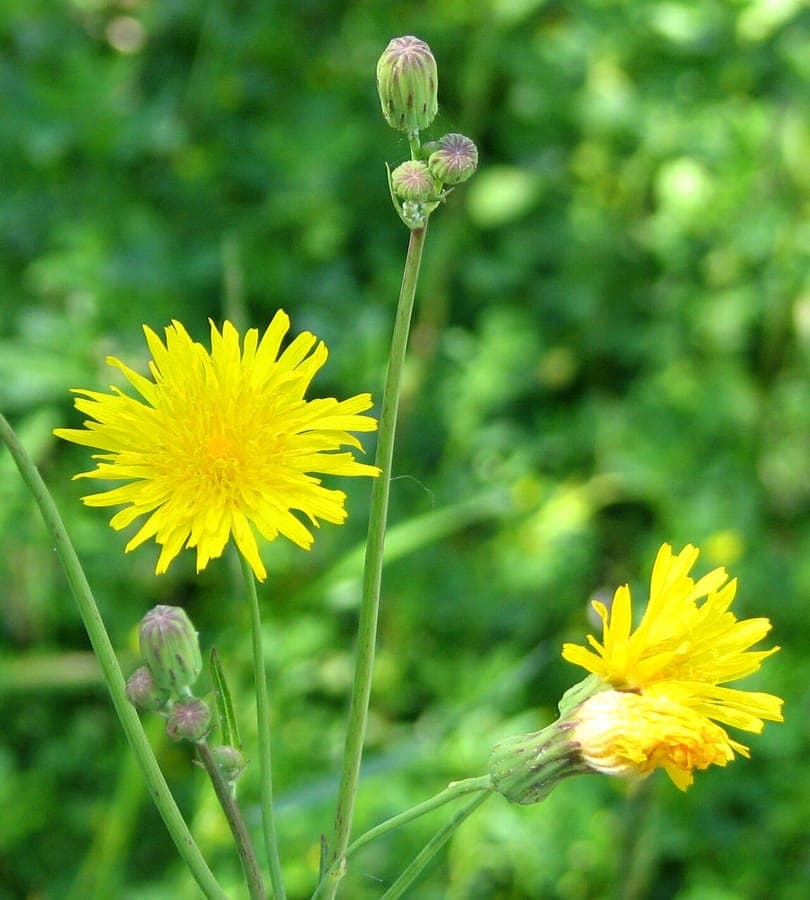
D. Gordon E. Robertson / CC BY-SA 3.0, via Wikimedia Commons
Hieracium prenanthoides: complete guide
Hieracium prenanthoides
Want to see Hieracium prenanthoides: complete guide in your garden?
Full design in HD: €7.99
Look after your Hieracium prenanthoides with the GardenWorld app
Identify plants with your camera and get a care calendar with reminders for this plant.


Hieracium prenanthoides, commonly known as rough-leaved hawkweed or hasenlattich hawkweed, is a mid-height herbaceous perennial from the Asteraceae family. This species grows throughout south and central Europe to the Caucasus on mountain meadows, woodlands, and open slopes. The plant offers interesting foliage and sustained yellow flowering.\n\nThis plant grows to approximately 50 to 100 centimeters in height depending on growing conditions. The foliage is distinctly rough, with stiff hairs on the leaves making this plant immediately recognizable. The stems are sturdy and upright, with narrow leaves arranged along the stem. The flowers are small, yellow, in loose open flower clusters, appearing from July through September.\n\nHieracium prenanthoides thrives in full sun but accepts partial shade. The plant prefers moderately moist to dry soils. Well-draining substrates are preferred, though the plant tolerates heavier soils as long as waterlogging is prevented. Poor soils are acceptable.\n\nWatering should be regular during the growing season. This plant tolerates both drier and somewhat wetter conditions as long as extremes are avoided. Once established, the plant is reasonably drought-resistant, though regular moisture encourages flowering.\n\nHieracium prenanthoides requires minimal feeding. A single fertilizer application in spring suffices. Heavy fertilization can promote excessive stem growth at the expense of flowering.\n\nMaintenance is straightforward. Spent flowers can be removed to encourage further blooming. In late spring, stems can be cut back to 15-20 centimeters height. Self-seeding can occur, so seed heads can be carefully removed.\n\nWinter hardiness is excellent to USDA zone 4 (-30 degrees Celsius). Foliage disappears in winter, but the plant reliably regrows each spring. No winter protection required.\n\nCompanion planting works well with other mid-height perennials. Combine with alliums, salvias, and other yellow bloomers for color contrast. This hawkweed provides good support for lower frontal plants.\n\nPropagation by seed in spring or division in spring or fall is possible. Seed germinates easily. The plant also spreads through self-seeding.\n\nHieracium prenanthoides is an easy-to-grow plant for semi-wild gardens, borders, and meadows. With minimal attention, this plant offers reliable flowering year after year. Specialized garden centers stock this species. Consult gardenworld.app for additional tips.

See it in your garden
See Hieracium prenanthoides in your garden
One photo of your garden and a few questions. You see the result in about a minute.
Try it with a photoIdentify this plant in your own garden. Identify a plant
Similar plants
Frikart's aster (Aster × frikartii): complete guide
Aster × frikartii
Everything about Frikart's aster (Aster × frikartii): position, soil, pruning and hardiness of the aster that flowers lavender-blue from July to October.
False aster (Boltonia asteroides): complete guide
Boltonia asteroides
False aster (Boltonia asteroides) covers itself in white daisies from late August to October. How to plant, cut back and combine this tough, tall perennial.
Daisy bush (Brachyglottis greyi): care guide
Brachyglottis greyi
Brachyglottis greyi, formerly Senecio greyi, pairs silver felted leaves with yellow summer daisies. Advice on position, soil, pruning, hardiness and companions.
