
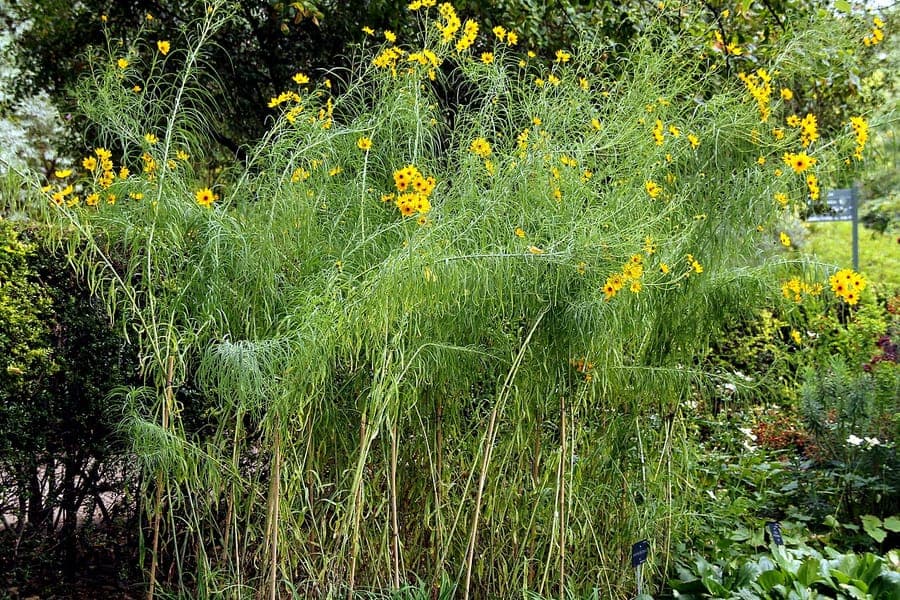
M a n u e l (M. Martin Vicente) / CC BY-SA 2.0, via Wikimedia Commons
Helianthus salicifolius: complete guide
Helianthus salicifolius
Want to see Helianthus salicifolius: complete guide in your garden?
1 minute, no credit card
Overview
Helianthus salicifolius, commonly called willow-leaf sunflower, is a perennial sunflower native to the central United States, particularly Kansas, Missouri, Nebraska, Oklahoma, and Texas. The plant is equally naturalized in Europe. It's prized for its elegant, long, narrow foliage and bright yellow flowers that bloom from August through October.
In gardens, it's a stately plant providing height and extended late-season color in dry to semi-dry environments. Growing to 150 centimeters or taller, it's perfect for garden background or as a screening plant.
Appearance & bloom
Helianthus salicifolius is an upright, columnar plant reaching 1 to 1.5 meters in height. Dense, narrow, linear foliage covers the stems - the inspiration for its species name "salicifolius" meaning "willow-leaved". The foliage is fine and elegantly elongated, imparting a refined appearance.
From August through October, tightly clustered small yellow flowers appear at branch tips. Each bloom measures 3 to 5 centimeters across with yellow ray and disk florets - miniature sunflowers in purest form. These flowers attract bees, butterflies, and beneficial insects.
Following bloom, interesting seed heads develop and remain decorative until birds harvest them for food.
Ideal location
Helianthus salicifolius thrives in full sun - a minimum of 6 to 8 hours of direct sunlight daily. In partial shade, the plant becomes leggy and blooms sparsely.
This is not a plant for small spaces - it requires room. Plant toward the rear of borders where its height doesn't shade other plants. It's ideal as a background specimen or for creating structure in mid to late-season gardens.
The plant creates a natural, wild effect and works beautifully in cottage or naturalistic garden styles. Plant in clusters of at least 3 for impact, or scatter for drifts.
Soil
Helianthus salicifolius grows in diverse soil types but prefers well-draining, moderately fertile soil. Once established, it's drought-tolerant and grows even in poor soil. Heavy clay benefits from sand or gravel amendment, but ordinary garden soil is adequate.
The plant is unfussy about pH, growing in nearly any acidic to neutral terrain. Fertility is less important - indeed, excessive feeding promotes weak growth and reduced blooming. Standard garden feeding is sufficient.
Drainage need not be perfect as some drought plants require, though winter waterlogging is undesirable. Plant in ordinary to slightly elevated locations.
Free design
Want to see Helianthus salicifolius: complete guide in your garden? Make a free design now.
Watering
Once established (water well the first year), Helianthus salicifolius is drought-tolerant. The plant develops deep roots providing good access to moisture. In normal seasons with adequate rainfall, supplemental water is unnecessary.
During extreme dry periods, water helps, particularly in the first season. Regular water during growth and bloom promotes better performance, but once established, the plant tolerates considerable drought.
Avoid winter waterlogging - ensure good drainage. Check soil moisture before watering.
Pruning
Helianthus salicifolius requires minimal pruning. Allow the plant to reach its natural height. Remove dead or damaged stems in spring.
To maintain a more compact form, pinch in June (remove the top 4-5 centimeters). This stimulates bushier growth and may slightly delay bloom but results in more flowers.
After blooming, remove seed heads for a neater appearance or leave them for bird food and self-seeding. In late autumn, cut stems back to ground level.
Maintenance calendar
Spring: remove dead stems; plant new specimens in April-May. Add lean organic matter. Summer: water during dry periods; enjoy developing plants. Pinch in June for compact form if desired. Autumn: bloom lasts August through October; leave seed heads for birds; cut stems back in November. Winter: no maintenance needed; plant dormant.
Winter hardiness
Helianthus salicifolius is winter-hardy in zones 4-10 (down to approximately -25 degrees Celsius). This is a remarkably cold-hardy plant, perfect for cold climates. Underground rootstocks survive very severe winters.
In very wet winters, root rot can occur if drainage is inadequate, so ensure water drains away. Mulching with leaves provides protection.
Companion plants
Helianthus salicifolius pairs well with:
- Asters and other perennials blooming simultaneously for September-October color
- Ornamental grasses like Miscanthus and Panicum
- Salvias and other late-season flowering plants
- Purple-foliaged plants like heuchera varieties for contrast
- Late-blooming bulbs like crocus and colchicum
The plant extends seasonal color distribution and is invaluable for late-summer naturalistic gardens.
Closing thoughts
Helianthus salicifolius is a stately native sunflower providing extended late-season color with minimal care. Its elegant foliage and bright yellow autumn blooms offer years of beauty. Plant in full sun, moderately fertile soil, and you've secured a self-reliant, bird-friendly companion.
Available at major garden retailers. For native plant guidance, visit www.gardenworld.app.
Want to see Helianthus salicifolius: complete guide in your garden? Make a free design now.
Upload a photo, pick a style, and get a photorealistic design with plant list in under a minute.
10,000+ gardens designed already
No credit card required


Similar plants
Calendula stellata: complete guide
Calendula stellata
Complete guide to Calendula stellata, the star-flowered marigold from Sicily: location, soil, watering and companion planting tips.
Korean chrysanthemum: complete guide
Chrysanthemum x rubellum
Chrysanthemum x rubellum is a hardy autumn perennial with single pink to copper flowers from August to November. Care and combinations.
Helianthus divaricatus: complete guide
Helianthus divaricatus
Helianthus divaricatus is a North American woodland sunflower with yellow summer blooms, ideal for naturalistic borders and shady edges.