
איתן פרמן / CC BY-SA 3.0, via Wikimedia Commons
Slender salsify: complete guide
Geropogon hybridus
Want to see Slender salsify: complete guide in your garden?
1 minute, no credit card
Overview
Geropogon hybridus, commonly known as slender salsify, is a fascinating plant belonging to the Asteraceae family and native to the Mediterranean region and Western Europe. This plant is renowned for its elegant purple flowers and distinctive slender white seed heads that attract considerable botanical interest. While relatively uncommon in gardens, this plant is certainly deserving of greater attention due to its unique appearance and ease of cultivation.
Appearance and Bloom
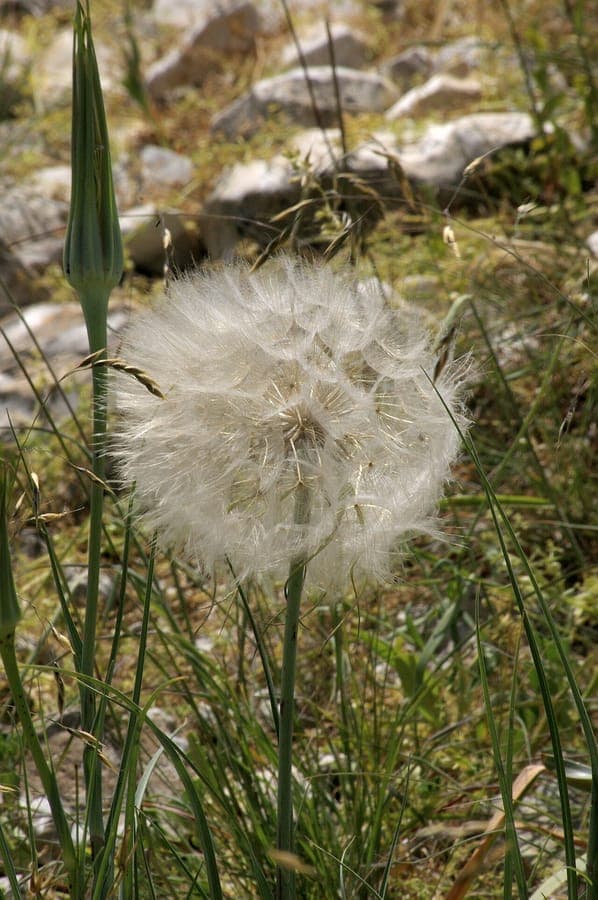
Geropogon hybridus grows as a slender, upright plant with fine, grayish foliage arranged along the stem. The plant is characterized by its purple flowers that bloom in May, providing a beautiful addition to spring garden displays. After flowering, the plant produces striking seed heads with long, hair-like appendages resembling a goat's beard, hence the alternative name "goat's beard plant."
Ideal Location
This plant thrives best in a sunny location where it receives at least 8 hours of direct sunlight daily. A south-facing bed with well-draining soil is ideal. Geropogon hybridus is highly drought-tolerant and feels at home in warm, open spots where other plants might struggle.
Soil
The plant is remarkably tolerant of soil pH and feels comfortable on both acidic and neutral soils (pH 6.5-7.0). It is not particular about soil composition but prefers well-draining, light soils. Heavy clay soils should be improved with sand or compost to prevent waterlogging.
Watering
Once established, Geropogon hybridus is extremely drought-tolerant and requires minimal watering. During the spring growing phase, you can water moderately, but once the plant is established, regular rainfall is usually sufficient. Excessive watering should be avoided, especially in winter.
Free design
Want to see Slender salsify: complete guide in your garden? Make a free design now.
Pruning
This plant requires minimal pruning. You can remove spent flowers to encourage continuous blooming, though this is not necessary. At the end of the season, you can cut the plant back to ground level or leave it standing for decorative seed heads.
Maintenance Calendar
- Spring (March-May): Plant in full sun on well-draining soil. Water gently until growth begins.
- Summer (June-August): Monitor for drought; water only if extremely dry. Deadhead spent flowers for longer bloom.
- Autumn (September-October): Leave seed heads for bird food and winter interest. Remove dead foliage.
- Winter (November-February): Plant is dormant. Minimal care needed.
Winter Hardiness
Geropogon hybridus is winter-hardy in many Southern European regions but may be sensitive to extreme cold in more northern climates. In British and Scandinavian gardens, it prefers warm, protected spots away from harsh winds.
Companion Plants
Combine Geropogon hybridus with other Mediterranean drought-tolerant plants such as:
- Lavender (Lavandula angustifolia)
- Sage (Salvia officinalis)
- Sea holly (Eryngium maritimum)
- Santolina (Santolina chamaecyparissus)
These combinations create a beautiful, airy Mediterranean garden with minimal maintenance requirements.
Closing Thoughts
Geropogon hybridus is an excellent choice for gardeners seeking something different. With its slender growth habit, purple spring flowers, and decorative seed heads, it offers year-round visual interest. It is ideal for those who appreciate low-maintenance plants that can withstand drought. Find Geropogon hybridus seedlings at garden centers specializing in Mediterranean plants. For more gardenworld.app design tips, visit gardenworld.app for your next garden project.
For more information on growing Mediterranean plants, explore gardenworld.app.
Want to see Slender salsify: complete guide in your garden? Make a free design now.
Upload a photo, pick a style, and get a photorealistic design with plant list in under a minute.
No credit card required


Similar plants
Calendula stellata: complete guide
Calendula stellata
Complete guide to Calendula stellata, the star-flowered marigold from Sicily: location, soil, watering and companion planting tips.
Korean chrysanthemum: complete guide
Chrysanthemum x rubellum
Chrysanthemum x rubellum is a hardy autumn perennial with single pink to copper flowers from August to November. Care and combinations.
Helianthus divaricatus: complete guide
Helianthus divaricatus
Helianthus divaricatus is a North American woodland sunflower with yellow summer blooms, ideal for naturalistic borders and shady edges.