
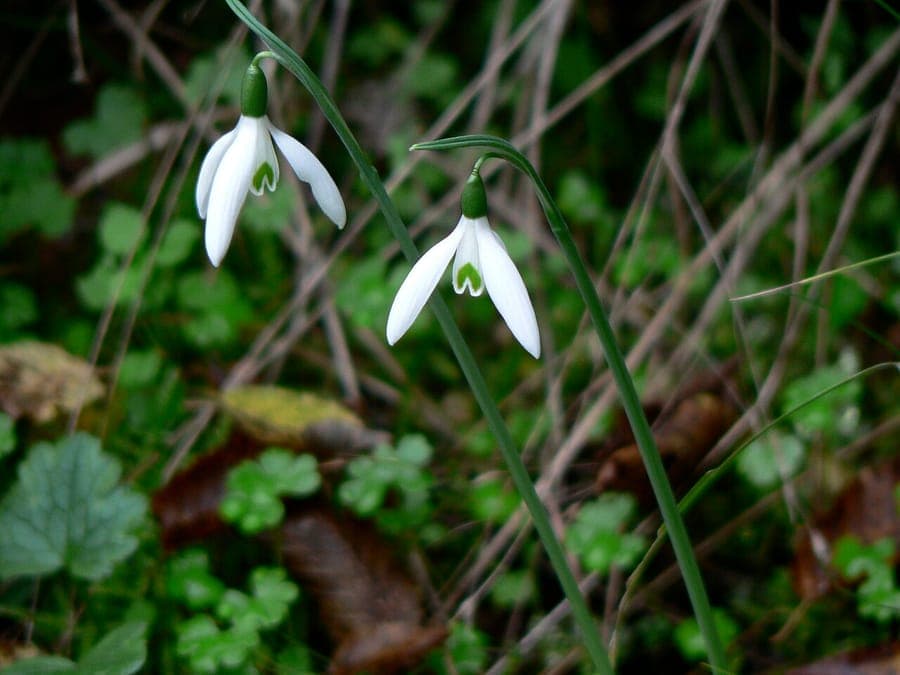
FrankFackelmayer / CC BY-SA 3.0, via Wikimedia Commons
Queen Olga's snowdrop: complete guide
Galanthus reginae-olgae
Want to see Queen Olga's snowdrop: complete guide in your garden?
1 minute, no credit card
Overview
Queen Olga's snowdrop (Galanthus reginae-olgae) is an elegant autumn-blooming bulb from the Amaryllidaceae family. This special snowdrop flowers when most gardens sleep. It is a natural inhabitant of Sicily and the Balkan lands, offering unique early bloom in the September garden.
Appearance & Bloom
Queen Olga's snowdrop reaches about 10 to 20 centimeters in height. The plant produces a few slender leaves and elegant nodding flowers in pure white with green. The flower consists of six tepals with characteristic green markings inside. Blooming starts in September to October, much earlier than regular snowdrops.
Ideal Location
Choose a half-shaded spot under deciduous trees or against south-facing facades. The plant grows optimally in dry summer-climate zones under trees where it can rest. Avoid purely wet places but accept moderate moisture. Shelter from hot midday sun in southern regions is useful.
Soil
Queen Olga's snowdrop grows in well-draining, humus-rich soil. A neutral to slightly acidic pH is ideal. Add compost to improve humus content. Drainage is critical in wet winters. Plant bulbs on sand bed for optimal drainage.
Free design
Want to see Queen Olga's snowdrop: complete guide in your garden? Make a free design now.
Watering
Natural rainwater is usually sufficient. Bulbs in ground like to dry out in summer months. Excessive watering during growing period can cause rot. After blooming in winter-spring, keeping more moist helps, but not wet.
Pruning
No pruning is needed. Withered flowers can be gently snapped off. Leaves must be fully yellow and withered before removal so bulbs can store food.
Maintenance Calendar
July-August: plant bulbs deep in ground. September-October: blooming of this rare autumn flower. November-December: leaf growth during mild winter months. January-February: rest period underground. March-May: feeding phase, leaves yellow.
Winter Hardiness
Queen Olga's snowdrop is completely hardy in Mediterranean and temperate zones. Grows frost-resistant in temperatures to -10 degrees Celsius. Leave bulbs in ground. In cold mountain regions extra mulch protection useful.
Companion Plants
Plant with other Mediterranean autumn-blooming or winter-growing plants. Combine with Crocus sativus, Sternbergia, and other autumn companions. Beautiful grouping with deciduous ferns that mark seasonal shifts.
Closing
Queen Olga's snowdrop offers unique autumn bloom when little else flowers. Available from specialized bulb dealers. Discover more information on gardenworld.app/nl and gardenworld.app/en.
Want to see Queen Olga's snowdrop: complete guide in your garden? Make a free design now.
Upload a photo, pick a style, and get a photorealistic design with plant list in under a minute.
No credit card required


Similar plants
Douglas' Onion: complete guide
Allium douglasii
Douglas' onion is a compact ornamental allium with purple flowers, perfect for rock gardens and sunny borders. Learn care, siting and hardiness.
Oblique onion: complete guide
Allium obliquum
The oblique onion is a hardy ornamental allium with chartreuse flower heads and blue-green foliage. Location, soil and care explained.
False hooded garlic: complete guide
Allium pseudocalyptratum
Discover false hooded garlic (Allium pseudocalyptratum): a rare ornamental onion from Lebanon for rock gardens and alpine troughs.