
Ivar Leidus / CC BY-SA 4.0, via Wikimedia Commons
Garden Strawberry: complete guide
Fragaria × ananassa
Want to see Garden Strawberry: complete guide in your garden?
1 minute, no credit card
Overview
The garden strawberry (Fragaria × ananassa) is the world's most widely grown soft fruit and a staple of gardens across Europe and North America. It is an 18th-century hybrid, the result of a cross between the Chilean strawberry (Fragaria chiloensis), prized for its large fruit, and the Virginia strawberry (Fragaria virginiana), valued for its outstanding flavour. The French botanist Antoine Nicolas Duchesne formally described the hybrid in 1785, and since then plant breeders have developed hundreds of named cultivars, each optimised for yield, flavour, disease resistance or season length.
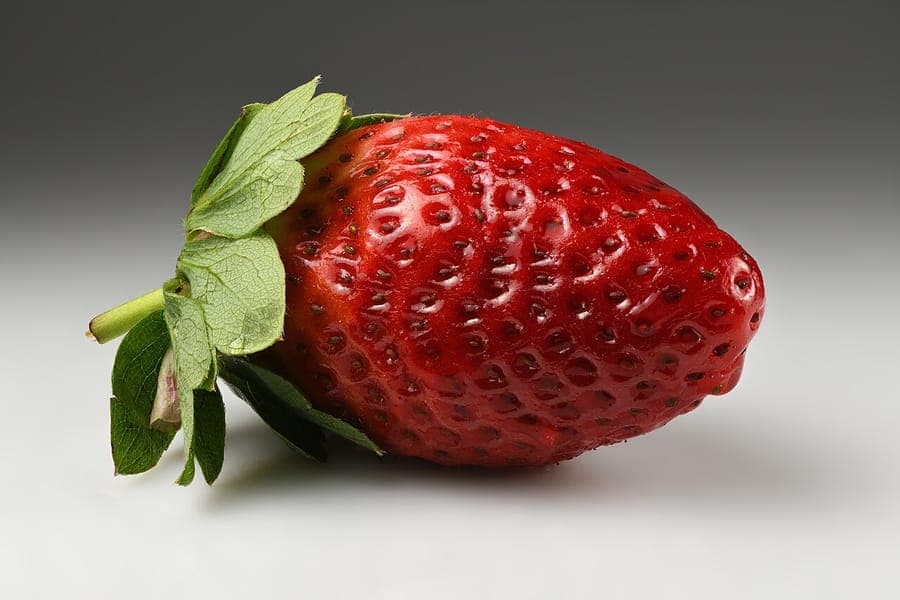
As a herbaceous perennial, the garden strawberry stays low - typically 15 to 30 cm tall - and spreads rapidly via long runners (stolons). One well-established plant can produce five to ten new daughter plants in a single season, making the species cost-effective to maintain once established. For the front garden it is both ornamental and productive: the white flowers brighten borders from May to June, and the glossy red fruit adds colour from June through August.
Popular cultivars include 'Elsanta' (reliable cropper, firm fruit, widely available at garden centres), 'Honeoye' (early season, sweet flavour), 'Korona' (high yield, excellent disease resistance), 'Senga Sengana' (old variety with exceptional aroma, ideal for jam) and 'Florence' (late season, large fruit). For continuous harvest throughout summer, combine an early-season variety with a day-neutral (everbearing) type such as 'Albion' or 'Evita'.
Appearance & bloom cycle
The garden strawberry forms a dense rosette of trifoliate (three-part) leaves on wiry petioles rising directly from the crown. Each leaflet is broadly oval with coarsely toothed margins, glossy mid-green on top and slightly paler and softly hairy beneath. New spring growth is pale yellow-green; leaves darken and toughen as the season progresses. In autumn, foliage often develops attractive bronze and red tints before dying back in colder regions.
Flowers emerge from May to June on upright stalks just above the leaf canopy. Each bloom is 2 to 3 cm across with five bright white petals surrounding a prominent cone of golden stamens - a simple but charming display that pollinators, particularly bumblebees and honeybees, find irresistible. In a well-stocked garden with abundant pollinators, hand pollination is never needed.
Fruits ripen six to eight weeks after flowering. Botanically, the strawberry is not a true berry but an accessory fruit: the fleshy red part is the enlarged receptacle, while the true fruits are the tiny yellow achenes (seeds) embedded on the surface. Fruits of summer-fruiting (June-bearing) varieties ripen in a concentrated flush over two to four weeks, making them ideal for harvesting and preserving in bulk. Day-neutral cultivars produce smaller flushes from June through October.
Plant spacing significantly affects both yield and disease pressure. Space plants 30 to 45 cm apart within rows spaced at least 60 cm apart. Crowded plantings reduce air circulation and increase the risk of grey mould (Botrytis cinerea).
Ideal location
Garden strawberries thrive in full sun - at least six hours of direct sunlight per day. More sun means higher sugar content in the fruit and, consequently, better flavour. A south-facing bed or a warm spot against a south wall accelerates ripening and is especially valuable in cooler, northern climates. Gentle slopes that allow cold air to drain away are preferable to frost pockets where cold air pools.
Late-spring frosts in May can devastate young flowers: a frost-damaged strawberry blossom is easy to recognise - the white petals remain intact but the central cluster of stamens and pistils turns black, a condition gardeners call 'blackheart'. At temperatures below -1 °C, cover plants with horticultural fleece or low poly tunnels for protection.
Avoid planting strawberries where tomatoes, potatoes, peppers or other members of the nightshade family (Solanaceae) were recently grown, as they share pathogens - particularly Verticillium wilt and Phytophthora crown rot. A rotation interval of at least three years is strongly recommended. Leeks, brassicas, herbs and ornamental perennials make good predecessors.
Soil requirements
Garden strawberries require free-draining, moisture-retentive soil with a pH between 5.5 and 6.5. Slightly acidic to neutral conditions are optimal. Heavy clay that stays waterlogged promotes crown rot and root diseases; very sandy soil dries out too rapidly and leaches nutrients.
Before planting, work in a generous amount of well-rotted organic matter: aim for a 10 cm layer incorporated to a depth of 25 cm. On heavy clay, add sharp sand and compost in equal measure to open up the structure. On light sandy soils, add peat-free compost or well-rotted leaf mould to improve moisture retention. The goal is a crumbly, free-draining tilth that holds moisture without becoming compacted.
A mulch layer of 5 to 8 cm of straw, wood chip or leaf mould applied around (but not over) the crowns keeps fruit clean, suppresses weeds and reduces moisture loss by up to 50% in hot weather. Straw is the traditional choice and gives the strawberry its English name in some older accounts - the fruit rests on a bed of straw.
Free design
Want to see Garden Strawberry: complete guide in your garden? Make a free design now.
Watering
Consistent moisture is essential, particularly during flowering and fruit development. A water deficit at these stages leads to small, misshapen or hollow fruit. Water deeply once or twice a week, soaking the soil to 20 cm depth; increase frequency to three times a week during prolonged dry spells or heat waves.
Drip irrigation is the most effective method as it delivers water directly to the root zone while keeping foliage and fruit dry - critical for preventing grey mould (Botrytis cinerea), which thrives in humid conditions around wet leaves and flowers. Water early in the morning so any inadvertent leaf wetting dries quickly in the daytime warmth.
In autumn, regular watering encourages new root development and helps the plant build reserves for the following season. Mulching in November reduces moisture fluctuation through winter. Container-grown strawberries need more frequent watering than those in the ground, as pots dry out much faster; check container moisture daily during summer.
Pruning
Pruning garden strawberries involves three main tasks: runner removal, post-harvest renovation and annual crown clearance in spring.
Runners (stolons) grow throughout the season. If your goal is maximum fruit production, remove runners as soon as they appear - they divert energy away from the developing fruit. If you want to propagate new plants, allow the first runner per mother plant to root in a small pot of compost pressed into the soil beside it; sever the runner once the daughter plant is established (after three to four weeks).
After harvest in August, carry out a renovation cut: trim all foliage back to 8 to 10 cm above the crown using clean, sharp secateurs. This removes old, potentially disease-laden leaves, exposes the crown to light and stimulates a flush of healthy new growth that will carry next season's flower buds. Remove all cut material from the bed to reduce disease inoculum.
In early spring (March), clear any frost-damaged or dead leaves, check crowns for signs of crown rot (soft, dark brown tissue at the base) and, if needed, apply a light top-dressing of compost around each plant.
Maintenance calendar
January – February: check that mulch is intact during cold spells; no major work needed.
March: remove dead winter foliage; check for strawberry mite (Phytonemus pallidus) and aphids; apply a light top-dressing of compost if growth looks weak.
April: begin regular watering as temperatures rise; watch for slug damage on young leaves; remove runners if fruiting is the priority.
May: flowering period - protect against late frosts with horticultural fleece; avoid mowing nearby grass too short so bees can feed on clover and dandelions; apply mulch under developing fruit.
June – July: harvest every two to three days to prevent over-ripening; remove diseased or mouldy fruit immediately; water generously in hot weather.
August: post-harvest renovation - cut back all foliage; thin out overcrowded plantings; propagate new runners if needed.
September – October: ensure regular moisture for new root development; apply a balanced organic fertiliser to support flower bud formation for next year.
November – December: mulch around crowns with straw; check for grey crown rot; prepare beds for new plantings in spring.
Winter hardiness
Garden strawberries are reliably cold-hardy across most of Europe and the British Isles. USDA hardiness zones 3 to 10 cover the full range of commercial and garden cultivation, with zones 4 to 8 representing the optimal range for northern European gardens. Plants tolerate temperatures as low as -15 °C when provided with a protective mulch layer.
The primary winter risk is not absolute cold but repeated freeze-thaw cycles that can split and rot the crown. A straw mulch applied in November and removed gradually in March provides insulation without causing the crown to drown under persistent moisture. In container cultivation, roots are more exposed: overwinter pots in an unheated glasshouse or wrap containers in hessian and bubble wrap.
Companion plants
Garlic and chives planted between strawberry rows deter aphids and reduce fungal pressure in the soil through their sulphur compounds. Spinach and lettuce make excellent short-season companions that use the open space early in the year without competing once the strawberries reach full canopy.
Borage (Borago officinalis) is a traditional companion: its blue flowers attract bumblebees to pollinate nearby strawberry blooms, and anecdotal evidence suggests its volatile compounds may deter Botrytis. Thyme and other low-growing herbs planted at 20 to 30 cm intervals attract additional beneficial insects.
Avoid planting strawberries near fennel, brassicas or nightshade-family crops. Roses, which share several fungal pathogens and pests with strawberries, are also best kept at a distance. Design your planting plan at gardenworld.app to find the ideal companions and spacing for your garden layout.
For an ornamental front garden border, strawberries pair well with Alchemilla mollis (lady's mantle), Geranium sanguineum (bloody cranesbill) and Lavandula angustifolia (lavender). This combination delivers pollinators, fragrance, colourful foliage and edible fruit in one attractive bed.
Conclusion
The garden strawberry rewards every type of gardener: beginners value its fast growth and generous harvest, while experienced growers delight in trialling heritage varieties and perfecting planting schemes. With the right cultivar, a sunny spot, good drainage and attentive summer care, you can harvest basketfuls of sweet, sun-warmed strawberries from June through August.
For personalised planting advice and a professional front garden design that makes the most of fruit and ornamental plants together, visit gardenworld.app.
Want to see Garden Strawberry: complete guide in your garden? Make a free design now.
Upload a photo, pick a style, and get a photorealistic design with plant list in under a minute.
10,000+ gardens designed already
No credit card required


Similar plants
Siberian crab apple: complete guide
Malus x robusta
Complete guide to the Siberian crab apple (Malus x robusta): location, soil, pruning, winter hardiness and the best companion plants for your garden.
Chinese flowering crabapple (Malus x spectabilis): complete guide
Malus x spectabilis
Meet the Chinese flowering crabapple (Malus x spectabilis): a classic spring bloomer with carmine buds and pink blossom.
Potentilla crassinervia: complete guide
Potentilla crassinervia
Potentilla crassinervia, the Corsican cinquefoil, grows wild on Corsica and Sardinia's peaks. Discover how to grow this hardy alpine rock garden gem.