
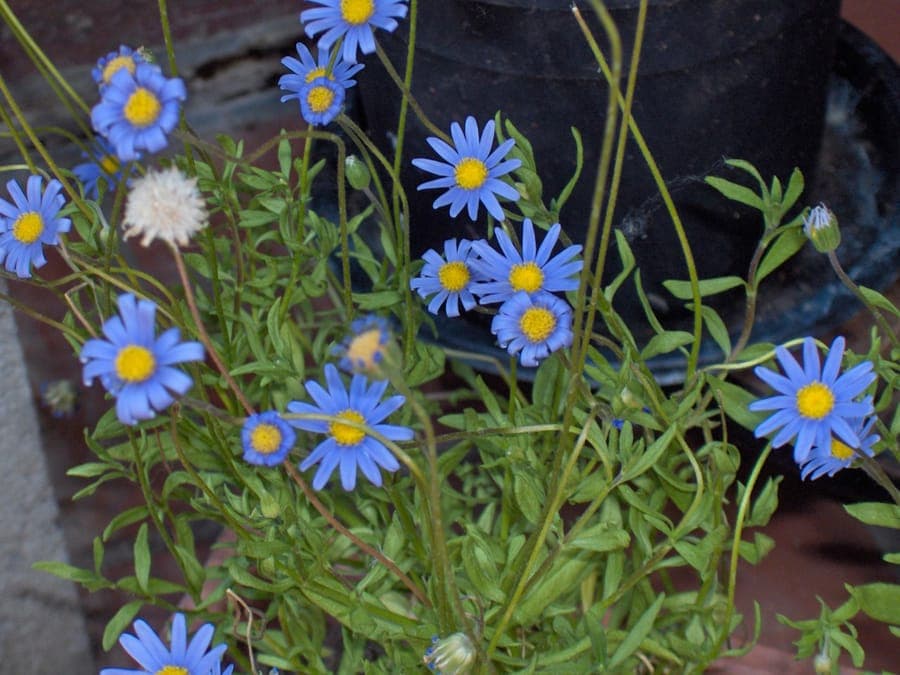
Georges Jansoone / CC BY-SA 3.0, via Wikimedia Commons
Blue daisy: complete guide
Felicia amelloides
Want to see Blue daisy: complete guide in your garden?
1 minute, no credit card
Overview
Felicia amelloides, known as Blue daisy or Blue marguerite, is a native South African plant in the Asteraceae family. Originally from the Cape Province, this plant is now a popular garden plant worldwide. The plant is renowned for its rich blue flowers that appear from spring to autumn. It is preferred for Mediterranean gardens, containers, bedding displays, and cut flower production.
Appearance and Bloom
Felicia amelloides grows into a compact to mid-height shrub, typically 30-60 cm tall. The plant has fine, bright green leaves and slender branches that elegantly branch out. The flowers are approximately 2-3 cm across with sky-blue petals and yellow disc florets. This contrast creates a visually attractive and bright appearance. Blooming period extends from April/May to October in temperate climates, often until the first frost.
Ideal Location
Felicia amelloides thrives in full sun to light shade with at least 5-6 hours of direct sunlight daily. Locations with very good air circulation are ideal. This plant prefers warm, sheltered spots where wind is not excessive. In containers it can be positioned flexibly. In very warm climates (over 30°C) it appreciates some afternoon shade.
Soil
Felicia amelloides prefers well-draining, moderately fertile soil. A mixture of garden soil, sand, and compost in equal parts works well. In containers, potting soil with added perlite can be used. The plant tolerates slightly acidic to neutral pH (6.0-7.0). Avoid waterlogging and very poor soils.
Watering
Water regularly during growing season, keeping soil moister than typical for Mediterranean plants. Don't let soil dry completely between waterings. In hot periods daily watering may be needed. Reduce watering in autumn and winter. Avoid water on foliage; always water at base. In containers more frequent watering is needed than in ground.
Free design
Want to see Blue daisy: complete guide in your garden? Make a free design now.
Pruning
Regular pruning helps keep the plant fuller and more compact. Cut back flowering stems after blooming in June. This encourages bushiness and autumn reblooming. In early spring, remove approximately one-third of the length. Remove dead or diseased branches year-round. The plant tolerates moderate heavy pruning well.
Maintenance Calendar
May: Blooming begins, water weekly. June-August: Warm growing season, post-bloom maintenance pruning. September: Prepare for autumn blooming, continue feeding. October: Full rebloom, water consistently. November: Blooming weakens, prepare for winter. December-March: Minimal maintenance, almost no water.
Winter Hardiness
Felicia amelloides is frost-sensitive and cannot tolerate temperatures below 0 degrees. In zones 9b-11 it can winter outdoors with frost protection. In colder climates, move-to-indoor overwintering (greenhouse, conservatory, or house) is needed. The plant will drop leaves when exposed to frost.
Companion Plants
Combine with other summer bloomers: Verbena, Osteospermum, Diascia, Petunia, Helichrysum, and grasses. In containers these daisies work well with Heuchera, Chlorophytum, and other contrasting foliage plants. These combinations create vibrant, attractive displays.
Closing Thoughts
Felicia amelloides brings year-round blooming and cheerful blue to your front garden. This South African jewel is easy to grow and thoroughly grateful. Available at garden centers and plant nurseries worldwide. Discover how this Cape beauty transforms your design on gardenworld.app. Plant multiple specimens for spectacular displays; this plant deserves every spot in sunny borders and containers.
Want to see Blue daisy: complete guide in your garden? Make a free design now.
Upload a photo, pick a style, and get a photorealistic design with plant list in under a minute.
No credit card required


Similar plants
Calendula stellata: complete guide
Calendula stellata
Complete guide to Calendula stellata, the star-flowered marigold from Sicily: location, soil, watering and companion planting tips.
Korean chrysanthemum: complete guide
Chrysanthemum x rubellum
Chrysanthemum x rubellum is a hardy autumn perennial with single pink to copper flowers from August to November. Care and combinations.
Helianthus divaricatus: complete guide
Helianthus divaricatus
Helianthus divaricatus is a North American woodland sunflower with yellow summer blooms, ideal for naturalistic borders and shady edges.