
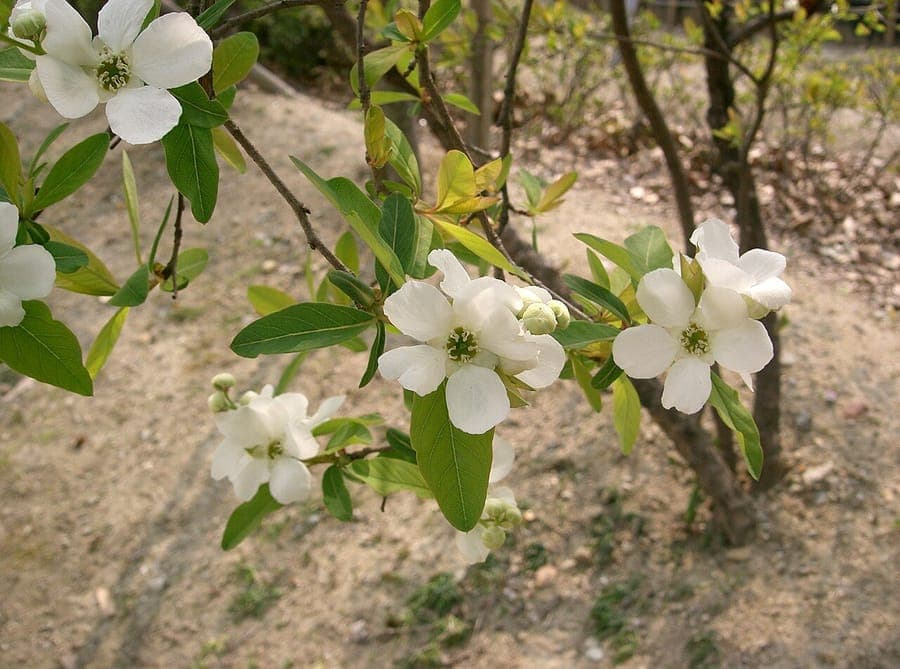
KENPEI / CC BY-SA 3.0, via Wikimedia Commons
Exochorda racemosa: complete guide
Exochorda racemosa
Want to see Exochorda racemosa: complete guide in your garden?
1 minute, no credit card
Overview
Exochorda racemosa, commonly known as the common pearlbush, is a beautiful deciduous shrub native to China and Central Asia. This shrub is especially renowned for its spectacular white flowers that appear in spring. With its elegant growth habit and rich blooming period, it is a valued addition to any front yard. The pearlbush grows vigorously and forms a natural, rounded shape without much intervention. This is a classic choice for gardeners who love traditional natural beauty.
Appearance and Bloom
The Exochorda racemosa is a deciduous shrub that becomes completely covered with white, unscented flowers in spring. The flowers appear in clusters and give the plant a fine, airy appearance. The blooming period lasts several weeks in March and April. After flowering, the plant produces small, inconspicuous fruits. The foliage is small, elegant, and yellow-green in color, providing fine contrast with the white flowers. In autumn, the leaves sometimes turn a lovely yellow before falling. The plant usually reaches a height of 2-3 meters.
Ideal Location
The Exochorda racemosa grows best in a sunny to half-shaded location. At least 4-5 hours of direct sunlight daily is needed for optimal blooming. The plant is very flexible and also thrives in lightly shaded spots. A location where you can see the flowers in the light of early morning sun is particularly attractive. Ensure the plant has enough space to reach its natural form. Use the plant as a specimen shrub or in a group with other spring-flowering shrubs.
Soil
The Exochorda racemosa is not very particular about soil, but grows best on loose, nutrient-rich soil. A pH between 6.0 and 7.5 is ideal. The plant tolerates both acidic and neutral soil. Ensure good drainage so waterlogging does not occur. Improve the soil when planting by adding compost or peat. In poor soil, you can add some organic fertilizer in spring each year. The plant does well on normal garden soil.
Free design
Want to see Exochorda racemosa: complete guide in your garden? Make a free design now.
Watering
After planting, the Exochorda should be watered regularly until it is well established. A young plant needs extra water during dry periods. Once well established, the plant is very drought-tolerant. Under normal conditions, regular rainfall is usually sufficient. During very dry periods, you may water, especially if the plant is in a warm, sunny location. Excessive moisture is not needed and can even be harmful. In winter, extra water is usually not necessary.
Pruning
The Exochorda racemosa grows naturally into a neat shape and requires little pruning. After flowering, you may gently remove old or weak branches. Ensure you do not cut too much, as this can damage the shape. Remove dead branches and crossing branches for better air circulation. The plant flowers on previous year's growth, so heavy pruning causes fewer flowers the following year. Light maintenance pruning is usually sufficient.
Maintenance Calendar
Spring: Check for winter damage. Light pruning after flowering. Summer: Monitor water during dry periods. Inspect for disease. Autumn: Prepare the plant for winter. Winter: No maintenance needed. Add organic fertilizer in spring each year if soil is poor.
Winter Hardiness
The Exochorda racemosa is fully winter-hardy in the UK and Northern Europe. This plant can tolerate temperatures down to -15 degrees Celsius. No special winter protection is necessary. In very severe winters, the tips of young shoots may suffer some frost damage, but this is not a problem. The plant recovers quickly in spring. This makes the pearlbush a very reliable choice for permanent planting in the garden.
Companion Plants
The Exochorda racemosa combines beautifully with other spring-flowering shrubs. Plant this together with forsythia, cherry, or magnolia for a spectacular spring display. Ornamental maples and yellow spireas also work well with this plant. Below you can plant bulbs such as tulips and daffodils that bloom earlier. Late spring and summer bloomers provide color later in the season. Ensure neighboring plants do not create excessive shade.
Conclusion
The Exochorda racemosa is an excellent, reliable shrub for those who enjoy spring flowers. This plant is available at garden centers. Ask for advice through gardenworld.app to create a beautiful spring garden design with this magnificent pearlbush as a centerpiece.
Want to see Exochorda racemosa: complete guide in your garden? Make a free design now.
Upload a photo, pick a style, and get a photorealistic design with plant list in under a minute.
No credit card required


Similar plants
Siberian crab apple: complete guide
Malus x robusta
Complete guide to the Siberian crab apple (Malus x robusta): location, soil, pruning, winter hardiness and the best companion plants for your garden.
Chinese flowering crabapple (Malus x spectabilis): complete guide
Malus x spectabilis
Meet the Chinese flowering crabapple (Malus x spectabilis): a classic spring bloomer with carmine buds and pink blossom.
Potentilla crassinervia: complete guide
Potentilla crassinervia
Potentilla crassinervia, the Corsican cinquefoil, grows wild on Corsica and Sardinia's peaks. Discover how to grow this hardy alpine rock garden gem.