
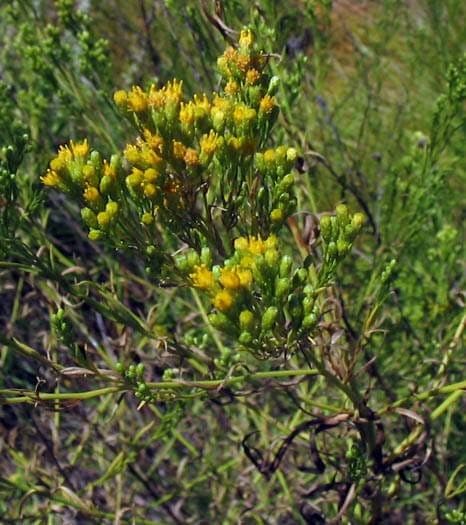
Unknown authorUnknown author / Public domain, via Wikimedia Commons
Western goldenrod: complete guide
Euthamia occidentalis
Want to see Western goldenrod: complete guide in your garden?
1 minute, no credit card
Overview
Euthamia occidentalis, commonly known as western goldenrod or western fragrant goldenrod, is a rhizomatous perennial herb in the Asteraceae family native to western North America. Its range stretches from British Columbia and Montana southward through California, Nevada, Arizona, Utah, Wyoming, Colorado, Nebraska, and into northwest Mexico (Baja California Norte). Formerly classified within Solidago as Solidago occidentalis, it was formally described by botanist Thomas Nuttall in 1840 in his Transactions of the American Philosophical Society.
This is a plant of wet and moist habitats - streambanks, marshes, wet meadows, and the edges of ditches and lakes - from sea level up to approximately 2,000 m elevation. In cultivation it has become valued in Europe for its late-season golden flower display and its excellent wildlife value. The flowers are subtly fragrant, giving rise to the name 'western fragrant goldenrod', and attract large numbers of late-season pollinators including bumblebees, honeybees, small tortoiseshell butterflies, red admirals, and numerous hoverfly species.
In European gardens, Euthamia occidentalis remains relatively uncommon, yet it offers remarkable ornamental value for wet borders, rain gardens, and wildlife-friendly plantings. Its narrow, three-veined leaves and flat-topped golden corymbs of tiny flower heads distinguish it visually from the more familiar arching Solidago cultivars. If you are planning a naturalistic or wildlife-oriented garden, this plant deserves a prominent place in your planting scheme. At gardenworld.app you can find inspiration and full garden design services to help place plants like western goldenrod in the most effective positions in your garden layout.
The plant grows from spreading rhizomes, gradually forming clumps or patches. In the garden, stems typically reach 60 to 120 cm in height, occasionally more in very moist, fertile conditions. The overall effect in bloom is a soft, billowing cloud of gold that provides a stunning September and October backdrop in border plantings.
Appearance & bloom cycle
The most distinctive feature of Euthamia occidentalis is its extremely narrow, grass-like leaves: up to 10 cm long but only 3–8 mm wide, with three parallel veins running from base to tip. The leaves are smooth to finely hairy, dark green above, and slightly glandular on the underside, releasing a pleasant resinous scent when brushed. The stems are erect, smooth, and branched in the upper third, giving the plant a bushy appearance at flowering time.
Flowering typically begins in August and continues through October or even November in mild maritime climates. The inflorescences are flat-topped or slightly domed corymbs composed of dozens to hundreds of small, 4–6 mm flower heads, each bearing 7–25 bright yellow ray florets surrounding a central cluster of disc florets. The massed effect of these corymbs is a dense, rich gold that is unmistakable in the late summer and autumn garden.
After flowering, the seed heads develop attractive, feathery white pappus that glitter in autumn sunlight and persist into December, providing structural interest during the dormant season. The cultivar 'Western Gold' is sometimes available in specialist nurseries and is valued for its compact habit (80–100 cm) and particularly abundant bloom.
The plant is later-blooming than most Solidago cultivars, making it especially valuable as a nectar source when most other late perennials have already finished. Birds, particularly goldfinches and siskins, are attracted to the seed heads through the winter months.
Ideal location
Western goldenrod performs best in full sun to partial shade. A minimum of four to five hours of direct sunlight per day is recommended for strong flowering; in deeper shade, bloom quality diminishes and stems may flop. In hotter climates or on south-facing positions in European gardens, some afternoon shade is beneficial to prevent moisture stress.
The plant's natural habitat - streambanks, marshes, and wet meadows - clearly signals its preference for moist to wet conditions. Excellent garden positions include: the margins of a garden pond or stream, low-lying areas that collect rainwater, rain gardens, and the moist borders of naturalistic plantings. The plant tolerates periodic flooding (up to 2–4 weeks) but performs best where roots are consistently moist but not permanently submerged.
In more conventional border settings with regular irrigation, Euthamia occidentalis adapts well, provided watering is attentive during dry spells. A sheltered position reduces stem damage from wind in tall specimens.
Soil requirements
This goldenrod accepts a wide range of soil types but strongly prefers moist to wet, moderately fertile soils with a pH between 4.5 and 7.0. It tolerates slightly acidic peaty soils as well as neutral clay loams. On alkaline soils above pH 7.5, chlorosis (yellowing of leaves) can develop due to iron or manganese deficiency; acidify with sulphur or peat if needed.
On clay or loam soils that remain naturally moist, the plant thrives with minimal amendment. On sandy soils, incorporate 10–15 cm of well-rotted compost or leafmould before planting to improve moisture retention. Avoid excessively rich soils that promote lush, floppy growth; moderate fertility is ideal.
Plant at 40–60 cm spacing; the rhizomes spread gradually but are manageable in most garden settings. Mulch with 5–7 cm of bark chippings or wood chips to conserve moisture and suppress weeds.
Free design
Want to see Western goldenrod: complete guide in your garden? Make a free design now.
Watering
Consistent moisture is the single most important cultivation factor for Euthamia occidentalis. Through the growing season from April to September, water deeply at least once a week; during hot, dry spells, water twice weekly. Drip irrigation or soaker hoses that deliver water directly to the root zone without wetting foliage are ideal.
During the flowering period (August–November), maintaining even soil moisture prolongs bloom duration and quality. Drought stress at this stage shortens flowering and can cause premature browning of flower heads. After autumn bloom, reduce watering progressively; through winter, rainfall in northwest European climates is generally sufficient, though ensure the root zone never dries completely during dry frost periods.
Plants placed at pond margins or stream edges naturally receive adequate moisture; check only that roots are not permanently submerged, as waterlogging the crown can cause rot. The plant tolerates temporary flooding of 2–4 weeks without lasting damage.
Pruning
Euthamia occidentalis requires minimal pruning. The primary task is cutting back dead stems in late February to early April, just above ground level, once the structural winter interest and wildlife value of the standing stems has been appreciated through the cold months.
Optionally, in late May to early June, cutting all stems back by half (the 'Chelsea chop' technique) produces a more compact plant that is less susceptible to flopping, with a slightly delayed but denser flower display. Do not prune after early July, as this will significantly delay or prevent flowering.
After flowering, leave seed heads in place through winter for birds and structural interest, or cut them in November if you prefer a tidier garden. Every four to five years, divide overgrown clumps in early spring by splitting the rhizome mass with a sharp spade; replant sections at 50–60 cm spacing.
Maintenance calendar
January–February: Leave standing stems for birds and winter structure. Apply fresh mulch if bare ground is exposed.
March: Cut down last year's stems close to ground level. Dress around the plant with compost or slow-release fertiliser. Divide clumps if needed.
April–May: Monitor early growth. Remove weeds before they establish. Begin watering in dry spells.
June: Optional Chelsea chop: cut stems to half height for a compact, sturdy plant. Refresh mulch layer.
July–August: Water regularly. Flower buds form; avoid pruning from now on.
September–October: Peak bloom. Outstanding for pollinators. Enjoy the golden display against the autumn sky.
November: Seed plumes disperse. Leave stems standing for birds and structural winter interest.
December: Minimal maintenance required. Mulch the root zone if hard frost without snow cover is expected.
Winter hardiness
Euthamia occidentalis is highly cold hardy, rating USDA zones 4–9. It withstands temperatures well below -20 °C without damage, as the above-ground stems die back completely in winter while the rhizome mass remains protected in the soil. In practice, no winter protection is needed anywhere in the Netherlands, Belgium, the UK, Germany, France, or the rest of temperate Europe.
In exceptionally cold continental climates - such as the Baltic states or eastern Poland - with prolonged dry frost and no snow cover, a 7–10 cm mulch layer over the crown provides extra insurance. In Atlantic Europe, this precaution is entirely unnecessary. The plant resumes vigorous growth as soon as soil temperatures rise above 5 °C in early spring, typically from mid-March onwards in northwest Europe.
The plant is robust across its hardiness range and reliable in returning year after year in established garden plantings.
Companion plants
Western goldenrod pairs beautifully with other late bloomers and moisture-loving perennials. Recommended combinations from specialist garden centres include:
- Lobelia cardinalis (cardinal flower): the vivid red spikes contrast spectacularly with the gold of Euthamia occidentalis; both thrive in moist to wet conditions.
- Eupatorium cannabinum (hemp agrimony): another late-blooming butterfly magnet that shares similar moisture preferences and creates a naturalistic combination.
- Iris pseudacorus (yellow flag iris): provides structural interest early in the season at pond margins before Euthamia occidentalis takes over the display.
- Veronicastrum virginicum (Culver's root): elegant white candles contrast beautifully with the flat golden corymbs.
- Molinia caerulea (purple moor grass): the airy, transparent habit of this grass provides movement and complements the golden flower heads.
- Persicaria amplexicaulis (mountain fleece): blooms simultaneously, prefers similar conditions; the red flower spikes and golden goldenrod create a vivid late-season palette.
For best effect, plant in groups of three to five plants at 45–50 cm spacing, which creates a solid mass of bloom within two seasons.
Closing
Euthamia occidentalis is an underappreciated perennial that rewards gardeners with months of golden autumn colour, excellent wildlife value, and minimal maintenance demands. Its tolerance of wet conditions makes it indispensable for difficult moist spots in the garden where many other plants struggle.
If you would like to incorporate western goldenrod or other late-blooming perennials into your garden design, visit gardenworld.app for professional garden design tools and inspiration that will help you create the perfect planting scheme for your specific garden conditions.
Want to see Western goldenrod: complete guide in your garden? Make a free design now.
Upload a photo, pick a style, and get a photorealistic design with plant list in under a minute.
10,000+ gardens designed already
No credit card required


Similar plants
Calendula stellata: complete guide
Calendula stellata
Complete guide to Calendula stellata, the star-flowered marigold from Sicily: location, soil, watering and companion planting tips.
Korean chrysanthemum: complete guide
Chrysanthemum x rubellum
Chrysanthemum x rubellum is a hardy autumn perennial with single pink to copper flowers from August to November. Care and combinations.
Helianthus divaricatus: complete guide
Helianthus divaricatus
Helianthus divaricatus is a North American woodland sunflower with yellow summer blooms, ideal for naturalistic borders and shady edges.